DMX Mirror for Nightclub Tunnels: How to Spec Zones, Heat & Sync
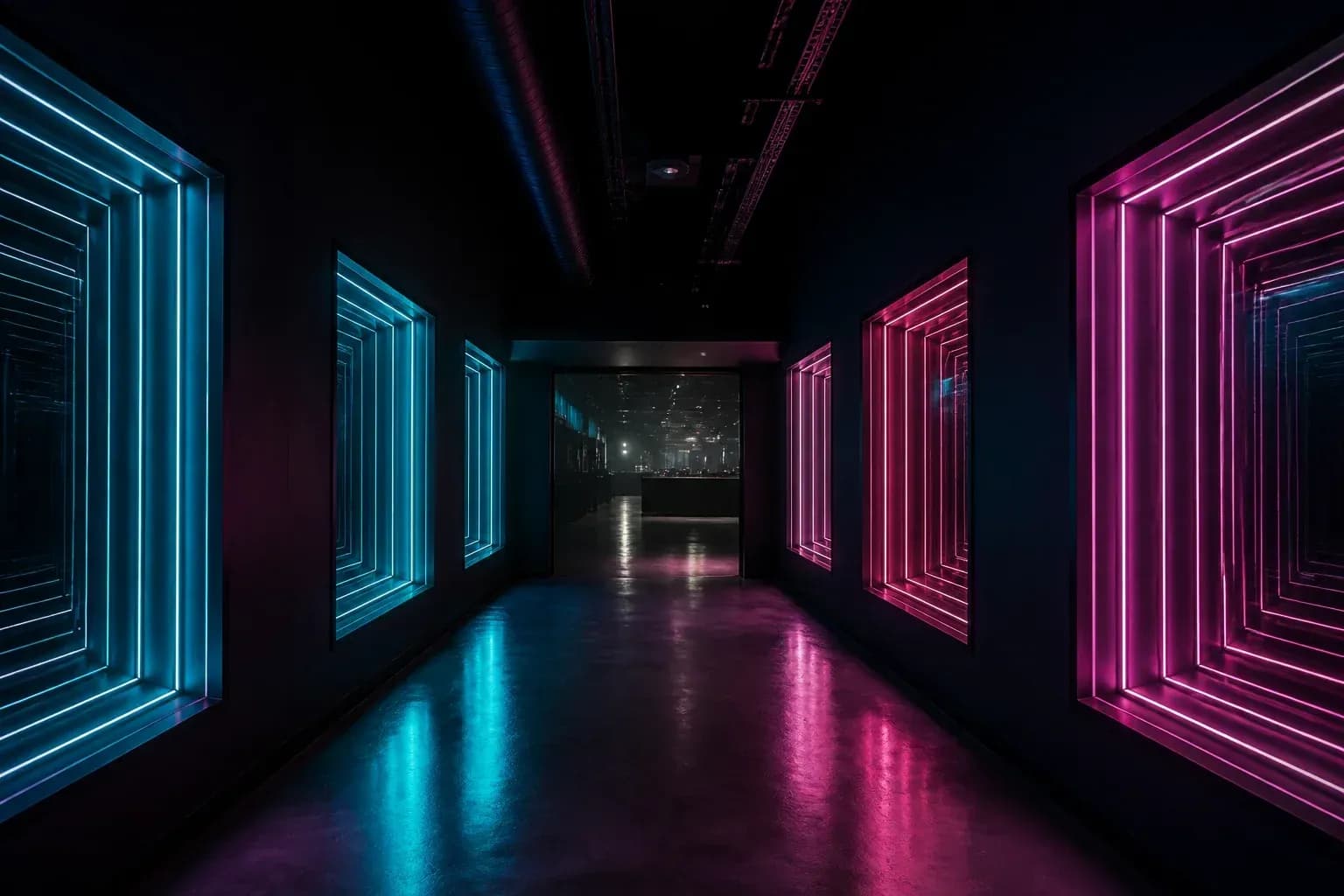
How to specify a DMX mirror for nightclub tunnels — addressing, zone sync, continuous-run heat management, and install power — so the infinity mirror tunnel joins the show desk instead of fighting it.
Why nightclub infinity tunnels fail when control is late
A nightclub infinity tunnel only works if the optical stack and the show desk agree. Buyers often lock glass spacing and letter height first, then ask for “DMX later” — after frames are closed, drivers are sized for a wall switch, and the lighting programmer has no universe, address map, or zone plan. The failure mode guests feel is not a missing feature list. It is a tunnel that stays on one saturated look while the room fades, or a wordmark that strobes out of time with the stage because each letter is its own unmanaged RGB island.
This guide is for nightlife operators, AV integrators, lighting designers, GCs, and sign contractors who need a DMX infinity mirror scoped before metal is cut. Static, RGB scene presets, and full DMX are different control tiers — we compare them in our control-tier guide — but nightclub tunnels almost always sit at the top of that ladder. Treat addressing, heat, suspension, and service access as fabrication deliverables, the same way you already treat stroke width and return depth.
When a nightclub infinity tunnel actually needs DMX
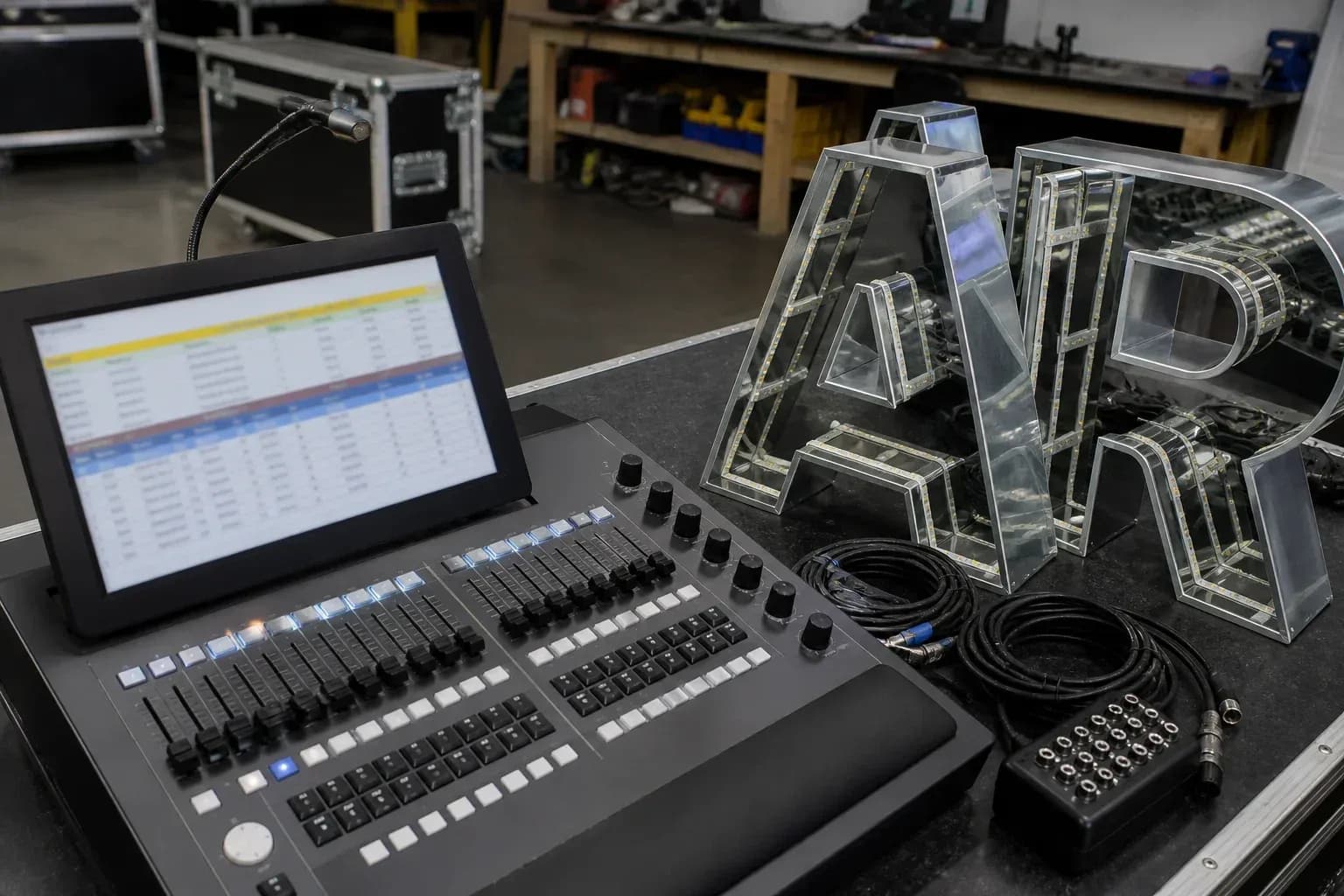
RGB with scene presets is enough when the venue wants a handful of looks — warm wash for early doors, brand color for photo ops, a lively chase for peak hours — recalled from a wall panel or app without a console operator. Reserve a full DMX infinity mirror when the tunnel must track the same cues as house lights, lasers, and LED walls: timed fades, color follow, blackout with the stage, or per-zone motion that matches a programmed show file.
Ask who will run the desk on a Tuesday versus a Saturday. If there is no resident programmer and the bar manager will only flip scenes, over-specifying DMX adds commissioning cost the room will never use. If a touring LD or house console owns every look, under-specifying leaves the tunnel looking like a stuck prop. Nightlife rooms with haze, cameras, and social content also benefit from DMX because intensity and color can be softened for photography without rebuilding the LED plane.
Architecture matters too. A single overhead wordmark above the bar can ride one universe with a compact address block. A corridor lined with repeated letter cells or portal frames needs zone maps so depth stays even while color marches down the tunnel — that is where nightclub infinity tunnel briefs outgrow simple RGB remotes.
Letter cells vs portal panels in a tunnel corridor
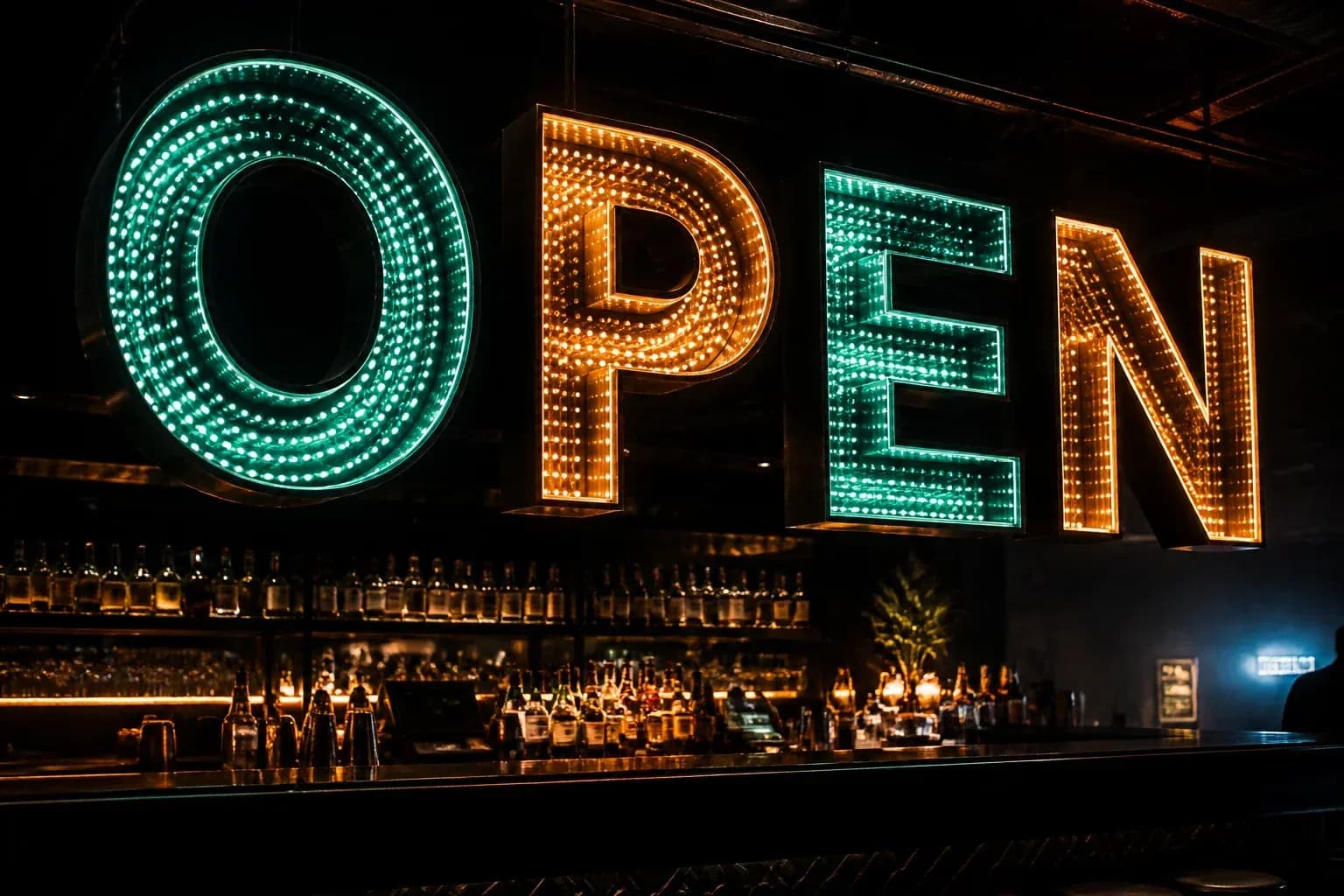
Two common builds serve nightclub tunnels. Infinity letter systems put each character in its own optical cell so a wordmark reads as endless tunnels across the set — strong for bar sightlines and brand moments, and the approach behind our nightlife tunnel letters case. Portal or panel walls turn the corridor itself into architecture: guests walk through synchronized depth on both sides or overhead. Letters win when the graphic is the hero; panels win when the space is the product.
Either way, even depth is non-negotiable. Stroke, return, LED density, and glass spacing must be validated per cell so counters and serifs do not collapse into hotspots while wider stems look endless. On DMX builds, uneven optical QC looks like a programming bug — guests blame the chase when the real fault is a letter that never matched its neighbor. Lock the optical golden sample before you debate cue lists.
Mounting and sightlines drive the BOM early. Suspended letter sets need documented lift points, cable routes, and vibration assumptions over a loud room. Flush corridor panels need niche depth, reveal metal, and access so a failed driver does not mean demolishing millwork on a Friday night. Share ceiling height, throw distance from the dance floor, and whether haze machines sit near the glass — coatings and service doors change with that brief.
Addressing, zones, power, and heat for continuous nightlife run
DMX scope is useless without a map the programmer can trust. Agree universe count, start addresses, and whether each letter, each panel, or each corridor bay is a zone. Document fixture profiles or personality modes so the desk does not invent channels the hardware never had. Multi-zone walls should sync so color and motion read as one continuous tunnel — not a row of clocks drifting apart because each cell got a different firmware personality at pack-out.
Power and heat sit next to control. Nightlife infinity mirrors often run late and long; LED planes and drivers need thermal paths sized for continuous run, not a retail lobby that dims after dinner. Place drivers where they can dump heat and still be reached without opening every optical face. Voltage, listing path for the install market, and cable lengths from niche to rack belong in the shop drawing set — the same discipline covered in our heat-management guide for continuous-run builds.
Commissioning is part of fabrication, not a soft afterthought. Dry-fit power and data before millwork closes; verify address order against the wordmark left-to-right; run a blackout and a full-white cue under show lighting so haze and camera bloom do not surprise the opening. A tunnel that only looked correct under factory fluorescent light will fight the room once house lights and fog are on.
What to send so a DMX nightclub tunnel is buildable
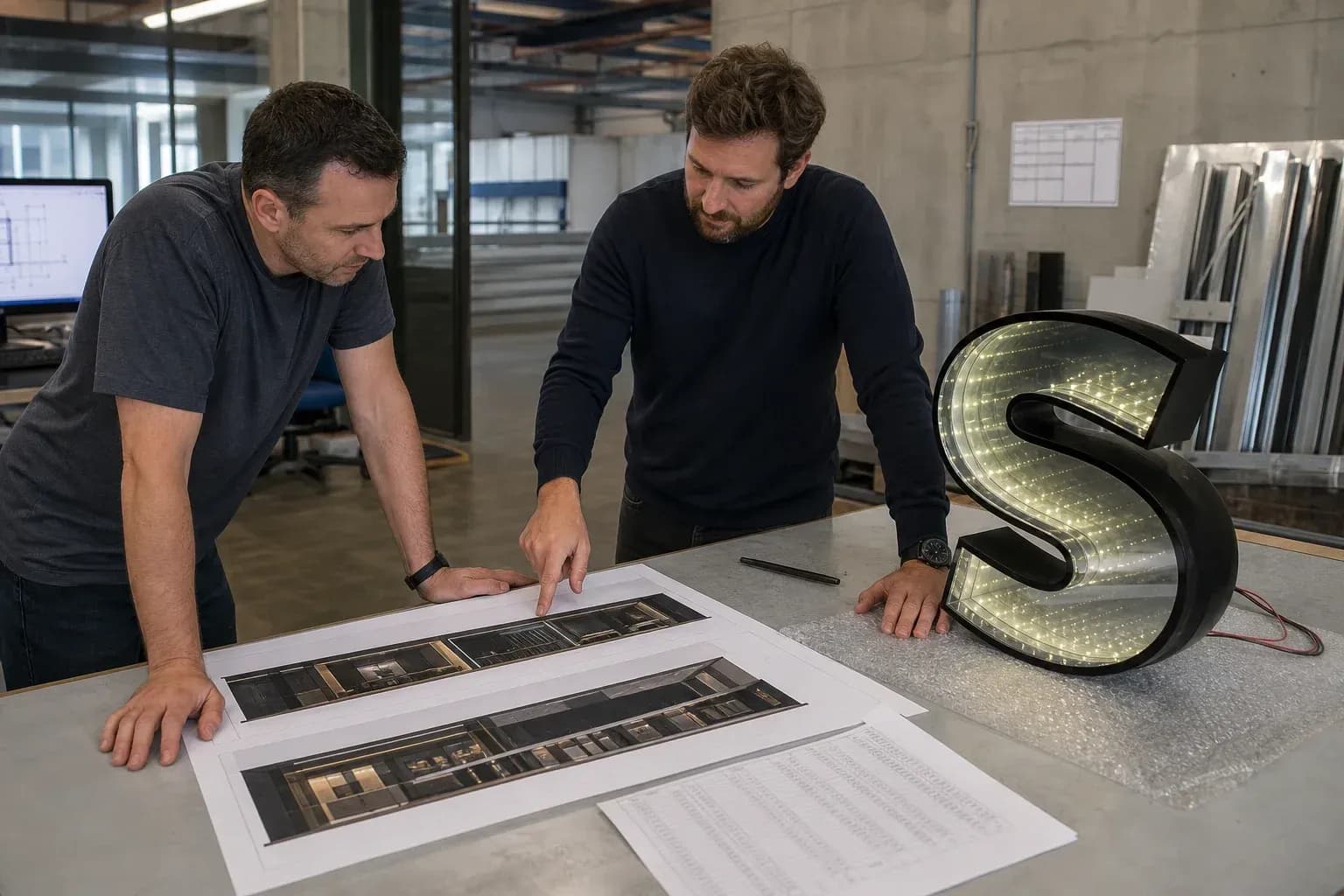
A useful RFQ names the graphic or portal intent, overall sizes, letter height and stroke if it is a wordmark, corridor or bar elevations with photos, ambient light and haze assumptions, and the control path: DMX universe availability, preferred personality, who owns the console, and whether RGB scenes are still needed as a fallback. Call out mount type (suspend, flush, standoff), service access, destination voltage and listing market, and any landlord or fire-life-safety constraints on open flame-adjacent haze near glass.
Send those inputs to InfinityMir when a nightclub infinity tunnel is on the table. We respond with a buildable map — optical stack and per-cell depth notes, DMX address and zone plan, driver and heat placement, suspension or niche assumptions, and a commissioning checklist your AV partner can run — so the tunnel joins the show file instead of becoming a stuck neon prop after opening night.
Related capability
Nightlife tunnel letters caseManufactured Product Catalog
Explore Infinity Mirror Product Lines
Browse our full range of custom infinity mirror signs, letter systems, and feature walls — engineered with CAD shop drawings, UL/CE compliance, and export packing.
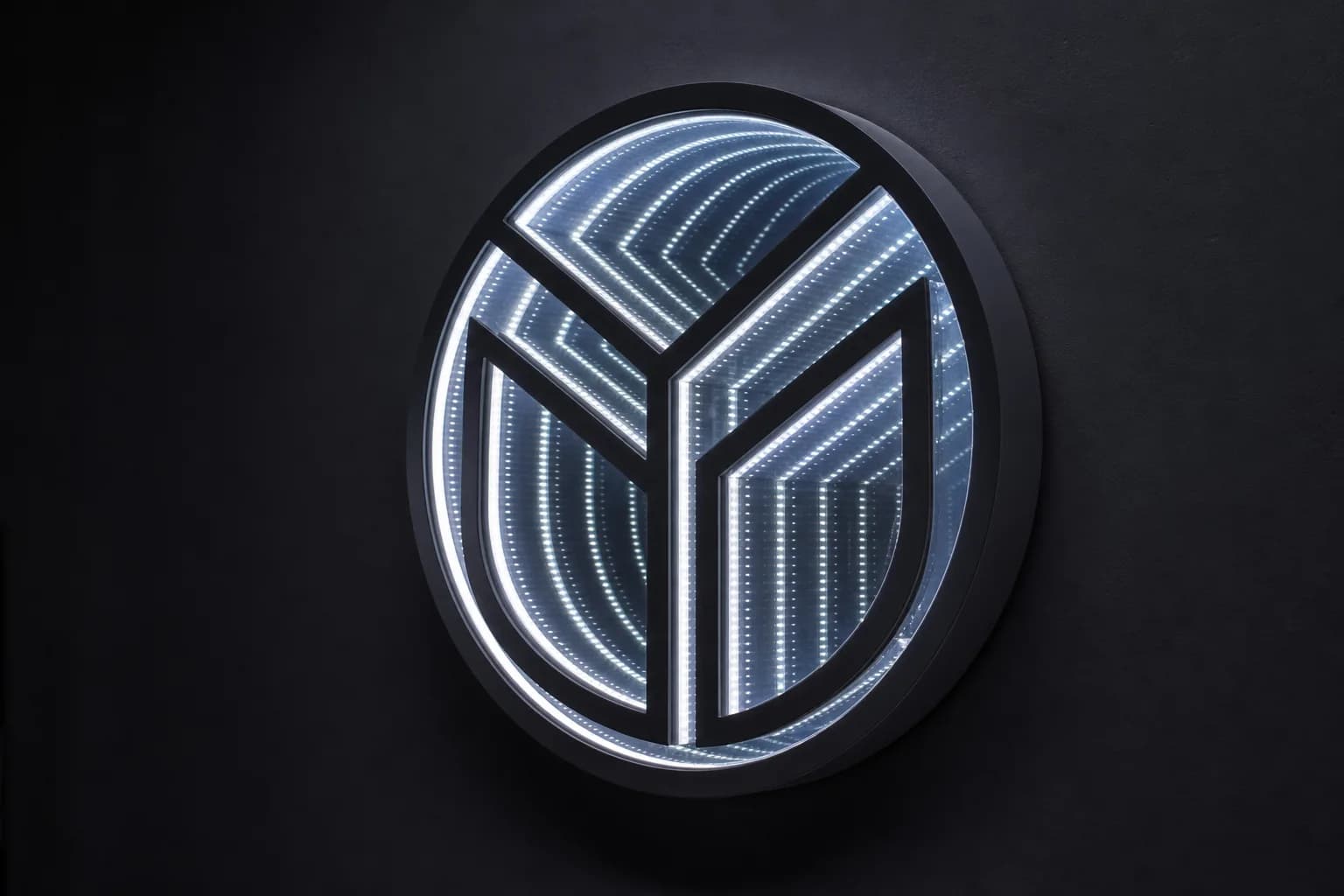
Infinity Logo Signs
Turn your brand mark into a custom infinity mirror logo sign — optical-grade glass, tuned LEDs, and endless depth engineered from vector artwork.
View Infinity Logo Signs details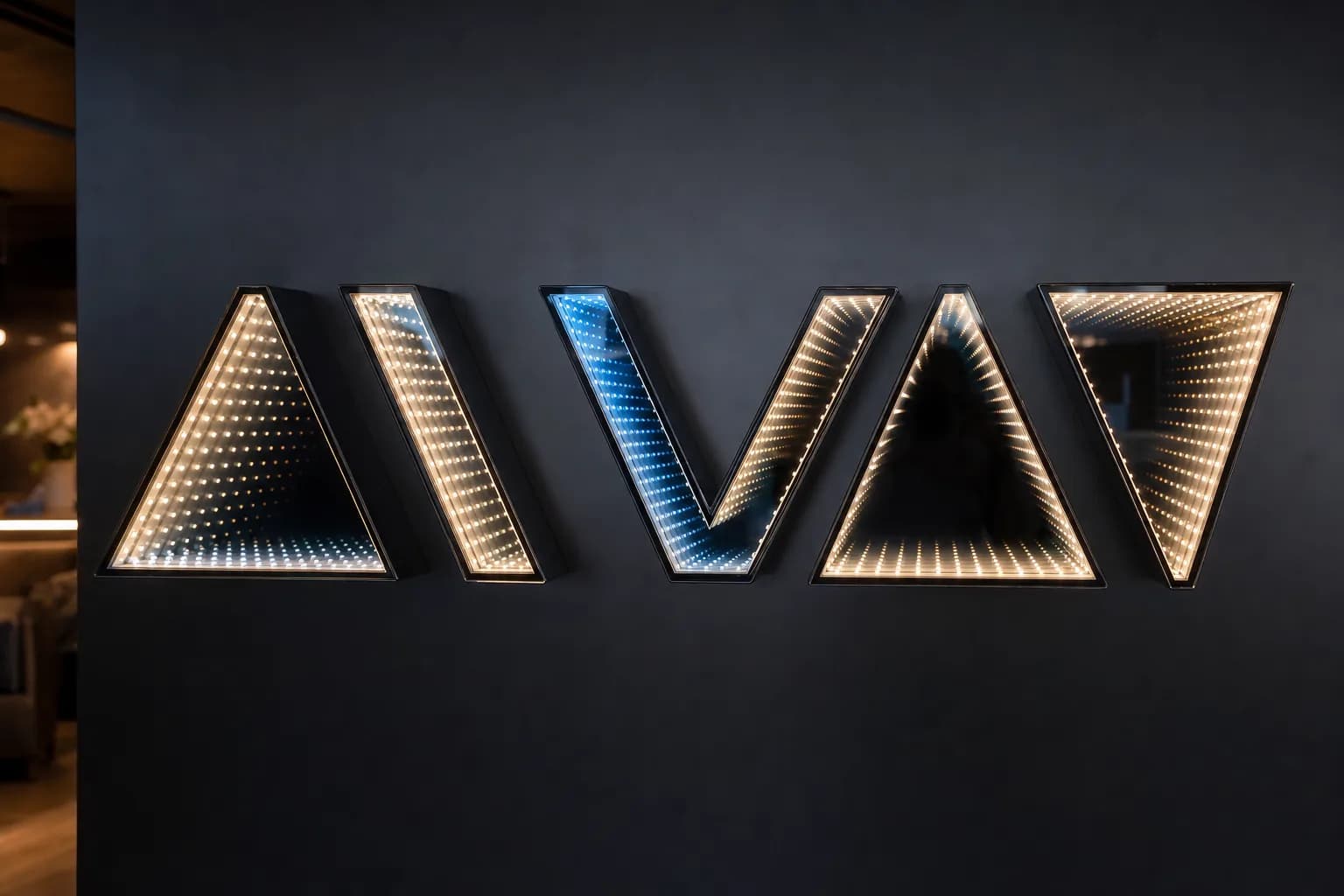
Infinity Mirror Letter Systems
Custom infinity mirror letter systems and channel signs built as individual optical cells for even depth across the whole wordmark.
View Infinity Mirror Letter Systems details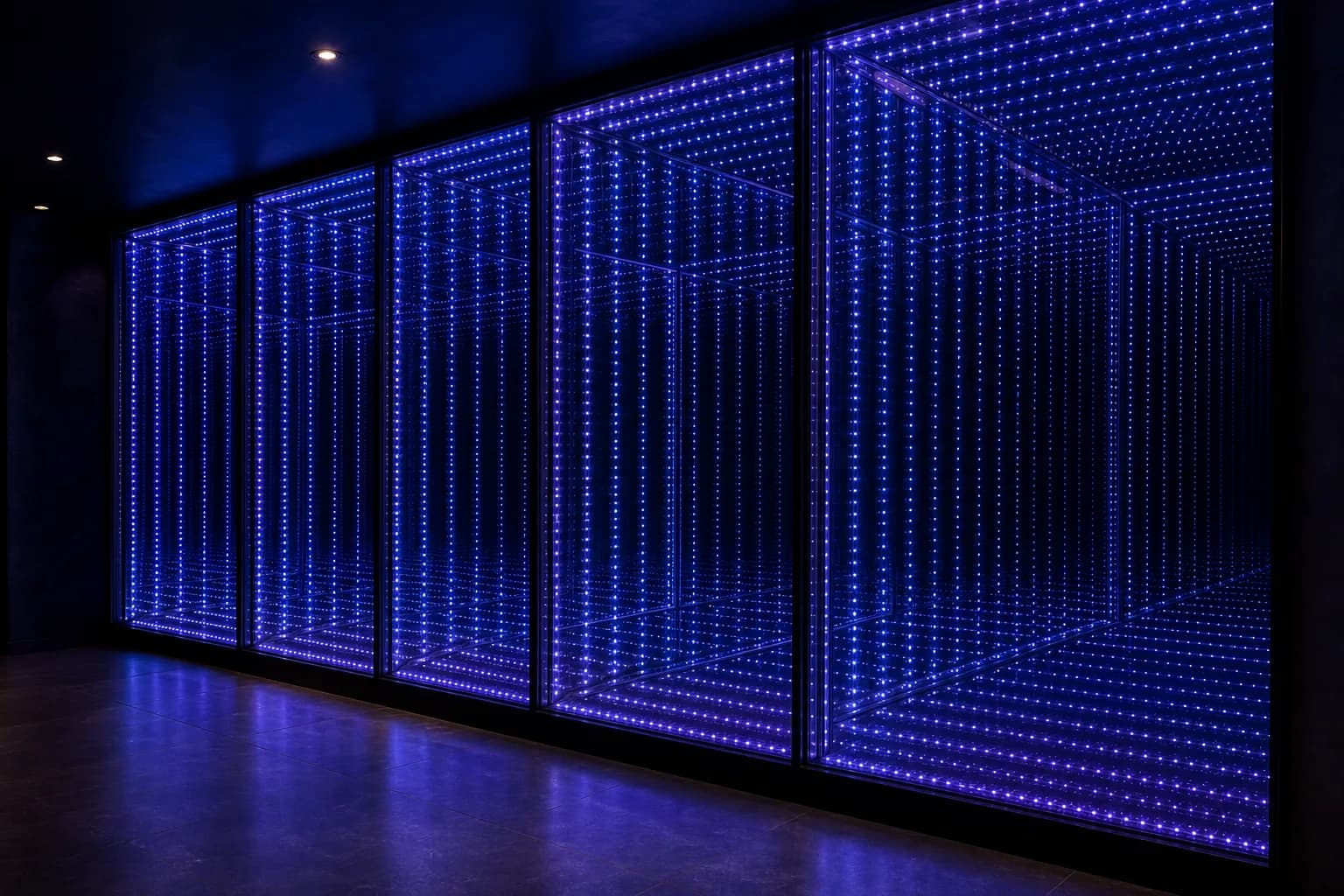
Feature Walls & Portals
Large-format infinity mirror feature walls and portals with synchronized multi-zone control, 24/7 heat management, and hidden service access.
View Feature Walls & Portals details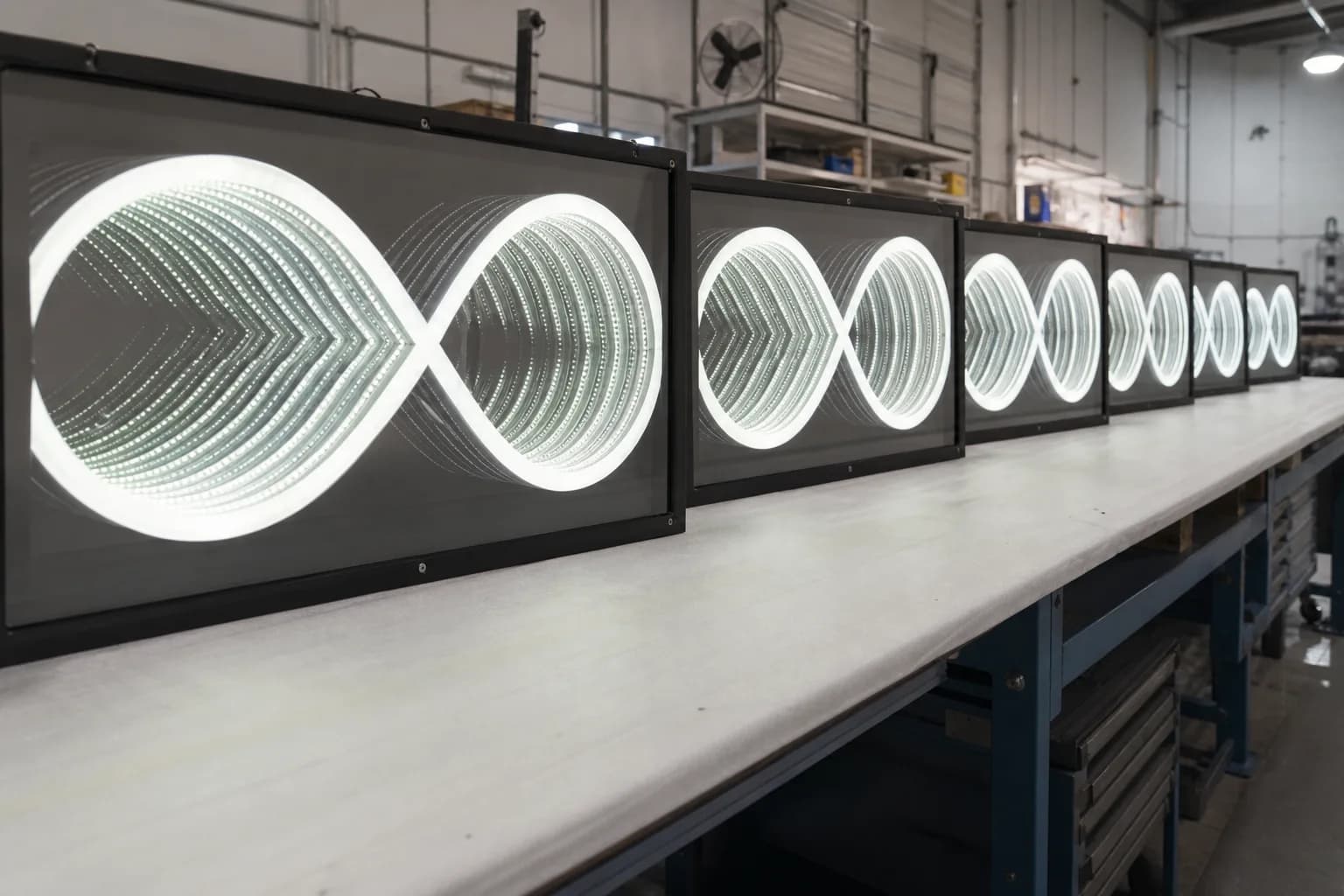
OEM & Rollout Programs
Private-label OEM & multi-location infinity mirror rollout programs with golden samples, controlled BOMs, and UL/CE electrical paths.
View OEM & Rollout Programs details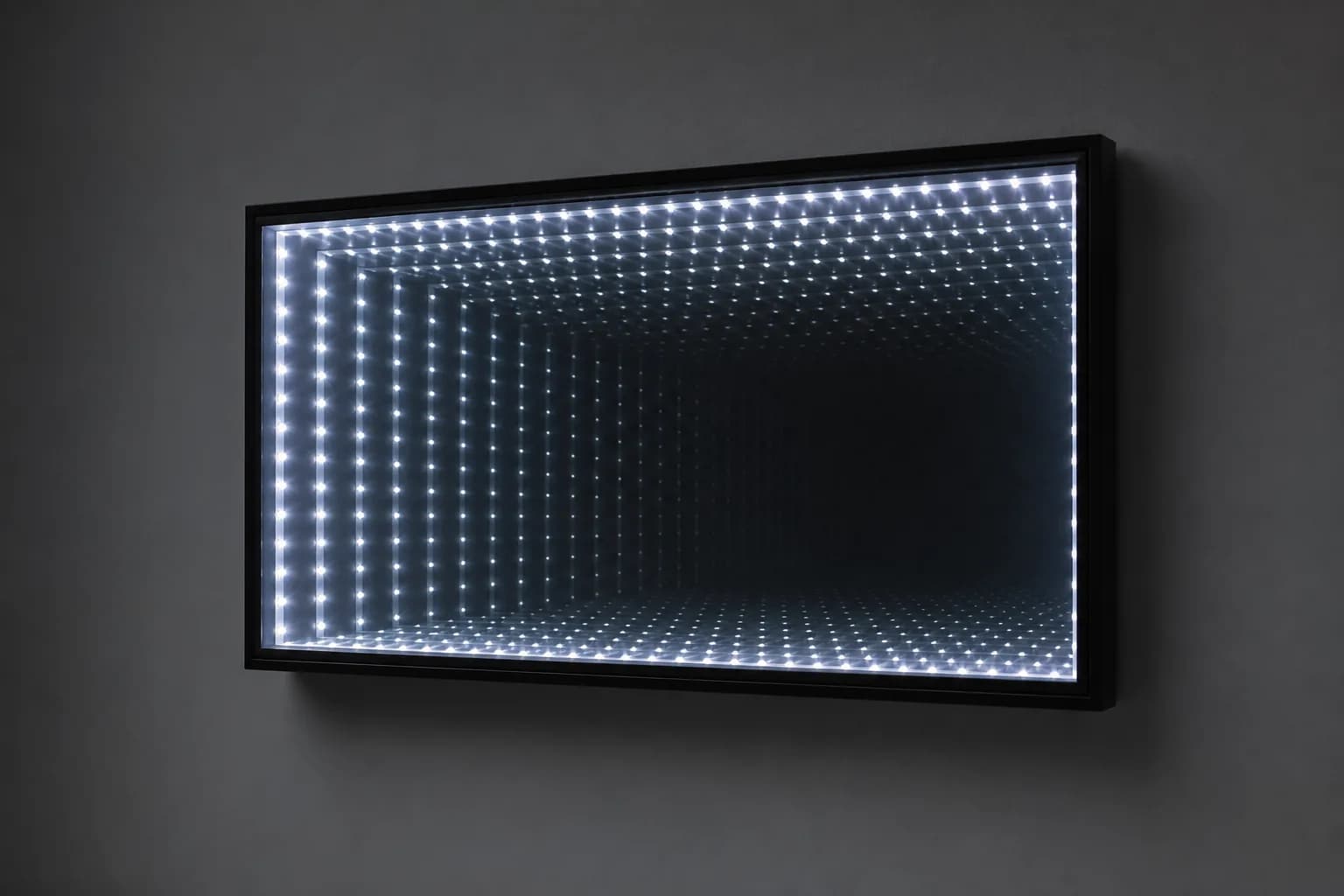
Standard Focal Panels
Fixed-size, ready-to-order standard infinity mirror focal panels with standard drivers and mounting kits for fast, predictable projects.
View Standard Focal Panels details