Infinity Mirror Focal Walls for Exhibition Booths & Trade Shows
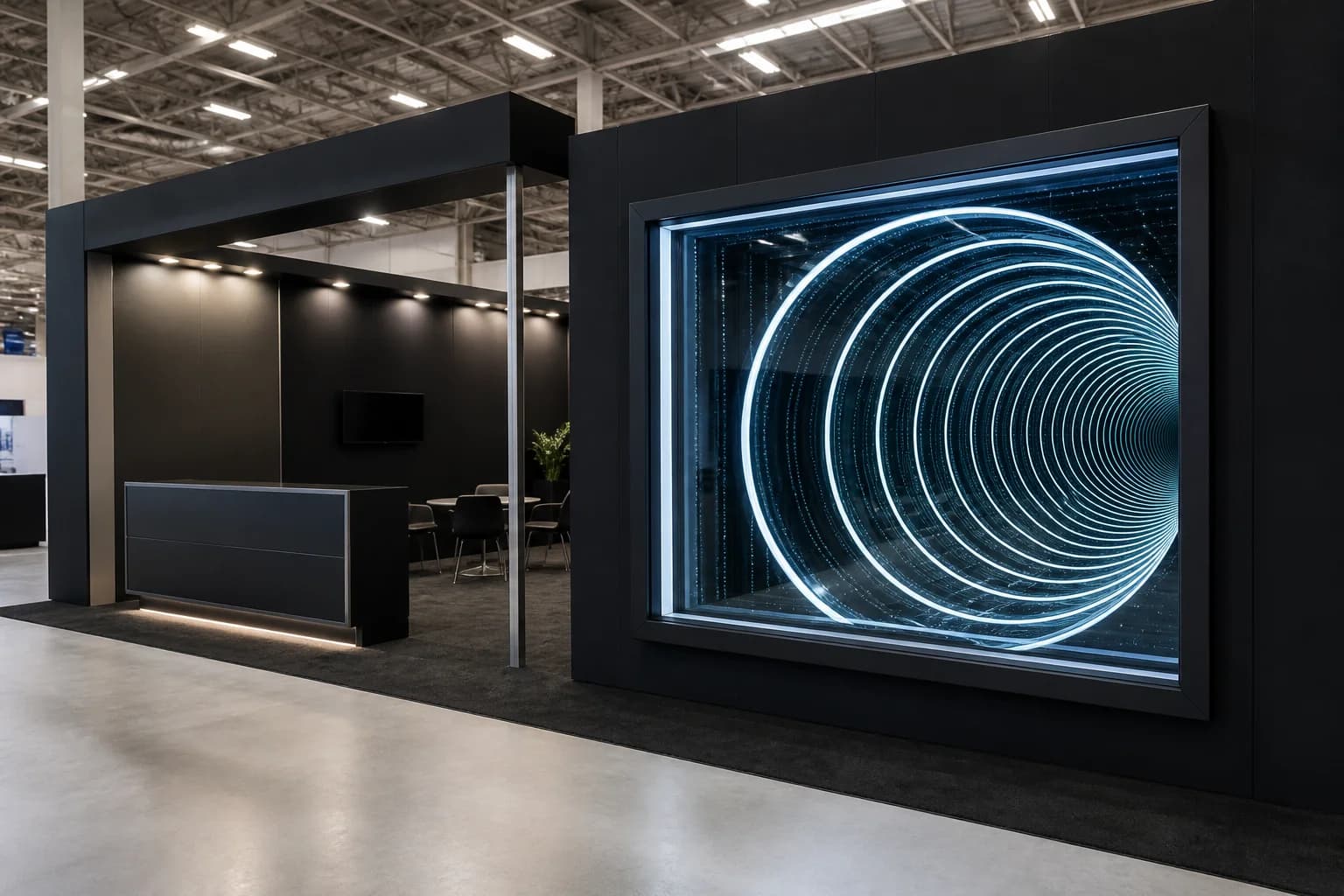
How to brief an exhibition infinity mirror and trade show focal wall so aisle read, hall ambient, modular strike, and power drops lock before panels ship — not after load-in starts.
A trade show focal wall fails when the brief ignores the aisle
Exhibition booths do not lose traffic because the graphics were dull. They lose it because the brief treated the infinity cell like a still from a dark showroom. Brand and agency teams pin a nightclub tunnel or a lobby feature wall onto a 6×6 m island, approve the render, and ship. Then hall fluorescents wash the face at noon, the freestanding frame accepts only 80 mm of depth, and attendees photograph a shallow, noisy stack from the aisle instead of the endless pull the exhibitor bought. That is not an LED problem. It is a brief that never named viewing distance from the carpet edge, how bright the hall actually is, or whether the wall must strike into road cases before the next city.
This guide is for brand marketers, exhibition builders, AV integrators, sign contractors, and agency producers who need an exhibition infinity mirror specified as touring hardware — not as a permanent lobby hung once. Product pages own the commercial offer for standard focal panels and modular feature walls. Here we name the show variables that change fabrication: aisle stop versus demo bay, high-ambient hall light, demountable panelization, power drops and union rules, and a calendar that does not wait for millwork. Shipping and crate details live in our export packing guide; this article locks the booth brief before those crates are labeled.
Where a trade show focal wall earns its keep
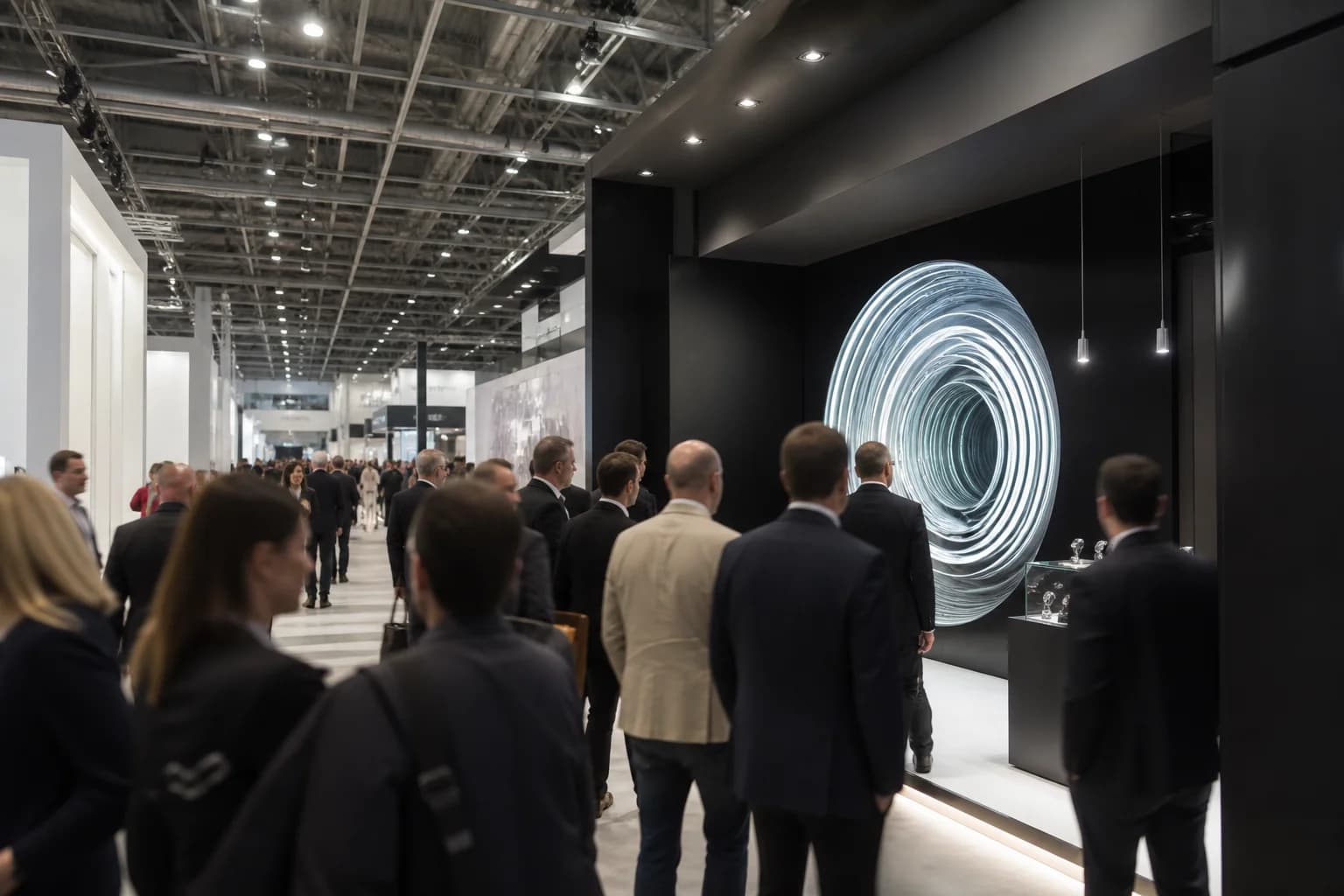
A trade show focal wall is not one SKU. An aisle-facing hero panel is a long-view stop: attendees see it from ten to twenty meters under bright hall light and decide in two seconds whether to turn. A demo bay or product stage behind the counter is a short-view linger — people already on the carpet need depth at arm’s length, often with a campaign color that changes show to show. A meeting-room or hospitality niche off the main floor is quieter: smaller, often a single standard focal panel, static white or one brand tone. Mixing those briefs on one “infinity booth wall” line is how a touring program inherits a nightclub chase cue, or a full modular wall is quoted when a catalog rectangle would have made the open date.
Match the cell to the dwell and the calendar. Aisle heroes usually want synchronized multi-panel depth so seams disappear against booth graphics, with brightness and glass spacing tuned for high ambient — the same optical discipline as our glass-spacing guide, applied to a hall axis rather than a hotel lobby. Demo bays can take RGB presets or a slow campaign scene without becoming a DMX tunnel. Side accents and satellite stands often start on standard focal panels: fixed size, documented driver, hang-and-power kits that survive a three-day strike. If the brand later wants a logo silhouette or a portal that follows custom millwork, that is an upgrade path — not a firmware flash on the first rectangle. Our panels-versus-custom buyer guide maps that fork; this brief only needs to name whether the face must follow artwork or can stay a published size band.
Hall ambient, viewing distance, and the phone camera
The endless effect is a stack tuned to distance and ambient, not a filter applied in post. State how far people actually stand: the aisle approach, the threshold at the carpet edge, the demo table if there is one. A tunnel tuned at one meter on a factory bench will look banded and shallow from the far side of a busy corridor. Glass-layer count, gap, LED pitch, and diffuser all move with that number. Hall lighting is not a boutique. Expect high, mixed fluorescents and LED washes that flatten weak stacks. If the booth also runs evening events under darker house light, say so — two ambients often mean a dimmable or scene-capable wall, not a single showroom setting shipped and forgotten.
Trade show walls are cameras. Social posts, press walks, and lead-gen videos will shoot the stand at wide angle under mixed color temperature. If neighboring booths throw cool white and your infinity cell is a saturated club palette, the photograph reads as two brands. Name a Kelvin band or brand RGB and whether the wall must hold one tone across the week or swap campaign presets between cities. Do not spec a strobe chase for a B2B aisle that must still look credible at 9 a.m. on day one. Photographable depth under bright ambient is the job; nightlife personality belongs where the venue already owns the dark.
Modular panels, road cases, and a show-week strike
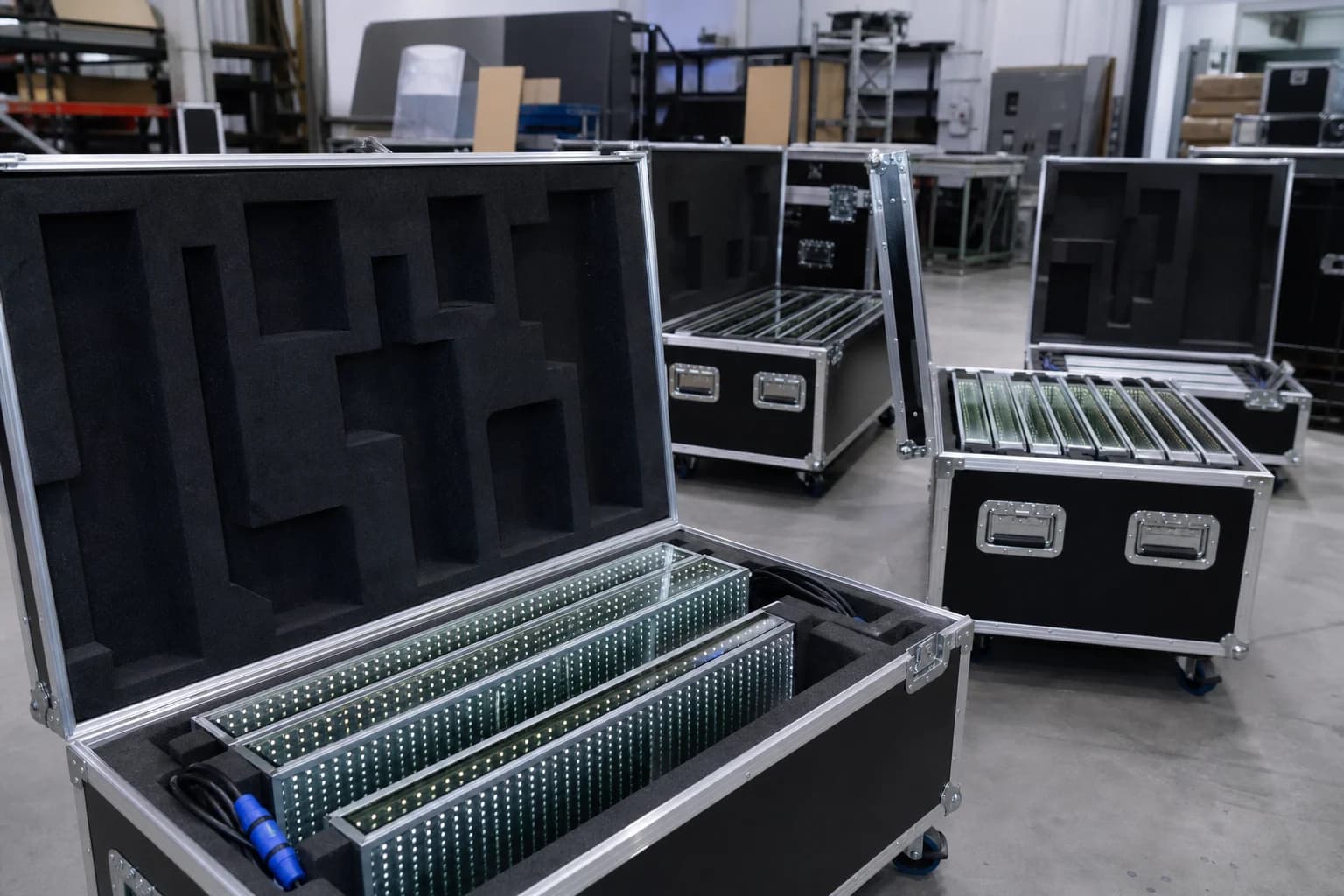
Exhibition infinity walls travel. Panel count, frame interfaces, and case packing have to survive load-in, live show, and strike without a factory tech on every call. Share booth footprint, wall width and height, maximum depth the freestanding or hardwall structure will accept, and whether the face sits flush, proud, or in a framed reveal. A 40 mm cavity and a 90 mm cavity are different optical products; quoting “full back wall” without a depth cap is how the crate arrives too thick for the extrusion. Modular arrays need labeled connectors and a repeatable hang sequence so a local crew can assemble without reinventing the stack each city.
Road-case discipline is part of the product, not an afterthought. Panels, frames, and drivers pack into protective cases with foam cutouts and labeled components so setup stays on the show clock. Spares for glass and drivers should travel with the kit when the program tours. Our exhibition booth focal wall case follows this logic — modular panels that assemble repeatably, pack for the road, and read from the aisle under hall light. Compact standard focal panels win when the calendar is tight and the face can stay rectangular; a full modular feature wall wins when the stand needs synchronized depth across a wide back wall. Do not invent lift points for a permanent lobby on a booth that must roll out in under two hours.
Power drops, hall rules, and campaign control presets
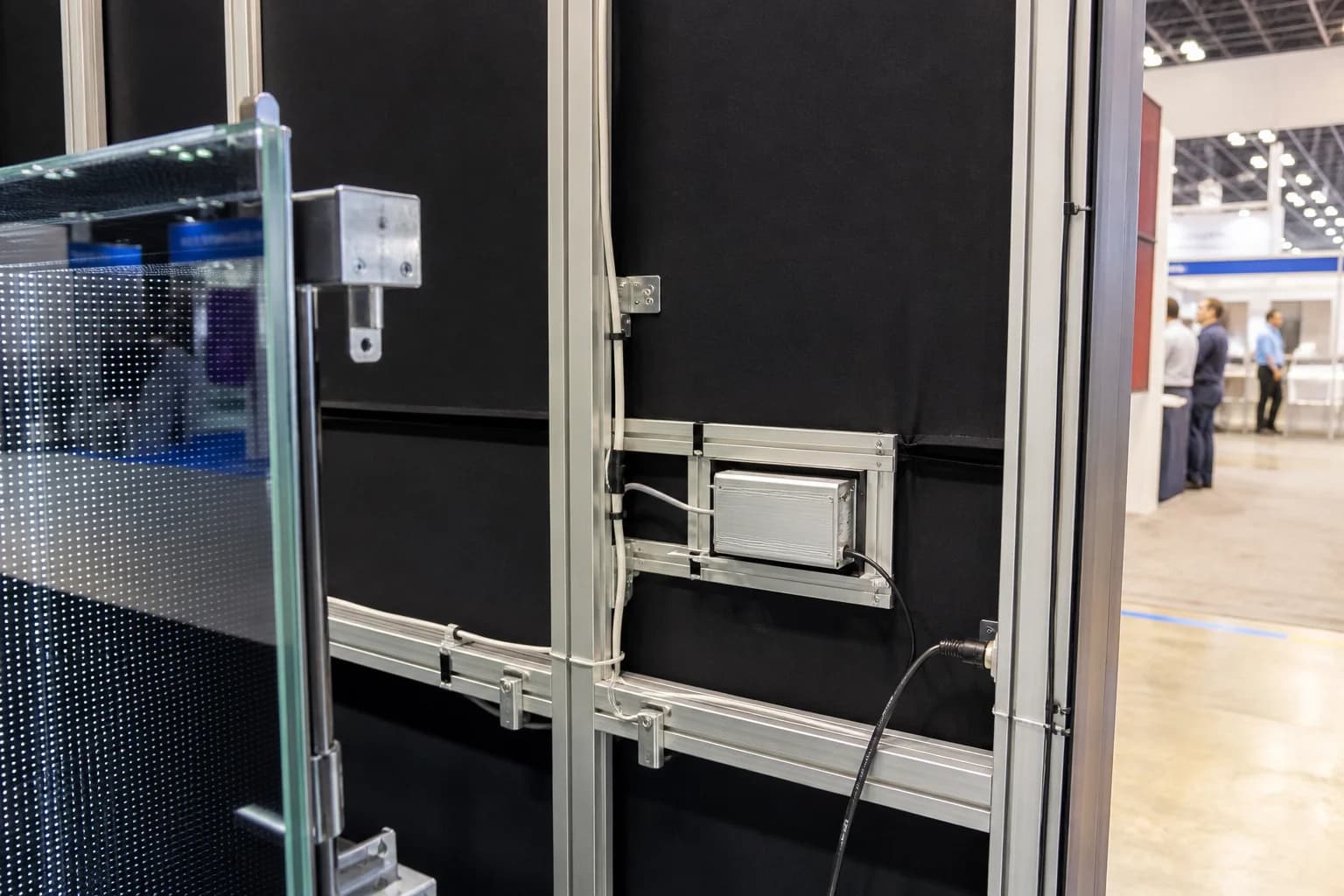
Exhibition power is not a hotel chase. Confirm venue voltage, available amperage on the booth drop, and whether union or hall rules restrict who lands drivers and terminations. Class 2 low-voltage paths and accessible driver bays matter when the wall must be serviced between sessions without opening sealed glass on the show floor. Under-sizing for a quiet lobby duty cycle is how a hall-facing wall dims and stripes by afternoon of day two — show weeks are long duty, high ambient, and often continuous during open hours.
Control should match the campaign, not a club cue stack. Static brand white or a single RGB preset is enough for many aisle heroes. Two or three campaign scenes (day open, evening reception, partner co-brand) cover most touring programs without a full DMX personality. Reserve venue-console tiers for activations that already own a show file. Mixing a static focal panel and a DMX portal on one vague “color-changing” line is how the electrician inherits the wrong controller at load-in. Our control-tier article maps static, RGB, and DMX; this brief only needs to name the tier, who owns the preset — brand, agency, or AV — and whether presets must change city to city without opening the optical cell.
What to send so the exhibition wall is buildable
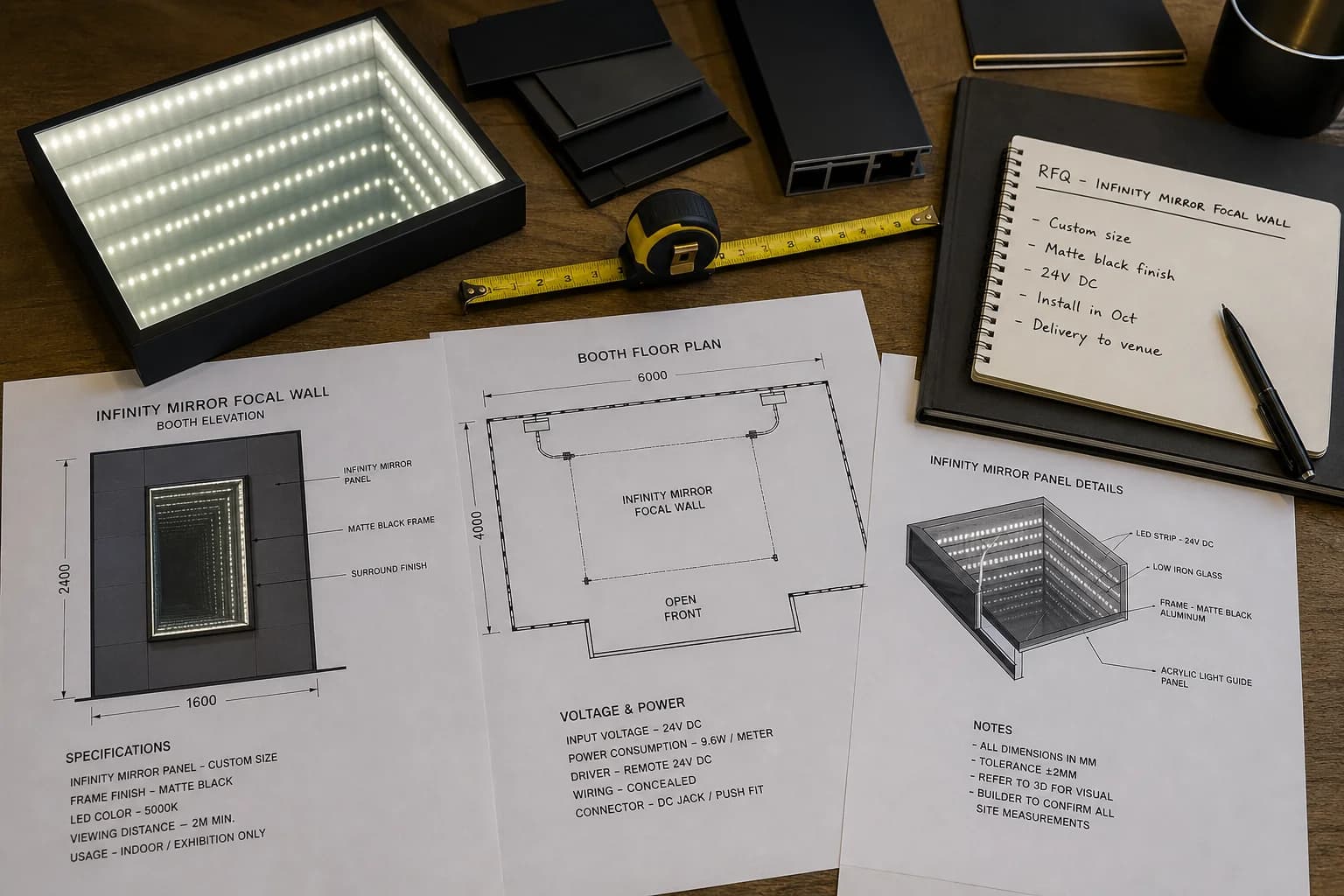
A useful RFQ for an exhibition infinity mirror is a short packet. Attach: booth footprint and wall width/height; max depth and flush/proud/reveal intent; freestanding versus hardwall versus hanging structure; photos or prior show references from the aisle approach; expected hall ambient and open hours; dwell (aisle hero, demo bay, meeting niche); whether the face must follow artwork or can be a published size band; control intent (static, campaign presets, or venue console); destination cities, voltage, and hall power notes; strike time and case constraints; and who approves — brand, agency, builder, or all three. If a touring spare kit is required, say so. If the date cannot move, say that too — calendar is often why a standard focal panel beats a full custom stack for the first show.
Send that packet to InfinityMir when a trade show focal wall or modular booth centerpiece is on the table. We respond with a buildable map: standard panel versus modular feature-wall path, optical stack for your aisle distances and hall ambient, frame and road-case assumptions, power and control notes, and the questions that still block glass. The exhibition booth focal wall we documented follows this logic — modular depth that packs, hangs, and reads under bright hall lighting — so the number you approve is tied to a drawing and a case list the crew can sequence, not to a still that never named the aisle.
Related capability
Exhibition booth focal wall caseManufactured Product Catalog
Explore Infinity Mirror Product Lines
Browse our full range of custom infinity mirror signs, letter systems, and feature walls — engineered with CAD shop drawings, UL/CE compliance, and export packing.
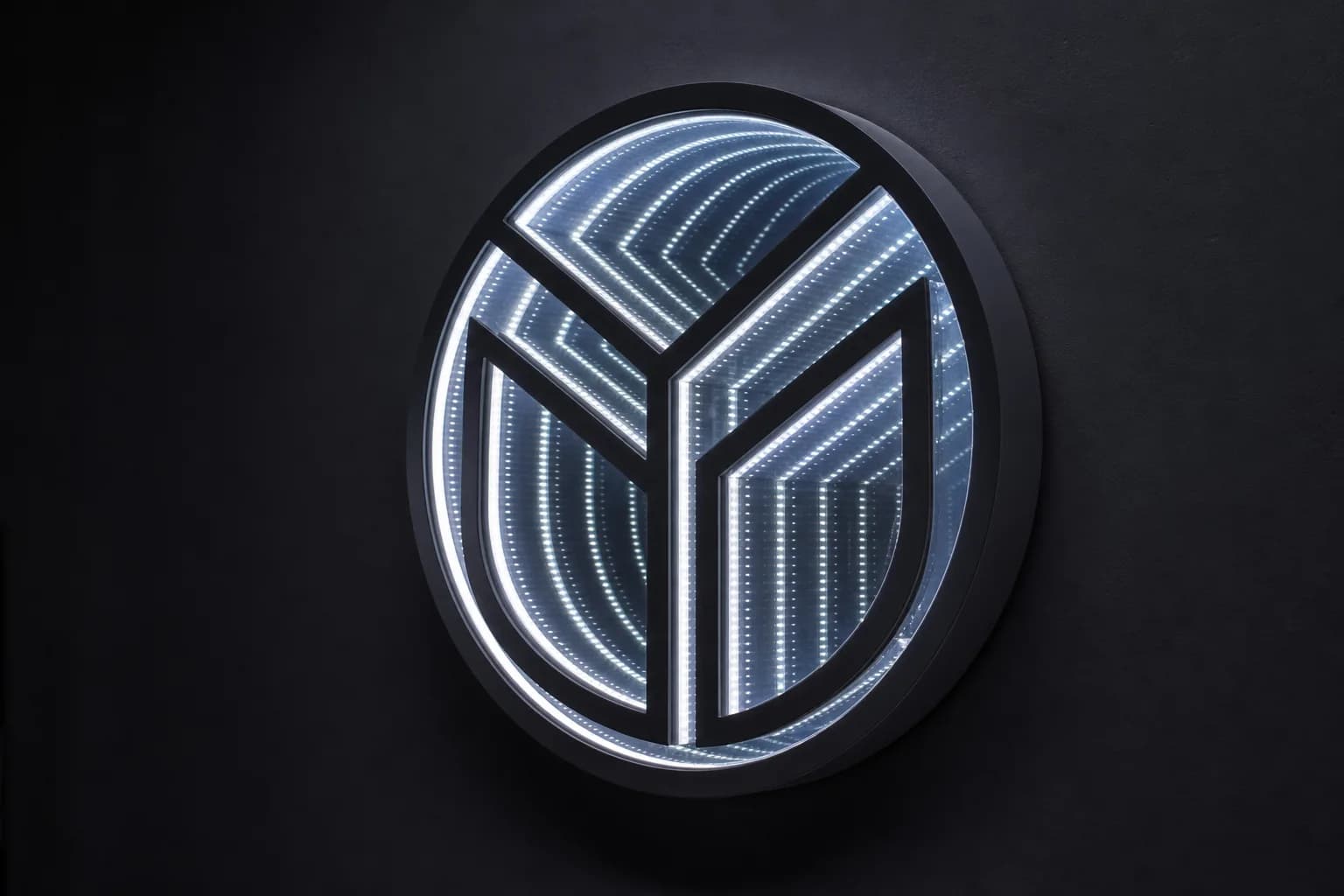
Infinity Logo Signs
Turn your brand mark into a custom infinity mirror logo sign — optical-grade glass, tuned LEDs, and endless depth engineered from vector artwork.
View Infinity Logo Signs details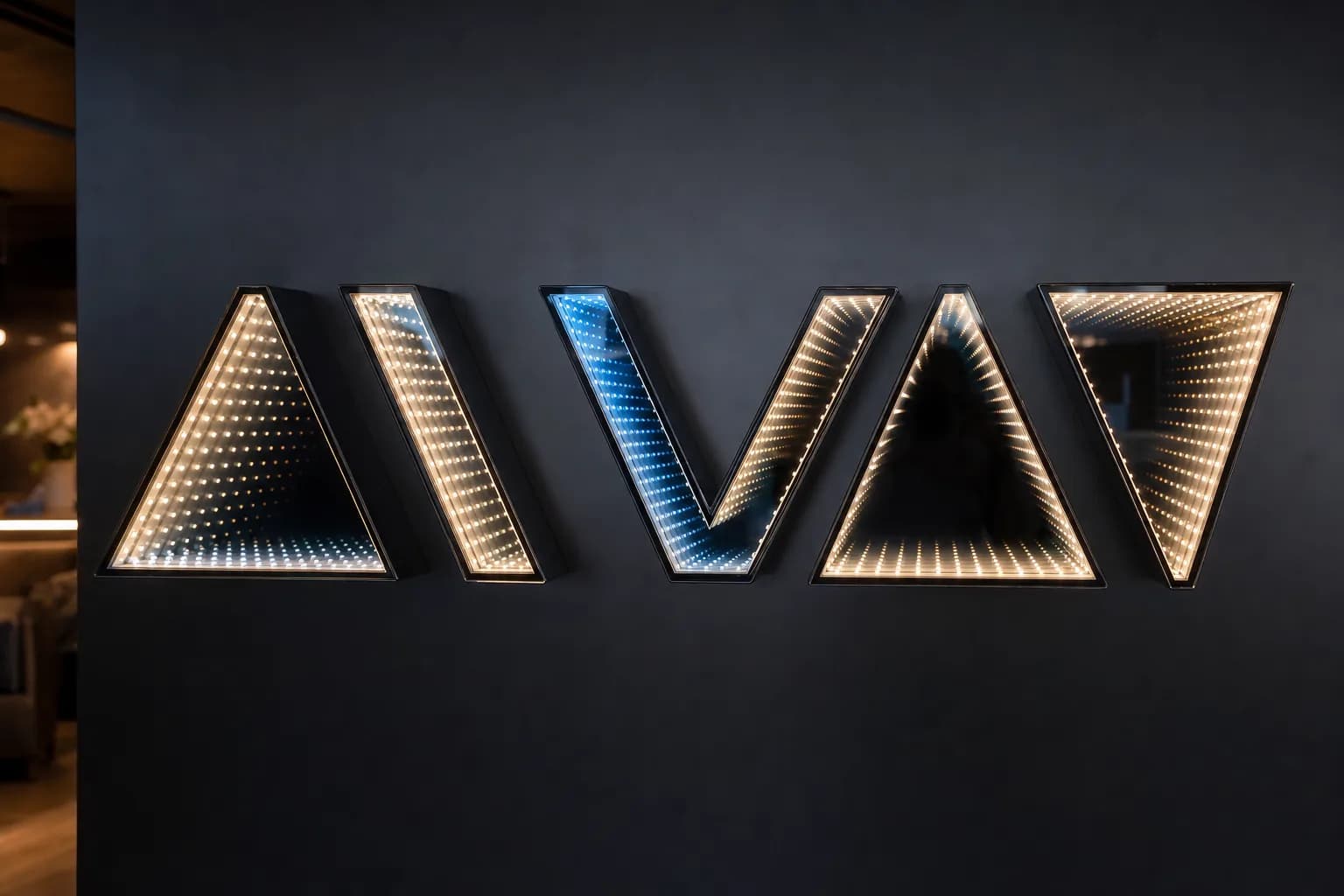
Infinity Mirror Letter Systems
Custom infinity mirror letter systems and channel signs built as individual optical cells for even depth across the whole wordmark.
View Infinity Mirror Letter Systems details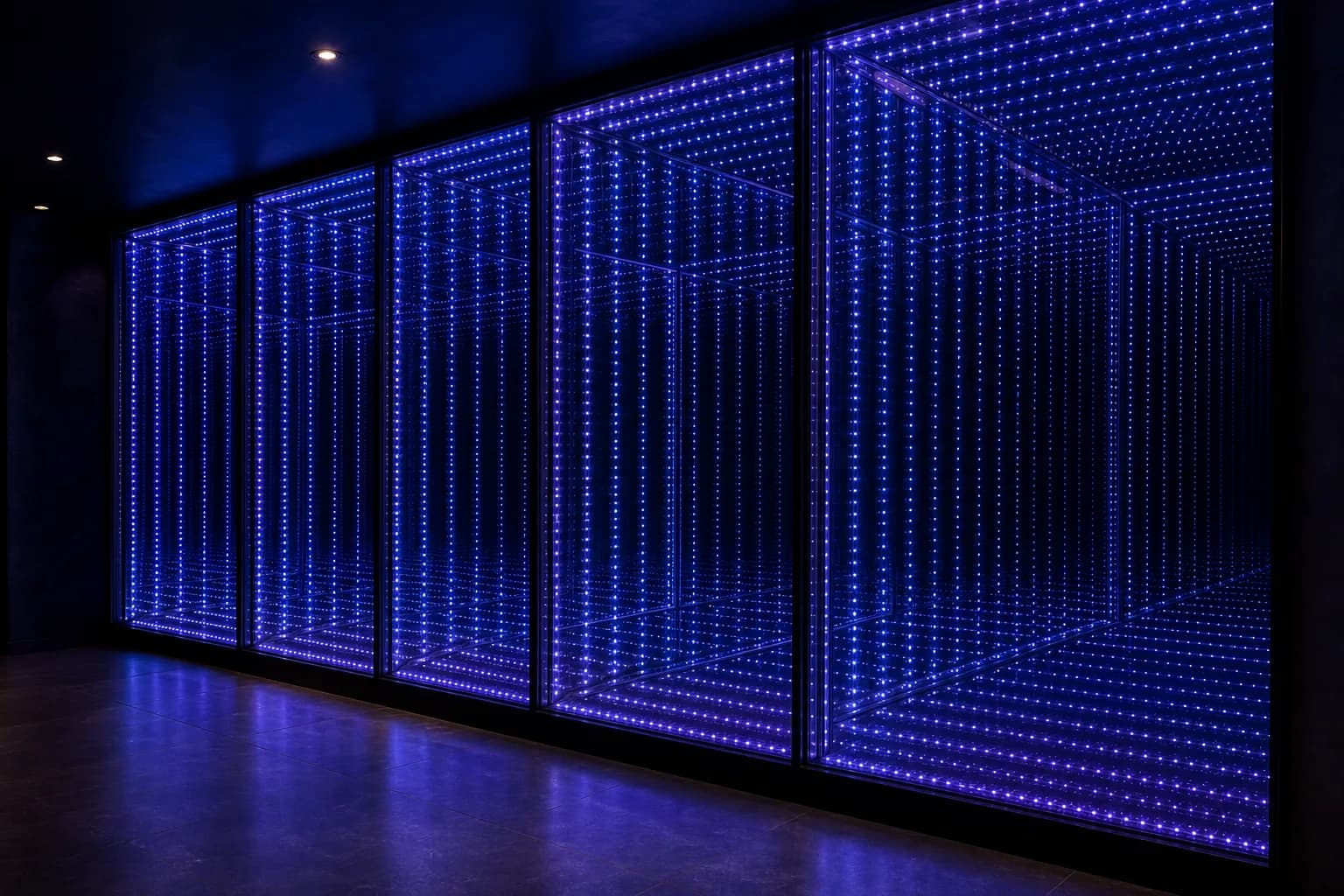
Feature Walls & Portals
Large-format infinity mirror feature walls and portals with synchronized multi-zone control, 24/7 heat management, and hidden service access.
View Feature Walls & Portals details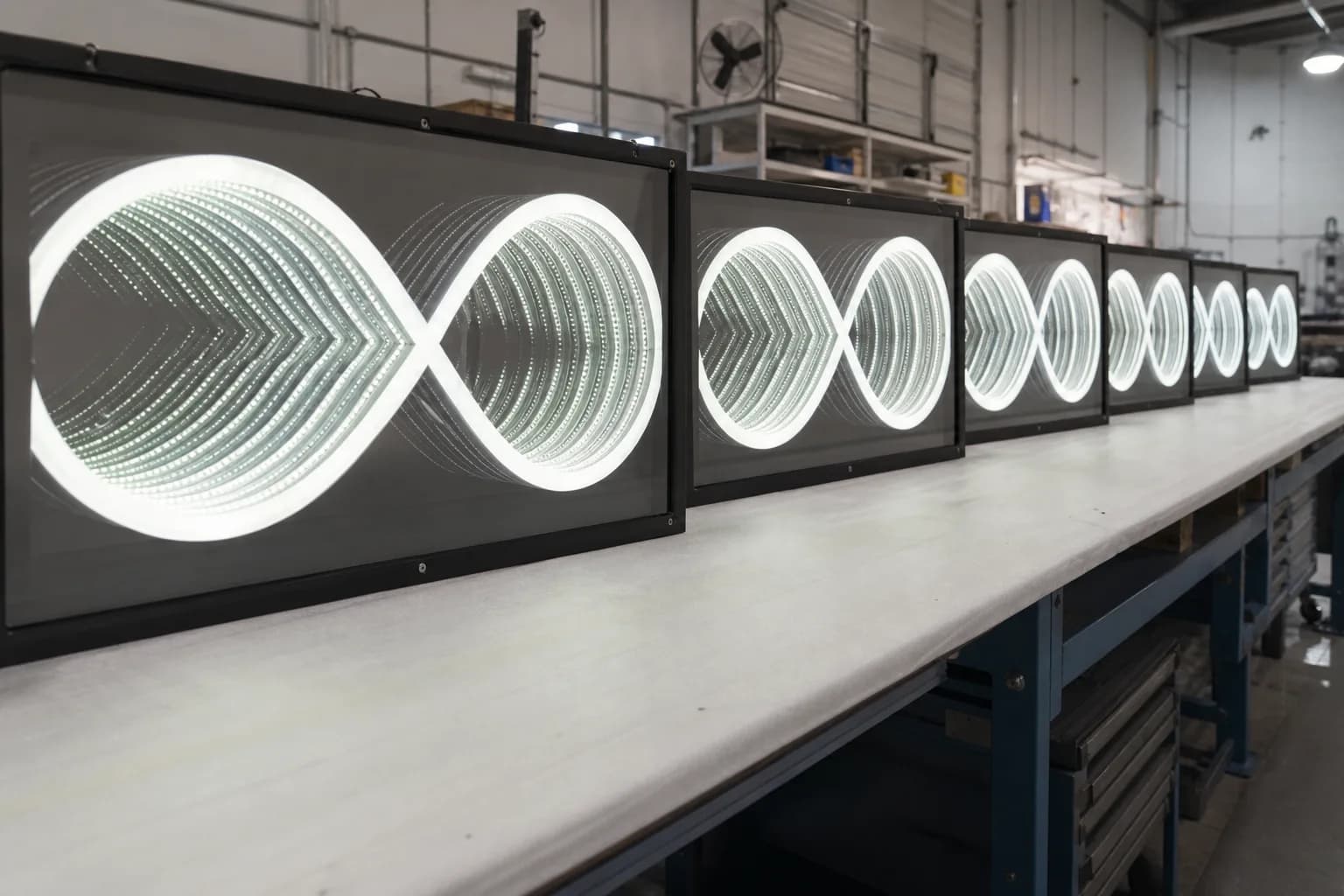
OEM & Rollout Programs
Private-label OEM & multi-location infinity mirror rollout programs with golden samples, controlled BOMs, and UL/CE electrical paths.
View OEM & Rollout Programs details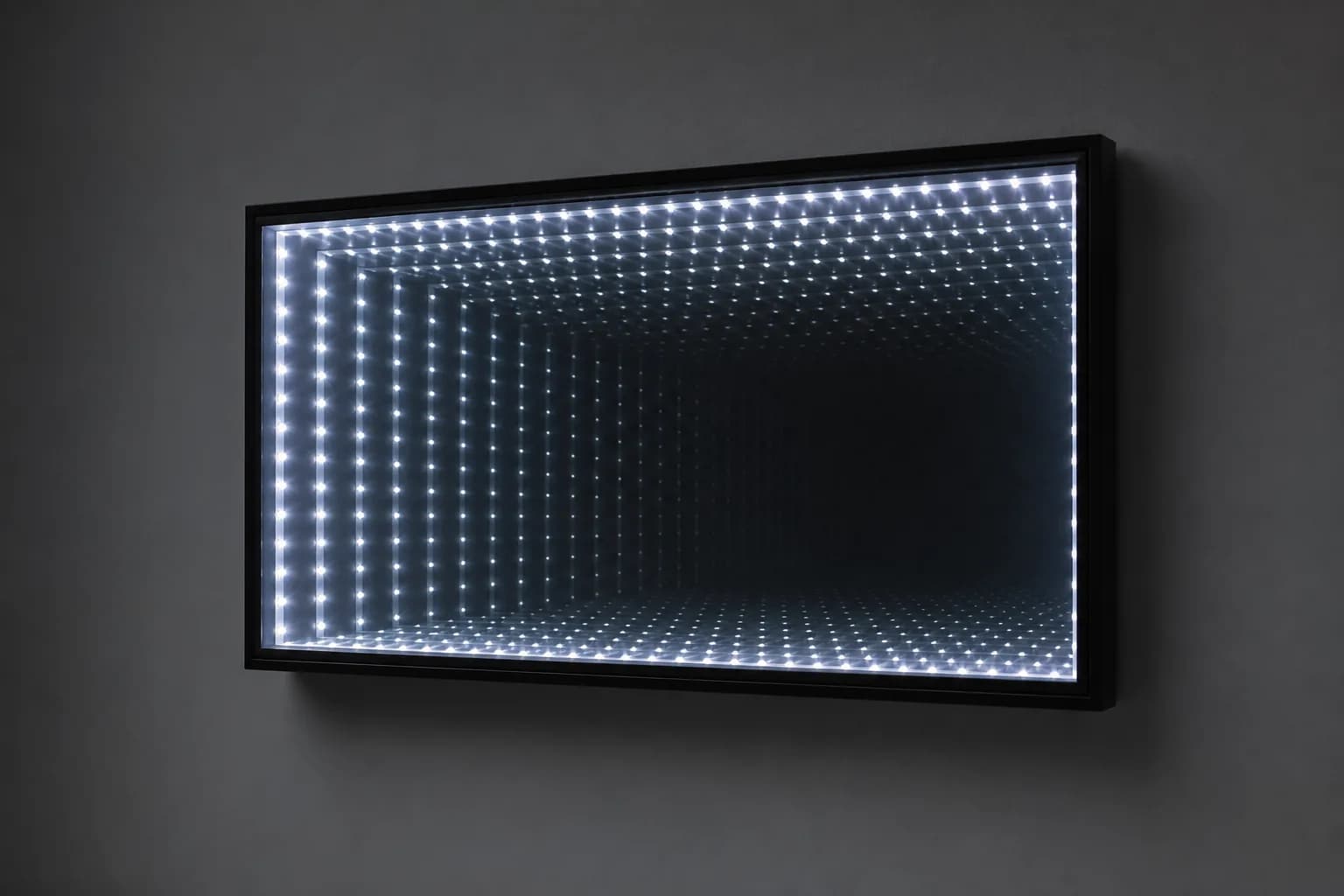
Standard Focal Panels
Fixed-size, ready-to-order standard infinity mirror focal panels with standard drivers and mounting kits for fast, predictable projects.
View Standard Focal Panels details