How the Infinity Mirror Effect Works: Glass Spacing, Mirror Layers & the Endless Tunnel
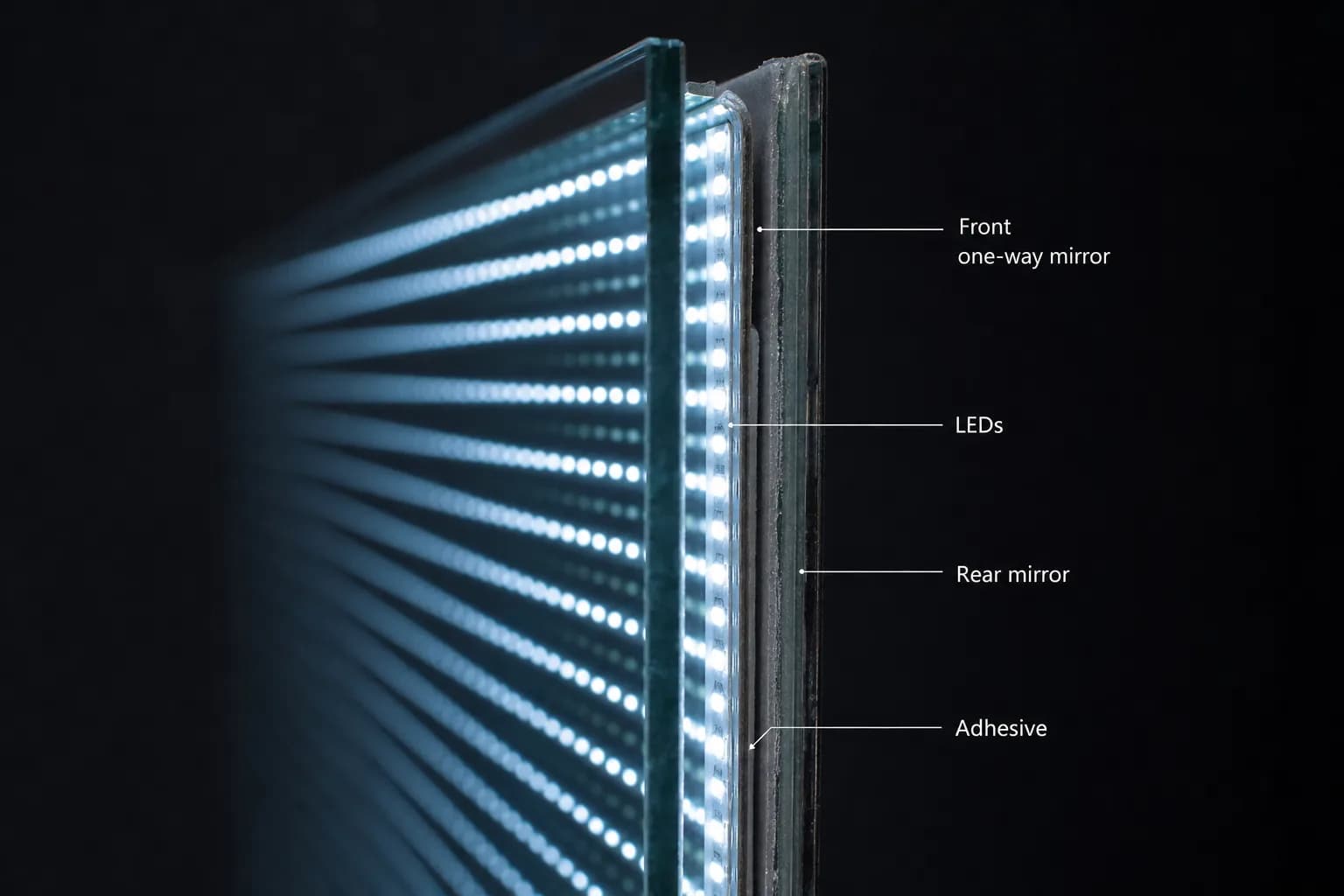
The infinity mirror effect lives or dies on three variables — mirror layers, glass spacing, and LED placement. Here is how we tune them so the mirror tunnel effect reads deep and even instead of shallow or glitchy.
Mirror layers: the one-way coating does the heavy lifting
A cheap half-silvered film gives a dim, greenish tunnel with visible tint on every reflection. We specify optical-grade one-way coatings with a controlled reflection-to-transmission ratio so the first reflection is bright and each subsequent one steps down cleanly. That single coating choice is the biggest driver of perceived infinity mirror effect quality.
The back mirror matters too: it needs to be flat and fully reflective, because any waviness in the mirror layers multiplies across the tunnel and makes the depth look wobbly — a defect that shows up clearly in an infinity mirror layers diagram but is hard to fix after fabrication.
Glass spacing sets the mirror tunnel depth
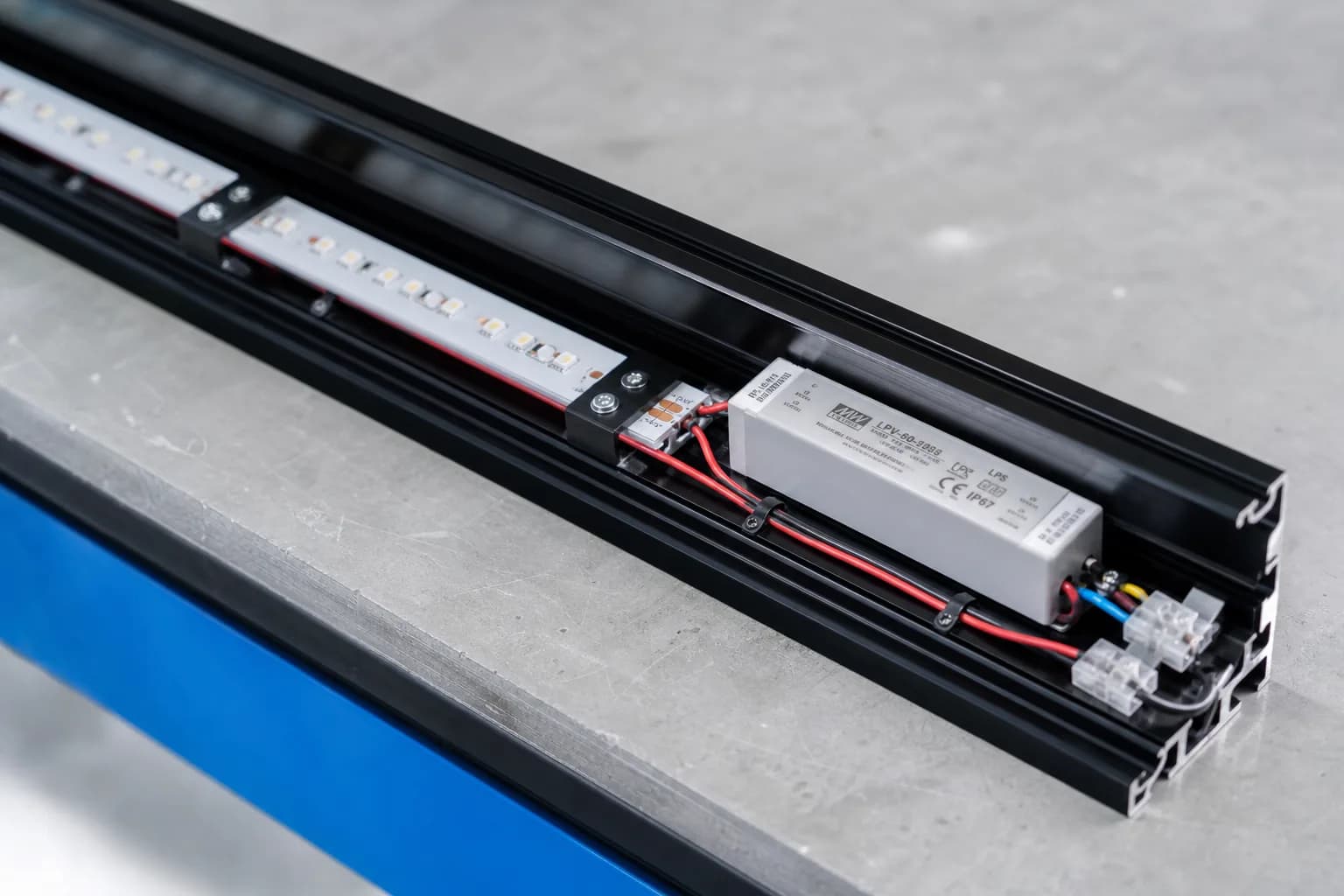
The gap between the two glass layers controls how far apart each reflection appears, directly shaping the mirror tunnel effect. A wider spacing reads as a deeper, more dramatic tunnel; a narrow gap gives a tighter, more contained effect. We tune glass spacing to viewing distance — a hotel lobby feature wall seen from across a room wants different spacing than an infinity logo sign viewed at arm's length.
Spacing also has to stay parallel across the whole piece. If the layers drift out of parallel, the tunnel skews to one side, which is why we control it in fabrication rather than leaving it to on-site assembly. For a real-world application of this tuning, see our hotel lobby infinity mirror feature wall project.
LED placement and diffusion for a clean infinity mirror effect
LEDs are placed around the perimeter of the cavity and hidden from direct view, so you see the reflected tunnel rather than the diodes themselves. Density and diffusion are tuned so individual points blend into a continuous line of light — the enemy is visible dots or a dotted first ring that breaks the infinity mirror effect.
For colored and RGB builds, we keep the LED plane even so color stays consistent as it recedes through the mirror tunnel. The result is an infinity mirror effect that looks engineered, not improvised. The same discipline applies whether the build is an infinity logo sign, a letter system, or a full-scale feature wall.
Related capability
Discuss your projectManufactured Product Catalog
Explore Infinity Mirror Product Lines
Browse our full range of custom infinity mirror signs, letter systems, and feature walls — engineered with CAD shop drawings, UL/CE compliance, and export packing.
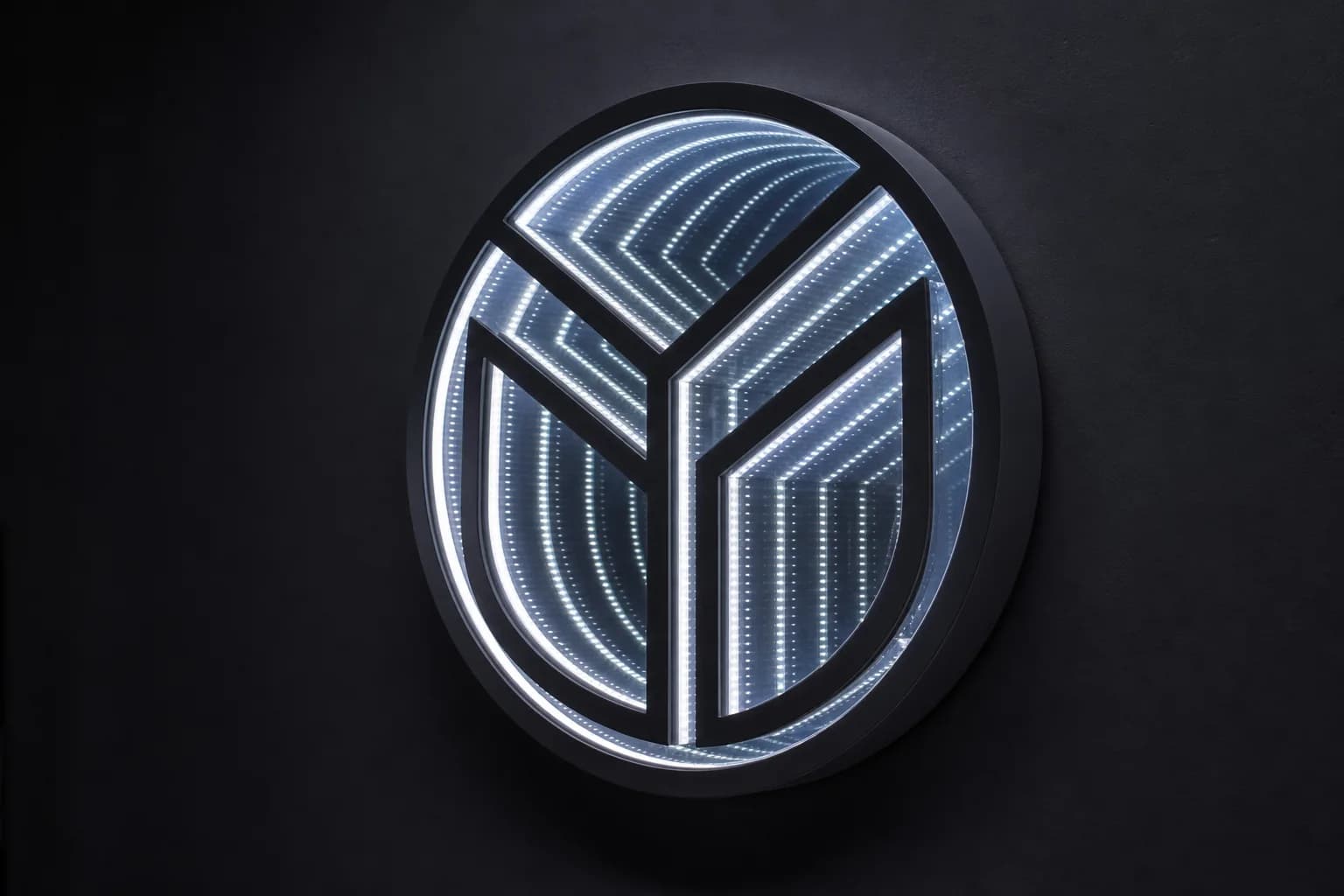
Infinity Logo Signs
Turn your brand mark into a custom infinity mirror logo sign — optical-grade glass, tuned LEDs, and endless depth engineered from vector artwork.
View Infinity Logo Signs details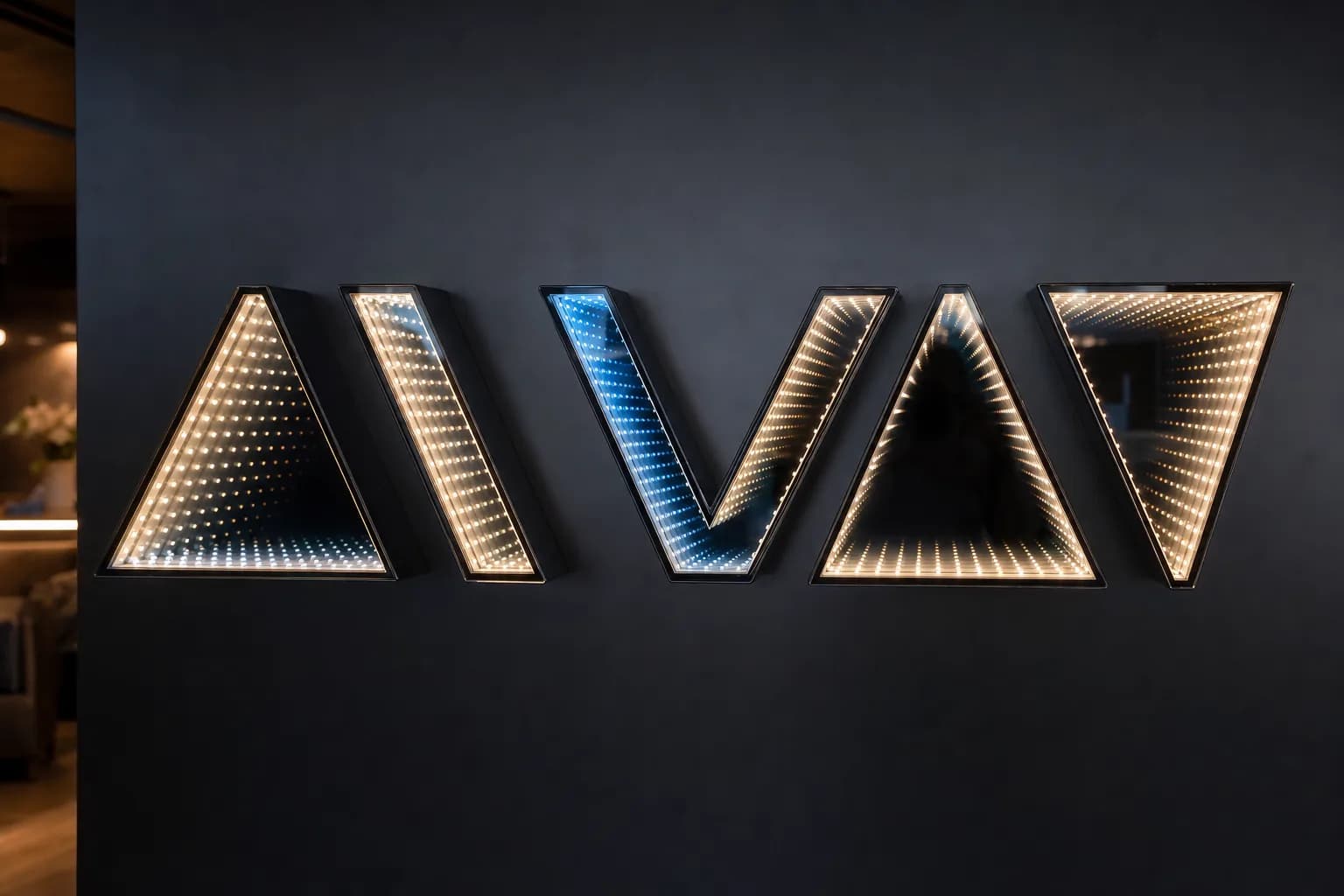
Infinity Mirror Letter Systems
Custom infinity mirror letter systems and channel signs built as individual optical cells for even depth across the whole wordmark.
View Infinity Mirror Letter Systems details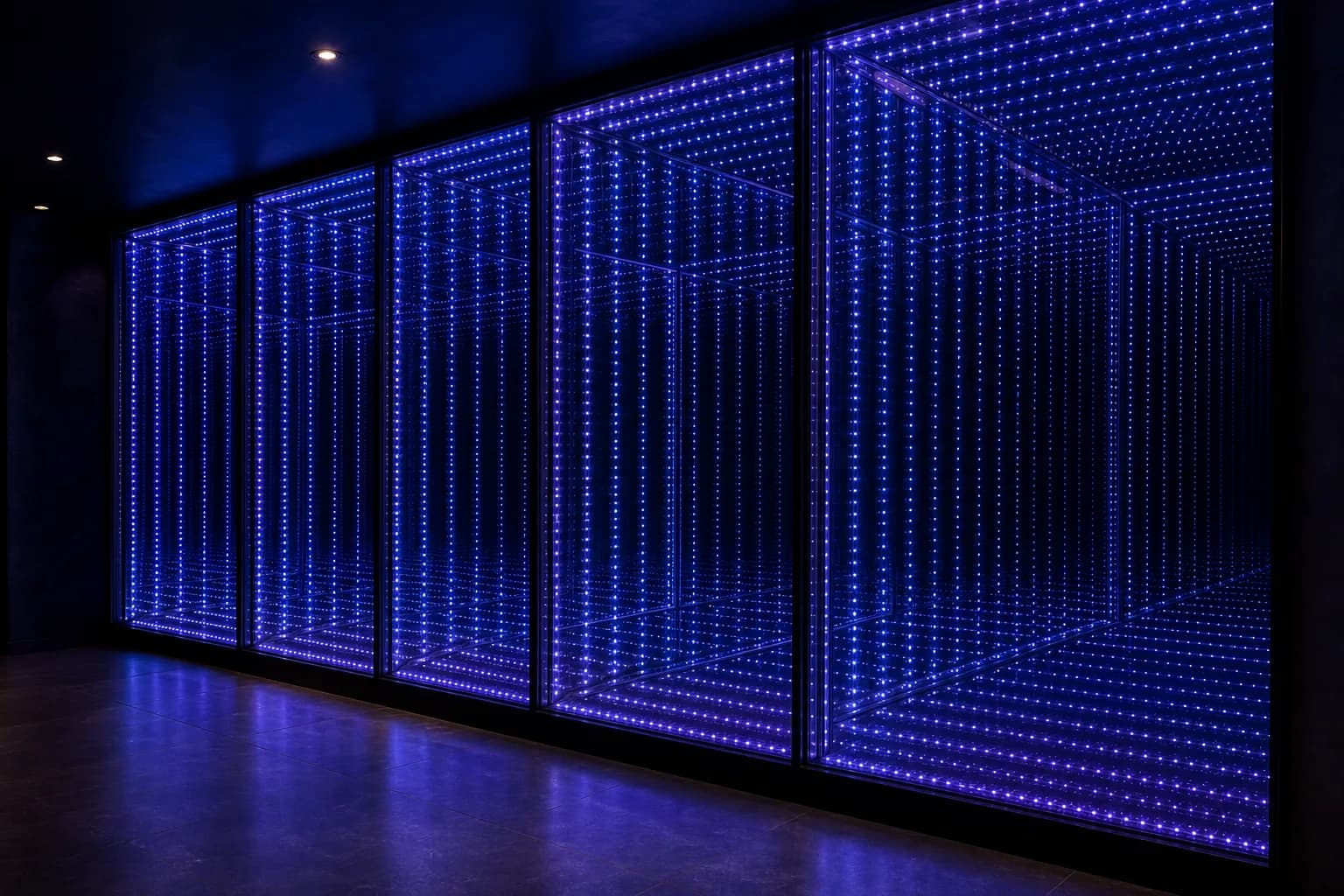
Feature Walls & Portals
Large-format infinity mirror feature walls and portals with synchronized multi-zone control, 24/7 heat management, and hidden service access.
View Feature Walls & Portals details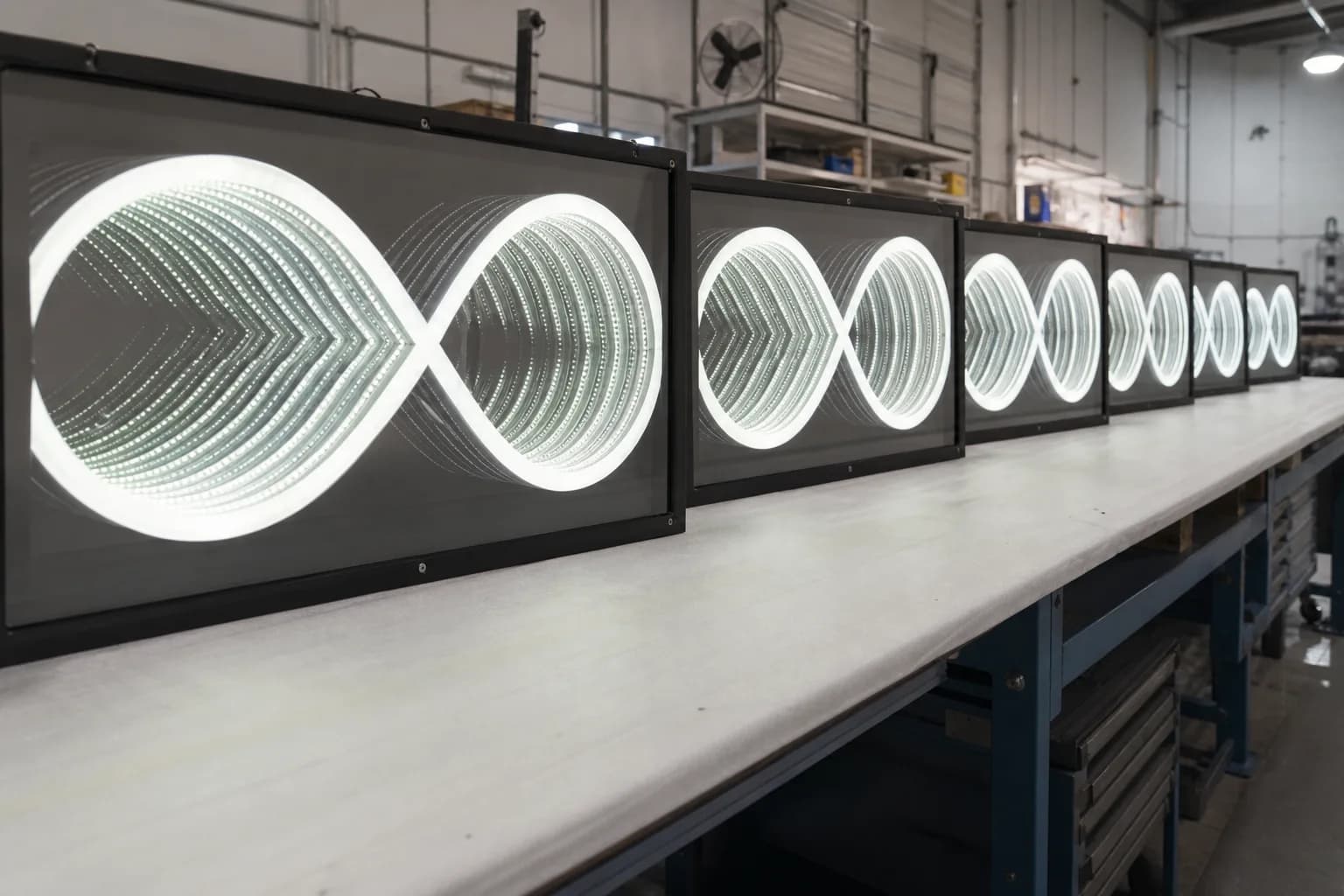
OEM & Rollout Programs
Private-label OEM & multi-location infinity mirror rollout programs with golden samples, controlled BOMs, and UL/CE electrical paths.
View OEM & Rollout Programs details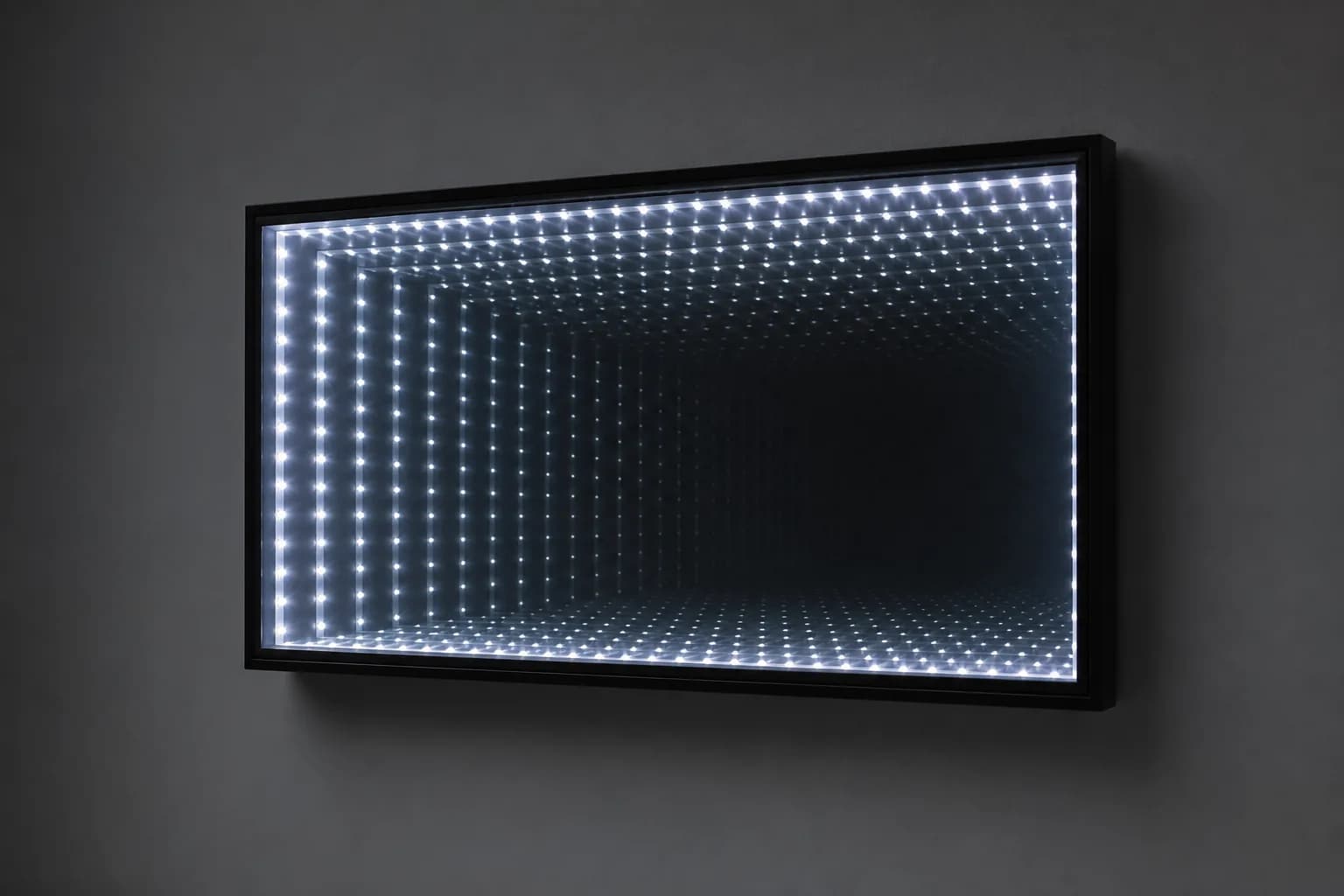
Standard Focal Panels
Fixed-size, ready-to-order standard infinity mirror focal panels with standard drivers and mounting kits for fast, predictable projects.
View Standard Focal Panels details