Maintenance & Service Access for Infinity Feature Walls
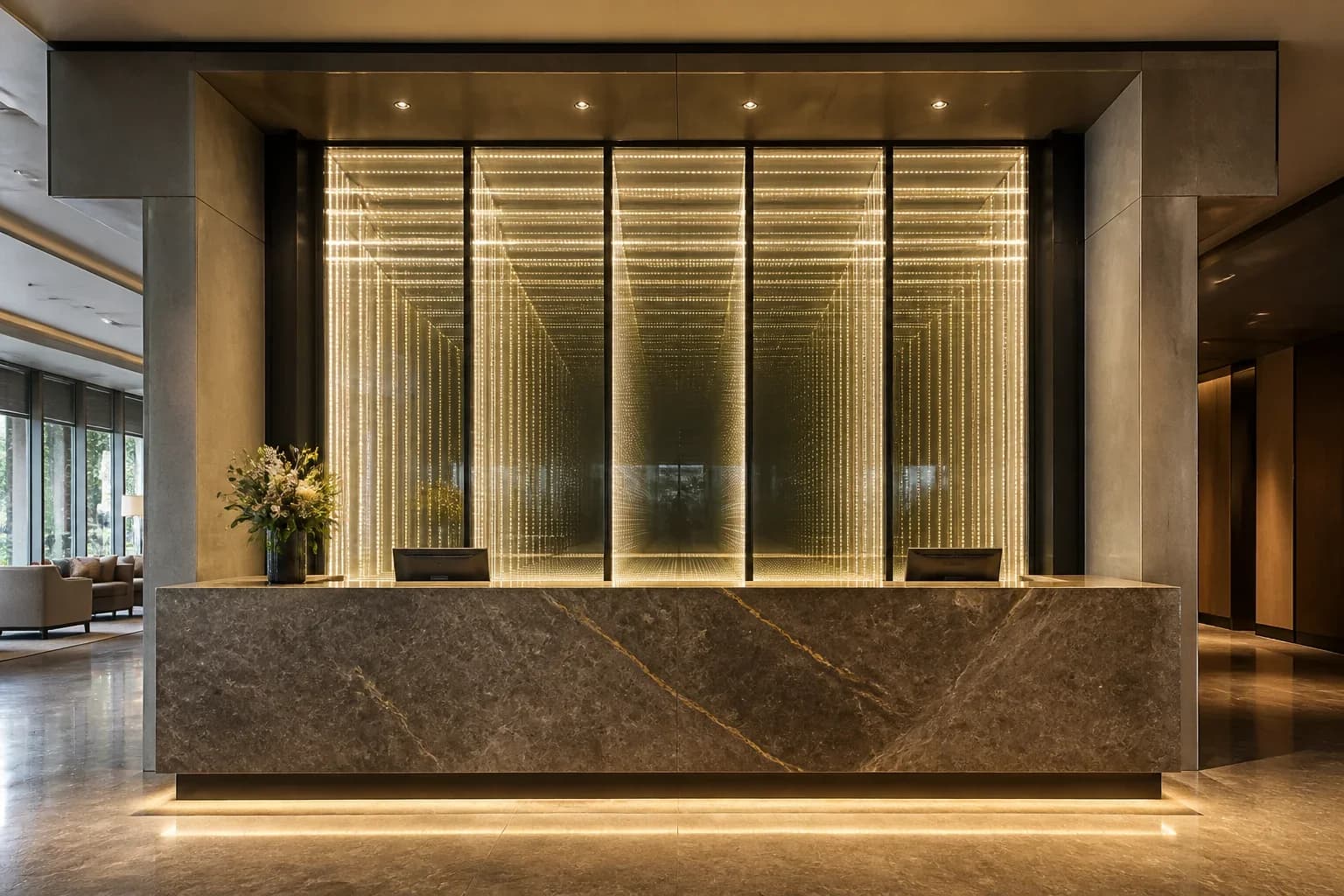
How to plan infinity feature wall maintenance and service access — rear hatches, bay swaps, labeled drivers, and spare kits — so facilities can fix a wall without demolishing millwork.
Why sealed infinity feature walls become facilities problems
An infinity feature wall looks finished when the last reveal closes and the depth reads endless under lobby light. That is also the moment many projects quietly lock facilities out. Buyers often approve glass spacing, panel count, and color scenes first, then treat service access as a millwork detail to “figure out on site.” After drywall, stone, and upholstered portals wrap the niche, a failed driver or dim bay means cutting finished surfaces or flying in a factory tech for a job that should have been a labeled swap.
This guide is for hotel and retail facilities teams, GCs, architects, interior designers, and sign contractors who need infinity feature wall maintenance scoped before metal is cut. Guests judge the illusion; operators judge whether a dark panel can be restored between breakfast and check-in. Treat rear access, bay-level removability, driver placement, and spare kits as fabrication deliverables — the same way you already treat niche depth and lifting assumptions — not as punch-list improvisation.
What fails first — and why you should not open the optical face
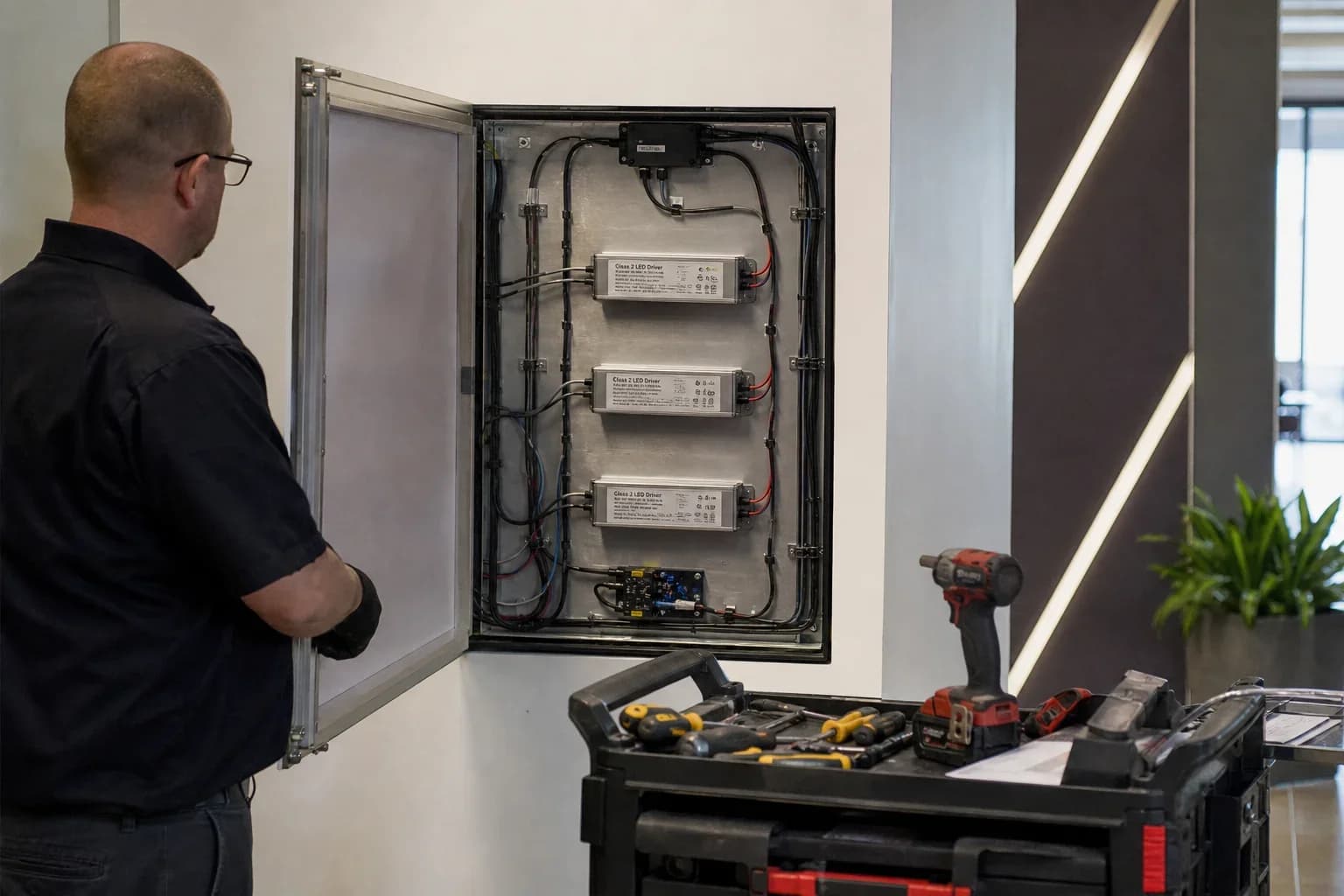
On continuous-run commercial walls, drivers and power supplies fail more often than optical glass. Controllers, data cables, and LED segments follow. Coatings and glass stacks rarely need routine service if they were handled and crated correctly; opening the face for a power issue scratches the very surface guests photograph. A maintainable infinity feature wall keeps the mirrored cavity closed and routes service to electronics and mounts behind or beside it.
Design the access path around the component that will actually be replaced. Drivers need clear labeling, strain-relieved connectors, and enough cavity volume to remove a unit without bending adjacent harnesses. Multi-zone RGB or DMX walls also need address maps posted or filed with facilities so a swapped brick does not leave one bay chasing a different personality than its neighbors. If your brief includes night-long duty cycles, pair this access plan with thermal paths sized for continuous run — the same discipline covered in our heat-management guide — because hot, unreachable drivers are the fastest path to early callbacks.
Service access patterns that keep the illusion intact
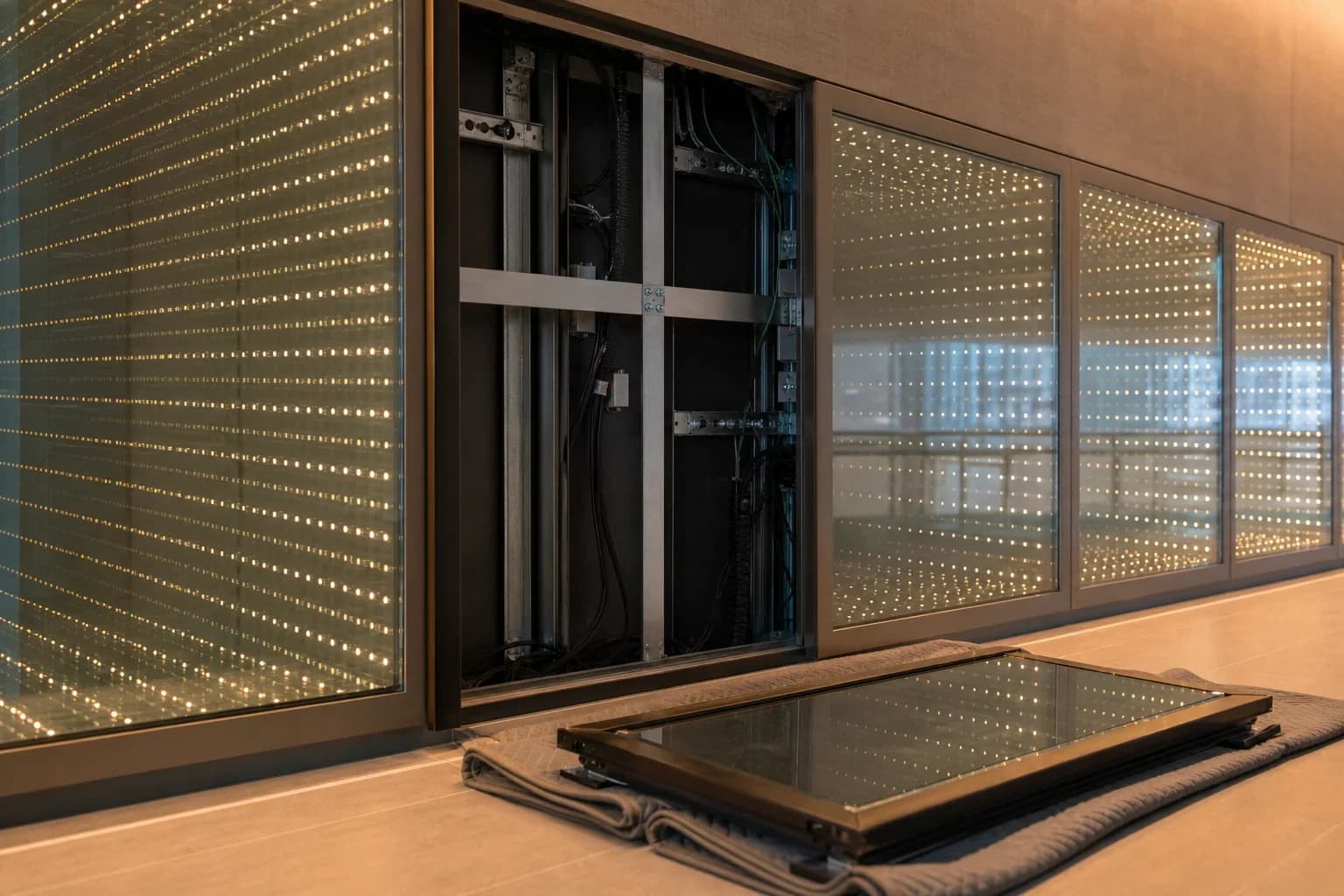
Four patterns cover most lobby and portal builds. A rear service hatch or chase works when there is a back-of-house corridor, electrical closet, or accessible void behind the wall — preferred for hotel reception features because guests never see a panel removed. Removable front bays on soft pads suit walls with no rear circulation: one optical cell comes out while neighbors stay live, provided seals and reveal metal are designed for repeat removal. Side or bottom chase doors hide in millwork returns when depth is shallow but a plinth or jamb can open. Fully sealed decorative faces with no documented path should be rejected in shop drawing review — they photograph well at opening and punish the property for years.
Access geometry belongs on the elevation, not in a verbal promise. Call out hinge or lift-off hardware, clear opening size for the largest driver, cable slack for service, and whether a lift or two-person handling is assumed for heavy glass. Coordinate with stone, metal, and soft-goods trades early so a hinged access door is not trapped behind a fixed marble return. The hotel lobby feature wall case we documented for hospitality follows this logic: synchronized multi-panel depth in front, hidden maintenance paths engineered for around-the-clock operation behind.
Multi-panel walls: bay swaps, labeling, and spare kits
Large feature walls are rarely one sealed box. They are arrays of optical cells that must read as one surface. Service planning should match that architecture: each bay gets an ID that matches the shop drawing, driver serials, and any DMX or scene address block. When facilities replace a supply, they should know which bay went dark without guessing from the guest side. Sync notes matter too — after a swap, a short verification cue (full white, brand color, blackout) confirms the repaired bay still tracks its neighbors.
Spare kits turn midnight failures into inventory pulls. For continuous-run lobbies and nightlife portals, specify a spare-driver ratio, labeled interconnects, and — when LED plane risk is real — a spare segment or module strategy agreed at RFQ. Document torque, gasket, and glass-handling notes so a local facilities crew or preferred electrician can finish the job without improvising on coated mirrors. OEM rollouts multiply this need: identical labeling and kit contents across sites keep brand ops from inventing a new procedure per city.
Commissioning is the first maintenance rehearsal. Before millwork closes, dry-fit every hatch, prove a driver can be removed and reseated, photograph labels, and hand facilities a one-page map: bay IDs, fuse or breaker references, voltage, and who to call for optical damage versus power swaps. A wall that only opened correctly under factory light with the builder present is not yet serviceable.
What to send so maintenance is buildable — not a change order

A useful RFQ for infinity feature wall maintenance names overall wall size and panel grid, niche depth, whether rear, side, or front-bay access is available, and photos or elevations of surrounding millwork and stone. Call out duty cycle (lobby hours vs 24/7), control tier, destination voltage and listing market, who will perform first-line service, and any landlord or life-safety limits on open cavities. Ask for spare-kit quantities up front if the property cannot tolerate multi-day dark bays.
Send those inputs to InfinityMir when a feature wall or branded portal is on the table. We respond with a buildable service map — access type per bay, driver and heat placement, labeling scheme, spare recommendations, and install notes your GC and facilities team can keep — so the endless depth guests love stays repairable without demolishing the finish work that made it look permanent.
Related capability
Hotel lobby feature wall caseManufactured Product Catalog
Explore Infinity Mirror Product Lines
Browse our full range of custom infinity mirror signs, letter systems, and feature walls — engineered with CAD shop drawings, UL/CE compliance, and export packing.
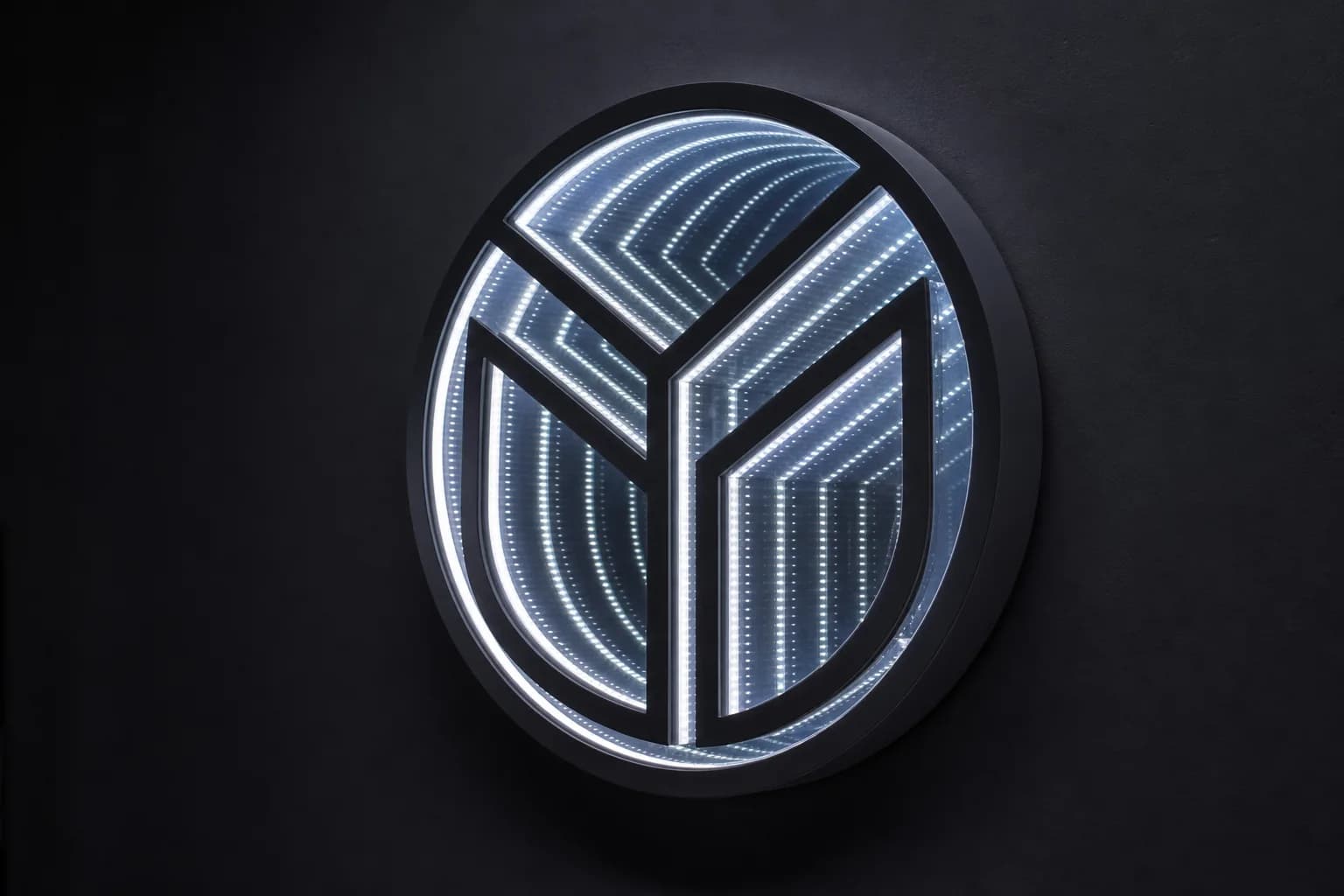
Infinity Logo Signs
Turn your brand mark into a custom infinity mirror logo sign — optical-grade glass, tuned LEDs, and endless depth engineered from vector artwork.
View Infinity Logo Signs details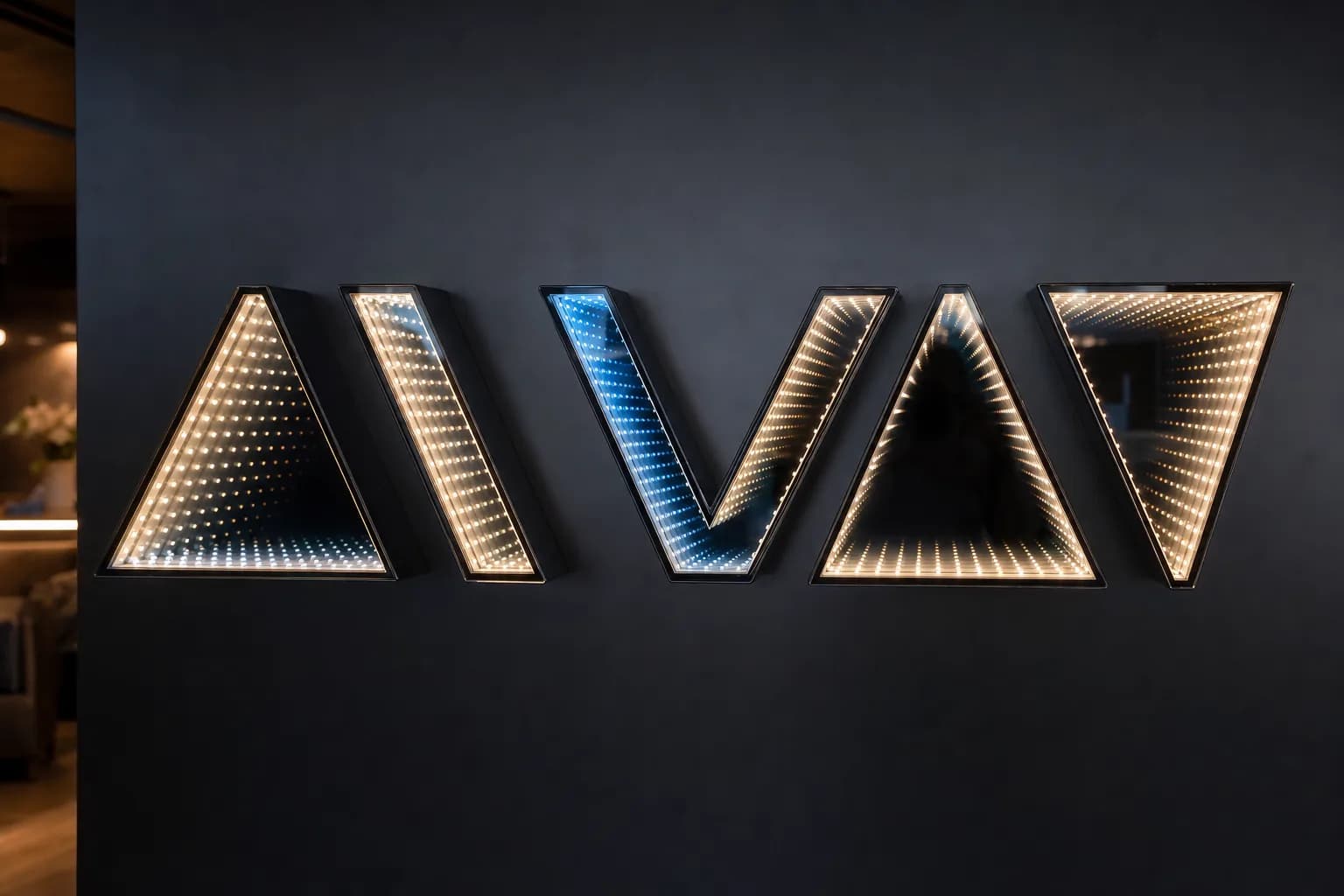
Infinity Mirror Letter Systems
Custom infinity mirror letter systems and channel signs built as individual optical cells for even depth across the whole wordmark.
View Infinity Mirror Letter Systems details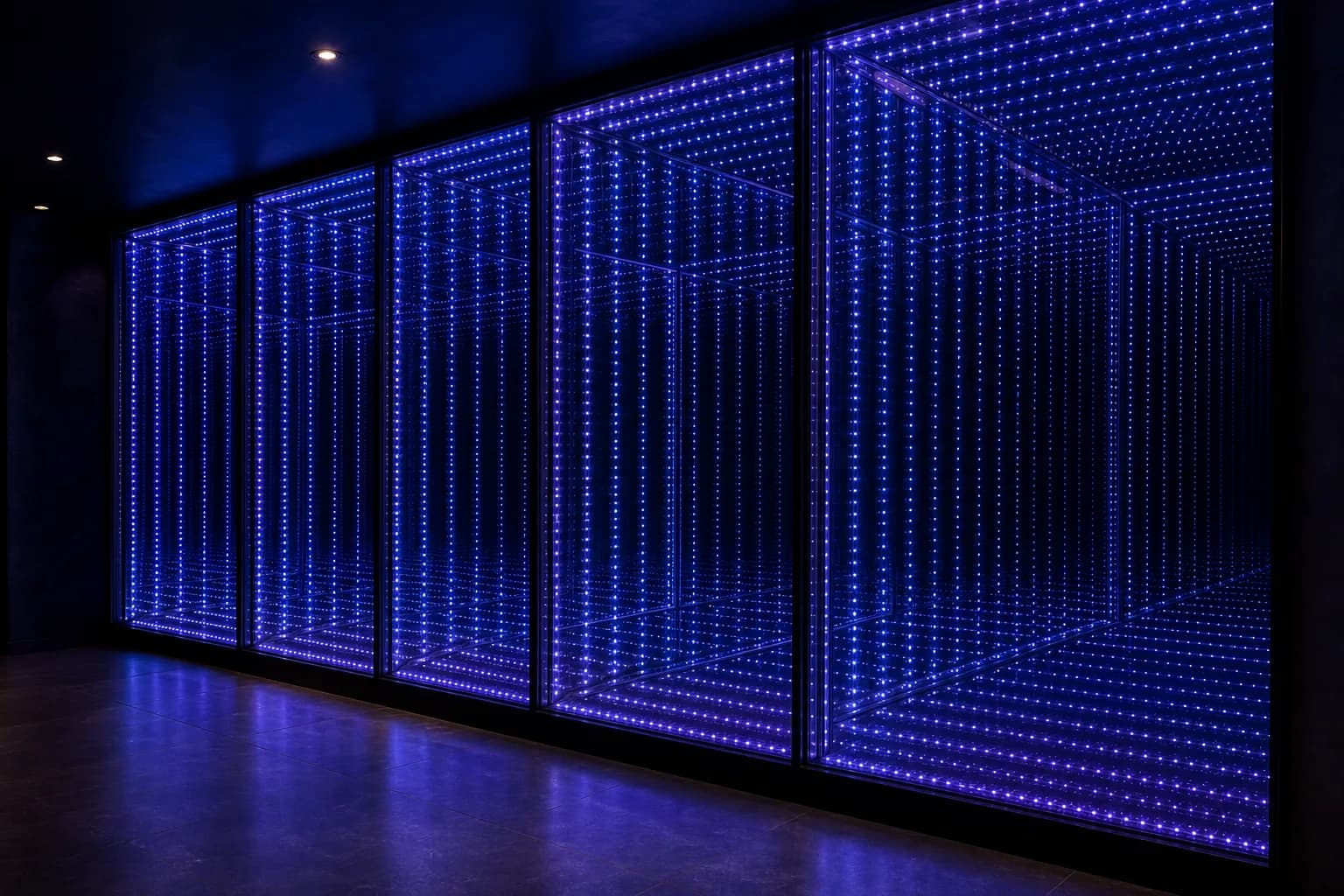
Feature Walls & Portals
Large-format infinity mirror feature walls and portals with synchronized multi-zone control, 24/7 heat management, and hidden service access.
View Feature Walls & Portals details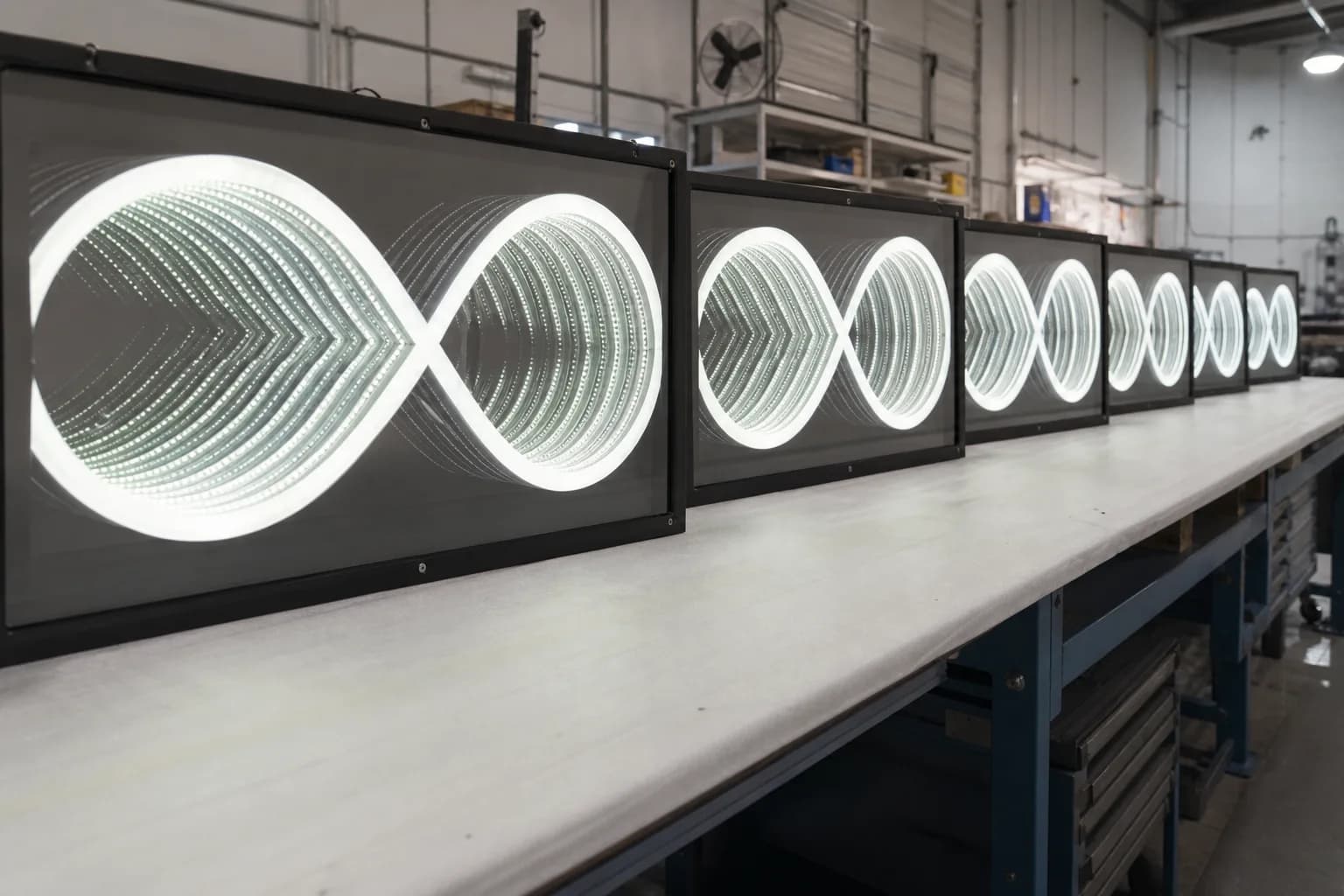
OEM & Rollout Programs
Private-label OEM & multi-location infinity mirror rollout programs with golden samples, controlled BOMs, and UL/CE electrical paths.
View OEM & Rollout Programs details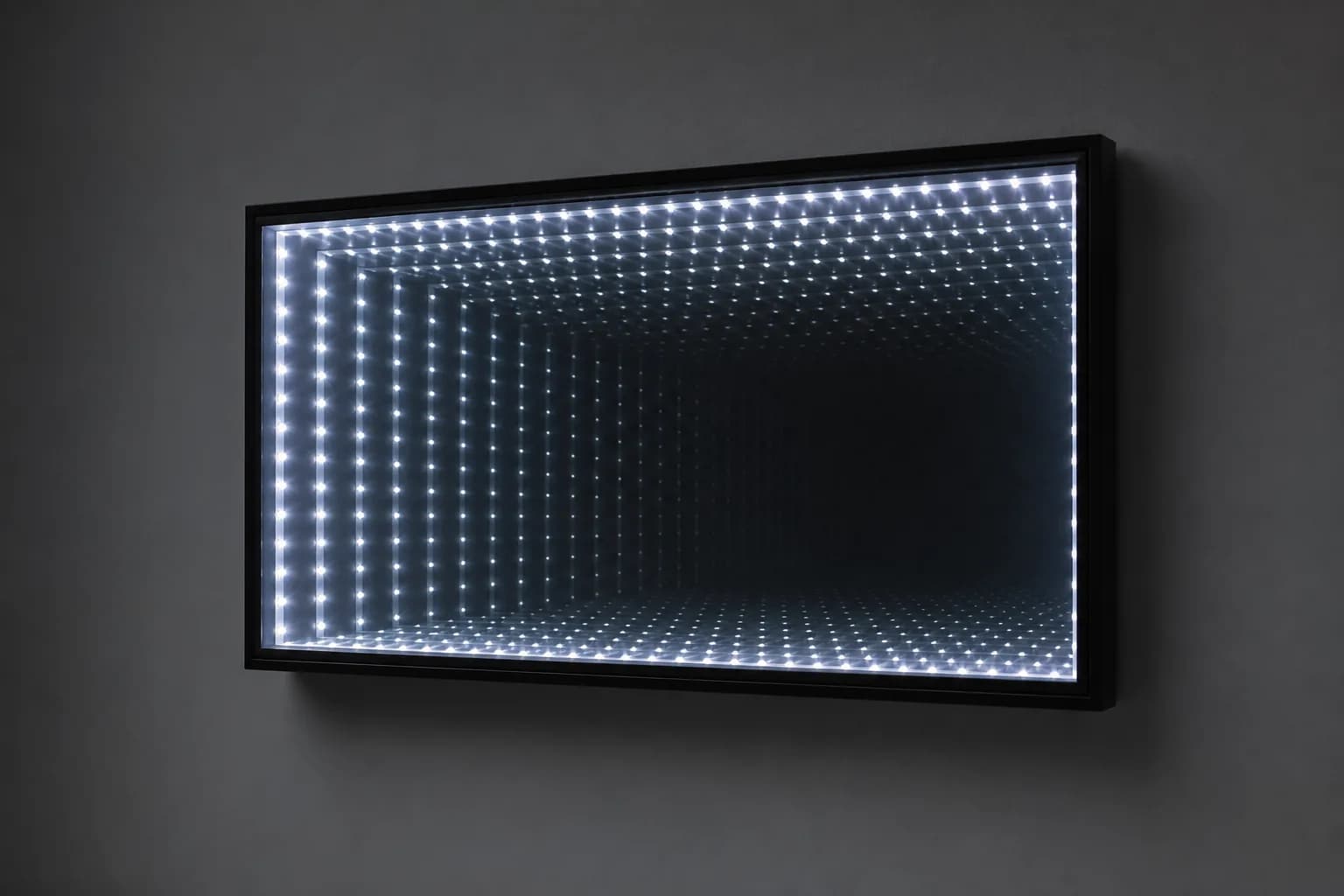
Standard Focal Panels
Fixed-size, ready-to-order standard infinity mirror focal panels with standard drivers and mounting kits for fast, predictable projects.
View Standard Focal Panels details