Photographable Brand Moments: Retail Infinity Logos That Survive the Camera
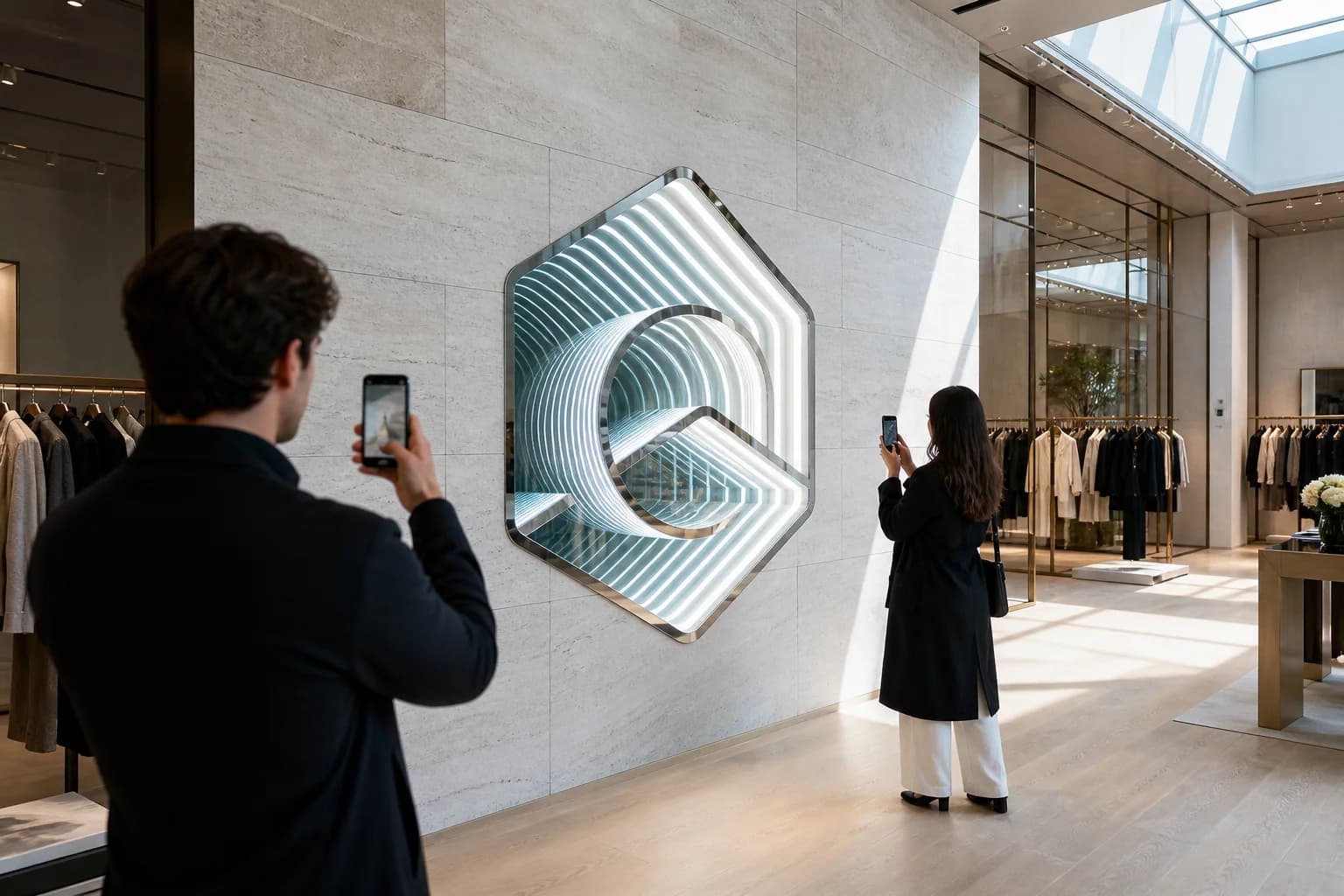
How to brief a retail infinity logo as a photographable brand moment — camera axis, store ambient, UGC versus press stills, and the RFQ notes that keep tunnel depth readable on phones after opening night.
A retail logo that nobody photographs is not a brand moment
Retail teams do not lose a flagship opening because the mark was off-brand. They lose it because the wall that was supposed to create a brand moment infinity mirror reads as a flat lightbox on every phone. Visual merchandising pins a dark-showroom still, the GC hangs the cell opposite a window wall, and opening-week social is a wash of glare, diode dots, and a tunnel that collapses at two meters. That is not a content-calendar problem. It is a brief that never named who would stand where with a camera, what the store actually looks like at noon, or whether the piece had to survive Reels as well as a still from the door.
This guide is for brand marketers, visual merchandising, store design, and retail development teams who need a retail infinity logo specified as a photographable asset — not only as illuminated ID. Product pages own the commercial offer. Our spec article covers artwork, optical stack, and wall build-up. Here we name the experience variables that change fabrication when the job is UGC, press walks, and opening-night stills: camera axis, dwell, ambient versus campaign light, and the crop guests actually post.
Where a retail infinity logo earns a photographable stop
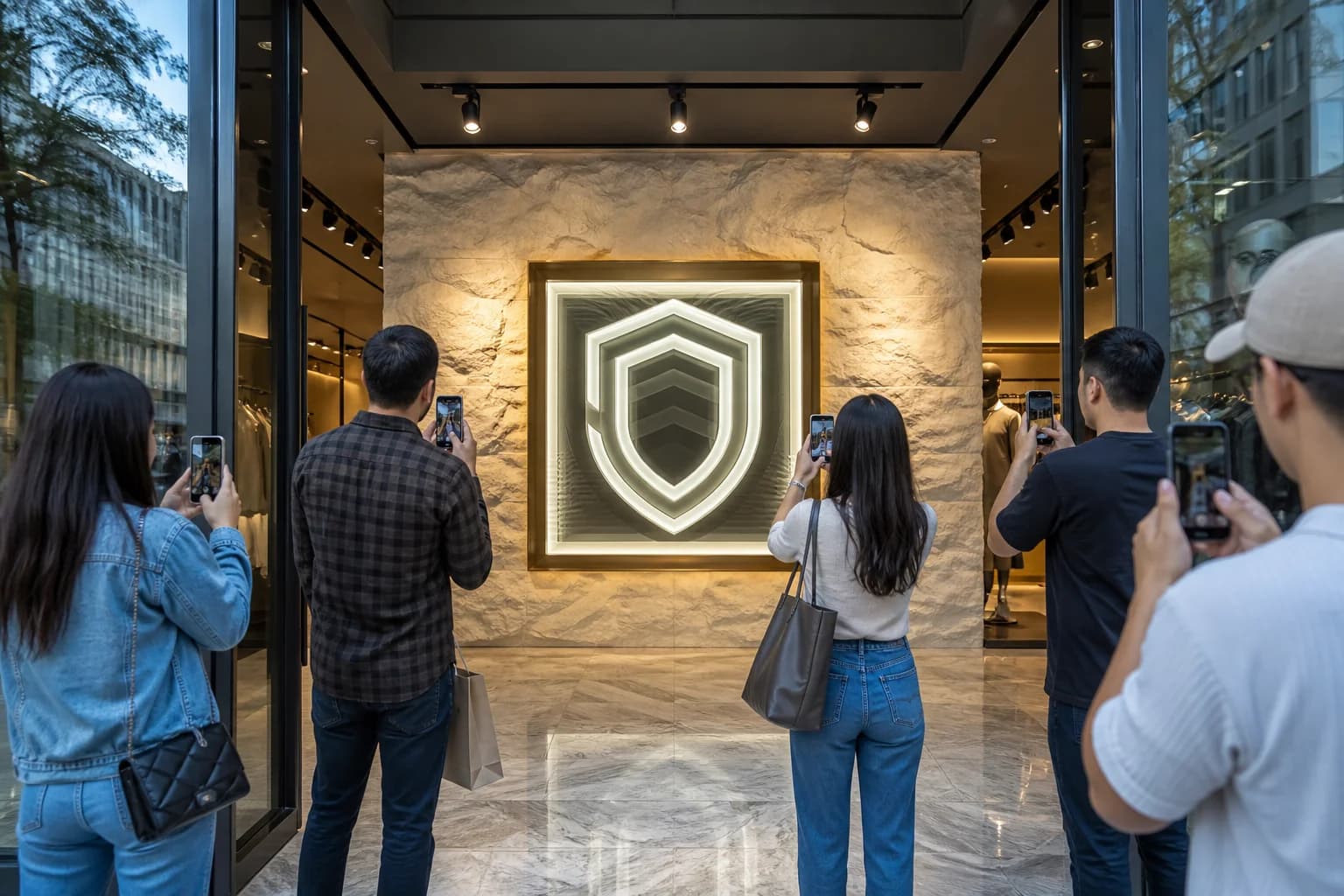
Placement is the brief. An entrance or threshold mark is a long-view stop: guests decide in two seconds whether to raise a phone before they hit product. A cash-wrap or queue wall is a short-view linger — people already in line need depth at arm’s length, and every receipt photo will crop tight. A fitting-corridor or brand lounge is quieter: smaller, often one icon tunnel, fixed brand color, intended for selfies rather than a hero still. A window or street-facing cell has to survive daylight and the sidewalk crop; if it only reads after dusk, the brand moment is a night-only asset.
Match the cell to the dwell and the crop. Entrance heroes usually want a bold icon or monogram that still reads as the brand when the phone is held landscape at four to eight meters. Queue and cash-wrap cells can be smaller but must erase first-ring diode dots because the camera is close. Do not put the only photographable mark behind a gondola or a seasonal table that will be dressed for launch week — the photo guests take is the photo that ships. Our flagship retail logo wall case follows this logic: an entrance moment tuned so depth holds under bright store lighting and still looks like the brand in customer photos.
What phones and press cameras actually capture
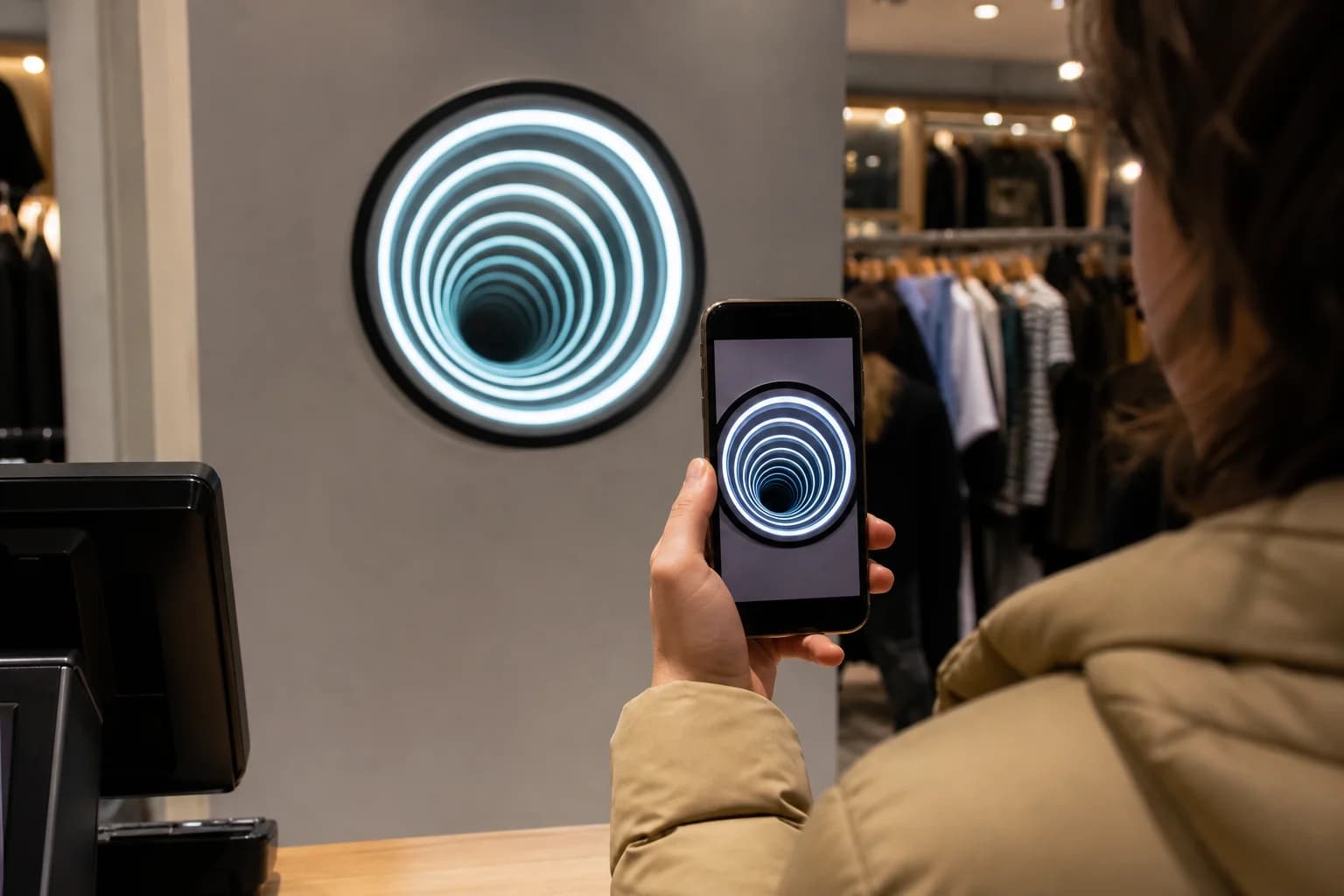
The endless effect is a stack tuned to distance and ambient, not a filter applied in post. State the real camera axes: door approach, mid-floor, cash wrap, and the press still the agency already storyboarded. A tunnel approved at one meter on a factory bench will look banded and shallow from the far side of a bright aisle. Glass spacing, LED pitch, and diffusion all move with that number — our glass-spacing note covers the physics; this brief only needs to name how far the phone will actually be.
Retail ambient is hostile. Daylight from the storefront, track spots, and cool ceiling grids wash shallow stacks and shift Kelvin so the photograph reads as a different brand than the fit-out. If neighboring displays throw 4000 K and the infinity cell is a saturated club palette, social posts look like two stores. Name a Kelvin band or a locked brand RGB and whether the wall must hold one tone through trading hours or swap a campaign preset after dusk. First-ring dots, muddy coatings, and a green cast on the one-way glass are the failures phones catch first. Ask for a sample reviewed under lighting that approximates the store, with test shots from the same distances guests will use — not only a workshop still.
Always-on depth versus campaign light for brand moment infinity mirrors
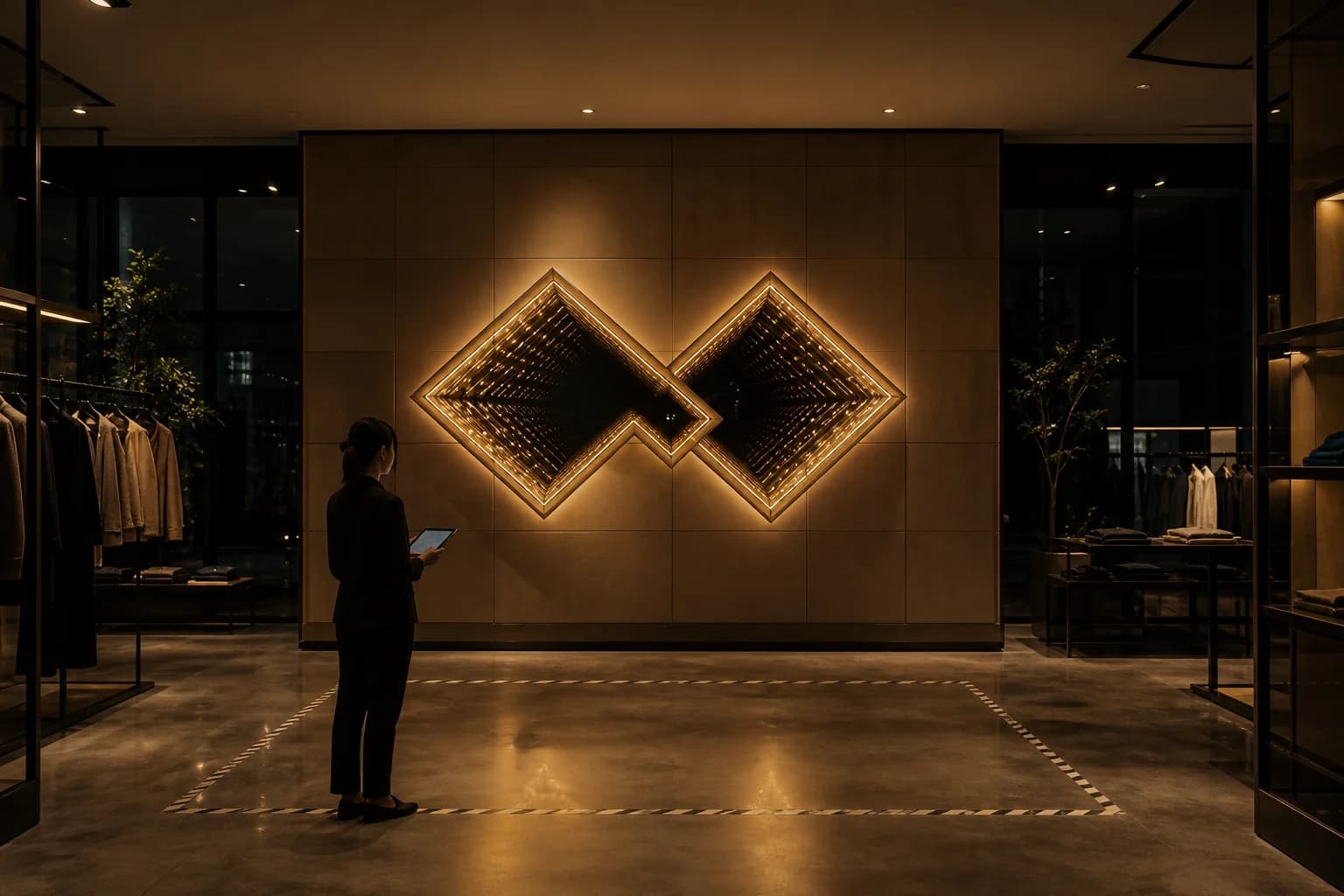
A brand moment infinity mirror that must work every trading hour is a different product from a launch-night cue. Always-on retail wants fixed brand color, even depth, and a face that still photographs at 11 a.m. under mixed daylight. Campaign windows — opening night, drop week, holiday — can add a slow scene or a second Kelvin without turning the store into a nightclub. Mixing those briefs on one “color-changing logo” line is how facilities inherit a chase cue they will never run, and how daytime UGC looks oversaturated next to product.
Control should match who owns the content calendar. Static brand white or a single RGB preset covers most photographable retail infinity logos. Two scenes (day open, evening event) cover most flagship programs without a full DMX personality. Reserve venue-console tiers for activations that already own a show file. Our control-tier article maps static, RGB, and DMX; this brief only needs to name the tier, who changes it — brand, VM, or AV — and whether campaign presets must revert without opening the optical cell. Continuous store hours also mean thermal paths belong in the same conversation as photography: a cell that peaks on day one and stripes by month three is a content problem as much as a facilities one.
Placement and crop mistakes that flatten the retail infinity logo
The most common failure is treating the infinity cell like a lightbox replacement. A shallow cavity, cheap half-silvered film, and a mark too fine to hold a continuous LED path photograph as a glowing sticker. Guests do not stop; press does not crop it as architecture. If the wordmark is too thin, lock an icon as the infinity cell and light the wordmark conventionally beside it — the photo then has a tunnel people can stand in front of, not a hairline that collapses on camera. Our comparison of infinity cells versus lightboxes and channel letters maps that fork; this brief only needs to name whether the photographable moment is the mark itself or a lit fascia.
The second failure is competing light and competing props. A hero mark opposite a window, under a wall-wash, or next to a video wall will lose the tunnel in every wide shot. Seasonal tables, mannequins, and hanging graphics that drift into the crop after merchandising reset will do the same. Name a keep-clear zone in the VM plan: the camera axis, the distance, and what must not sit in front of the illusion edge. If the program later needs letters or a full feature wall, that is a different product path — not a firmware flash on the logo cell.
Share the photo brief — we map a build that still reads on camera

A useful RFQ for a photographable retail infinity logo is a short packet. Attach: vector artwork and which mark is the tunnel versus conventionally lit; overall size and orientation; photos of the approach and the intended camera axes (door, mid-floor, cash wrap); expected ambient (daylight, track, night-set); dwell (stop, queue, selfie, press still); crop notes from the content team if they exist; control intent (fixed brand color versus campaign scenes); wall section or millwork depth; destination market and voltage; landlord or franchise caps; and whether a golden sample must be reviewed with phone test shots under store-like light. If opening-week photography is the success metric, say so — that changes sample review more than it changes a product SKU.
Send that packet to InfinityMir when a retail infinity logo is meant to be a brand moment, not only an ID. We respond with a fabrication-ready map: optical stack for your distances and ambient, color and control assumptions the content calendar can live with, mounting and service notes your GC can sequence, and the questions that still block glass. The flagship retail logo wall we documented follows this logic — depth that holds under bright store lighting and still looks like the brand in customer photos — so the number you approve is tied to a drawing and a camera axis, not to a dark still that never named the store.
Related capability
Portfolio — flagship retail logo wallManufactured Product Catalog
Explore Infinity Mirror Product Lines
Browse our full range of custom infinity mirror signs, letter systems, and feature walls — engineered with CAD shop drawings, UL/CE compliance, and export packing.
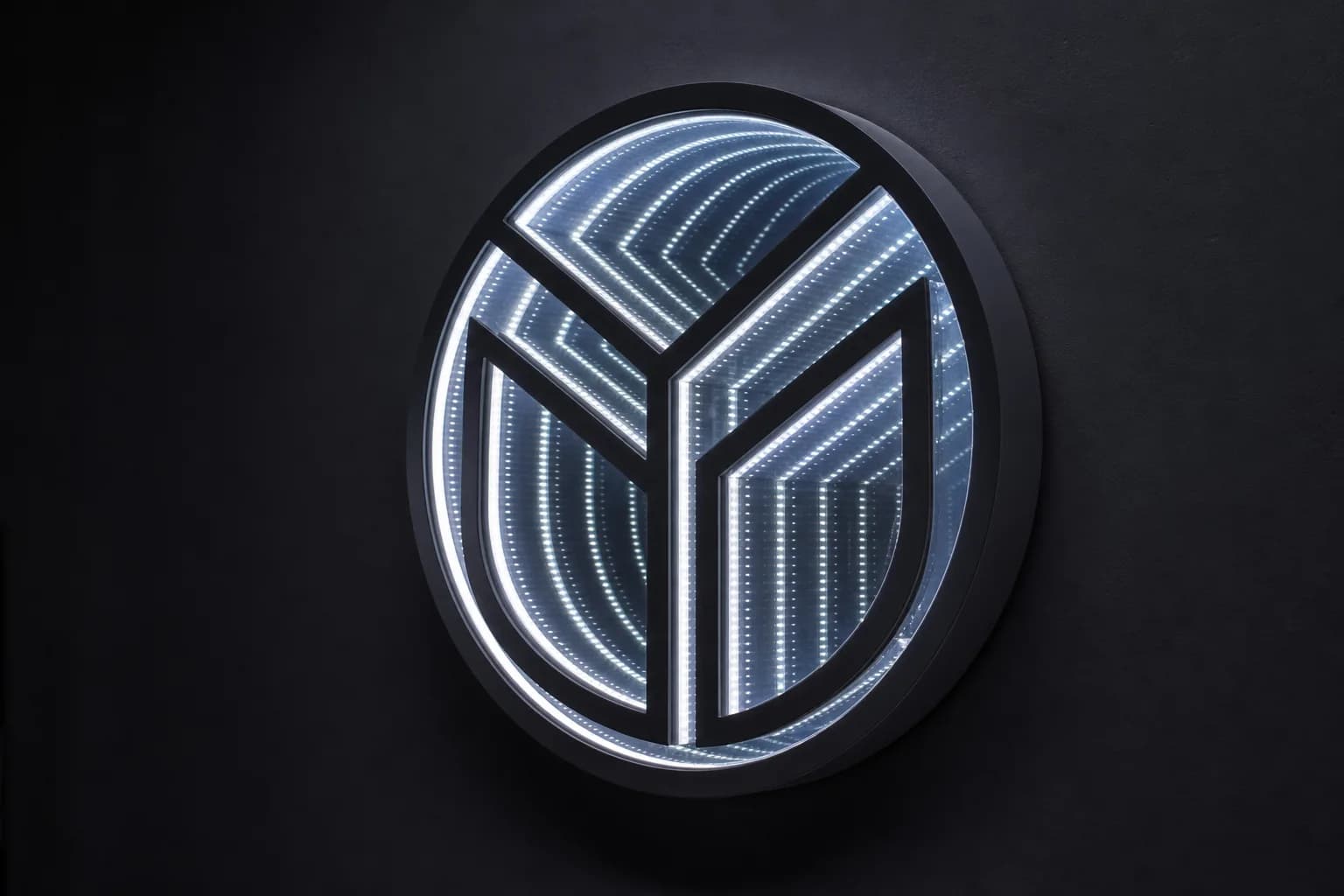
Infinity Logo Signs
Turn your brand mark into a custom infinity mirror logo sign — optical-grade glass, tuned LEDs, and endless depth engineered from vector artwork.
View Infinity Logo Signs details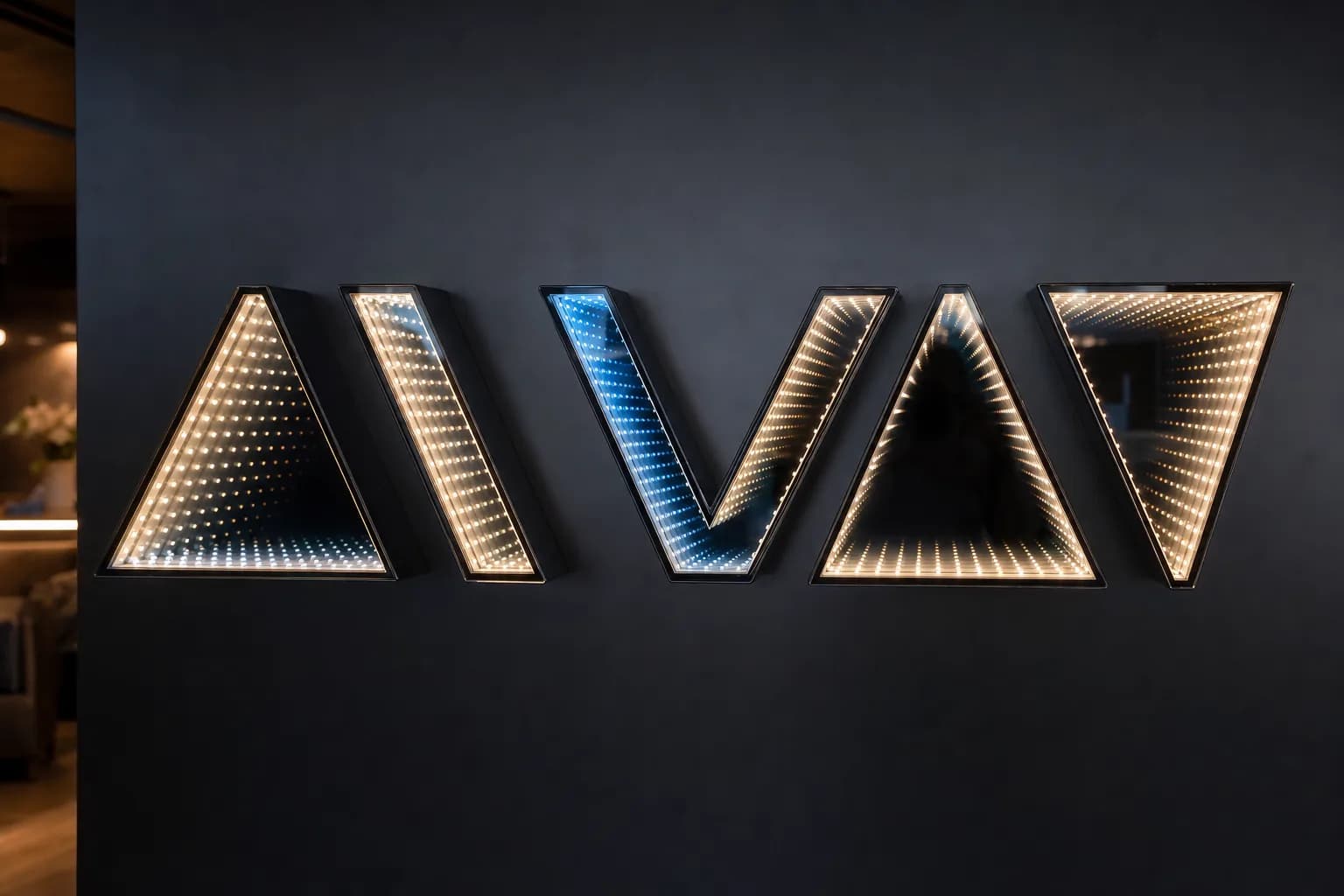
Infinity Mirror Letter Systems
Custom infinity mirror letter systems and channel signs built as individual optical cells for even depth across the whole wordmark.
View Infinity Mirror Letter Systems details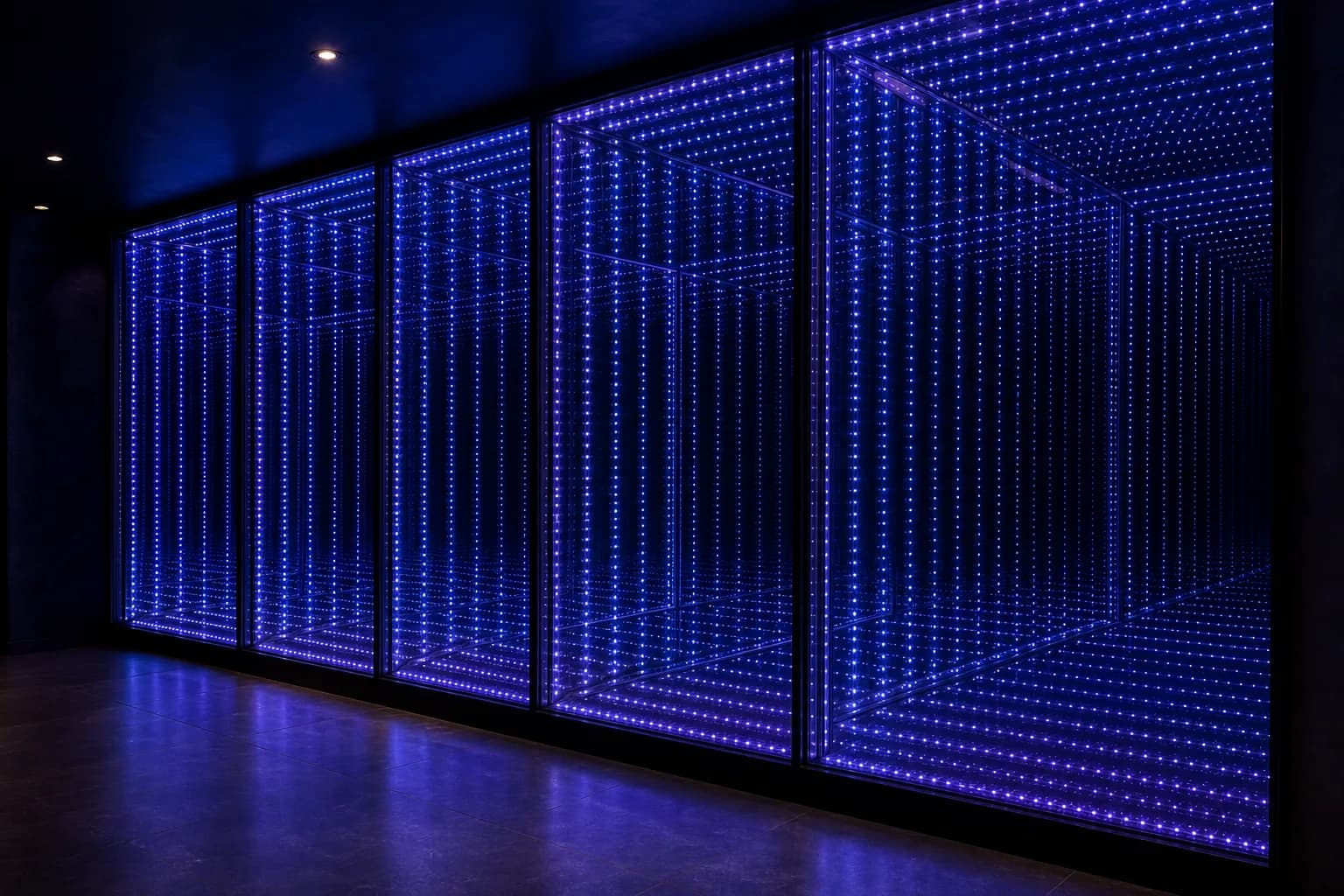
Feature Walls & Portals
Large-format infinity mirror feature walls and portals with synchronized multi-zone control, 24/7 heat management, and hidden service access.
View Feature Walls & Portals details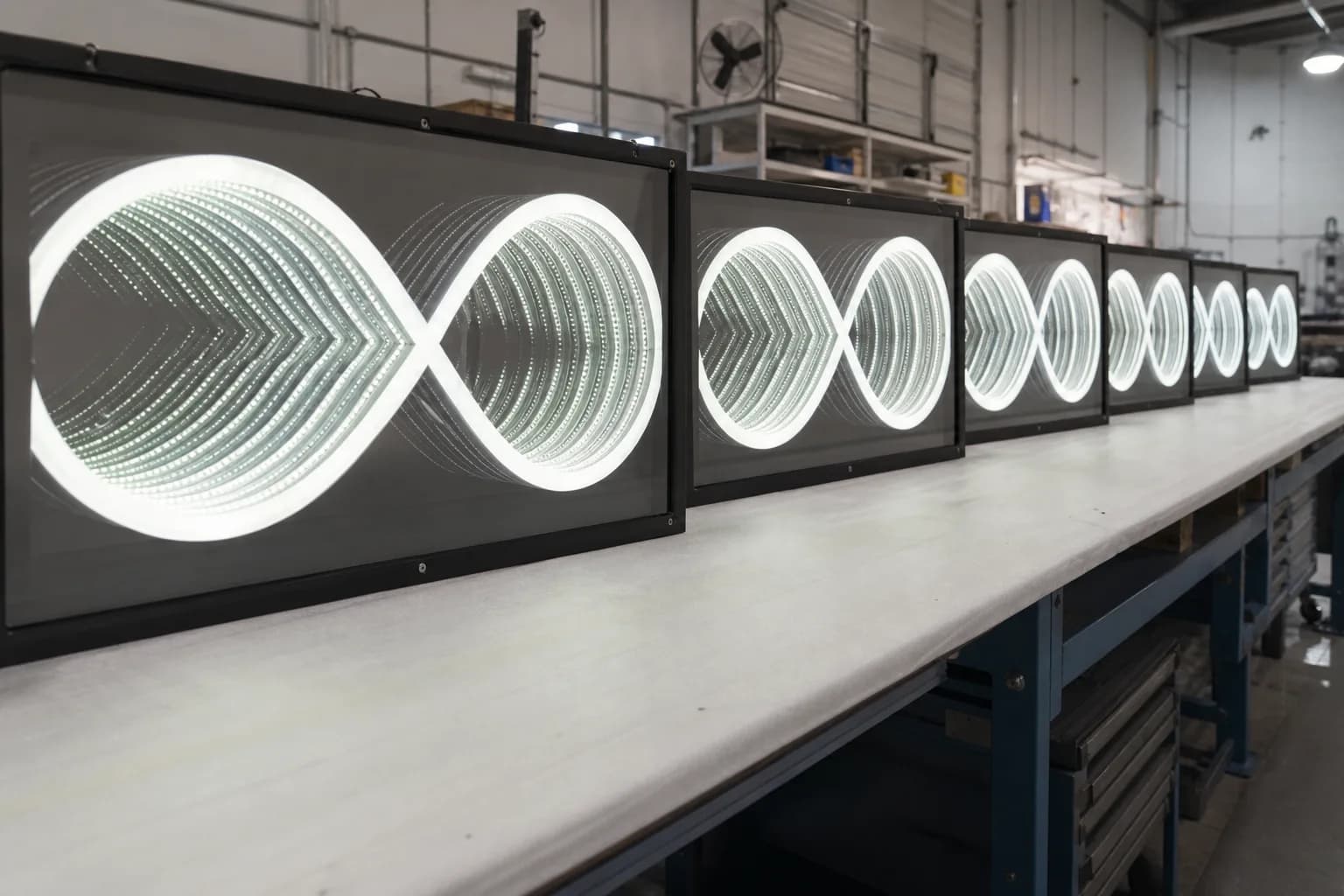
OEM & Rollout Programs
Private-label OEM & multi-location infinity mirror rollout programs with golden samples, controlled BOMs, and UL/CE electrical paths.
View OEM & Rollout Programs details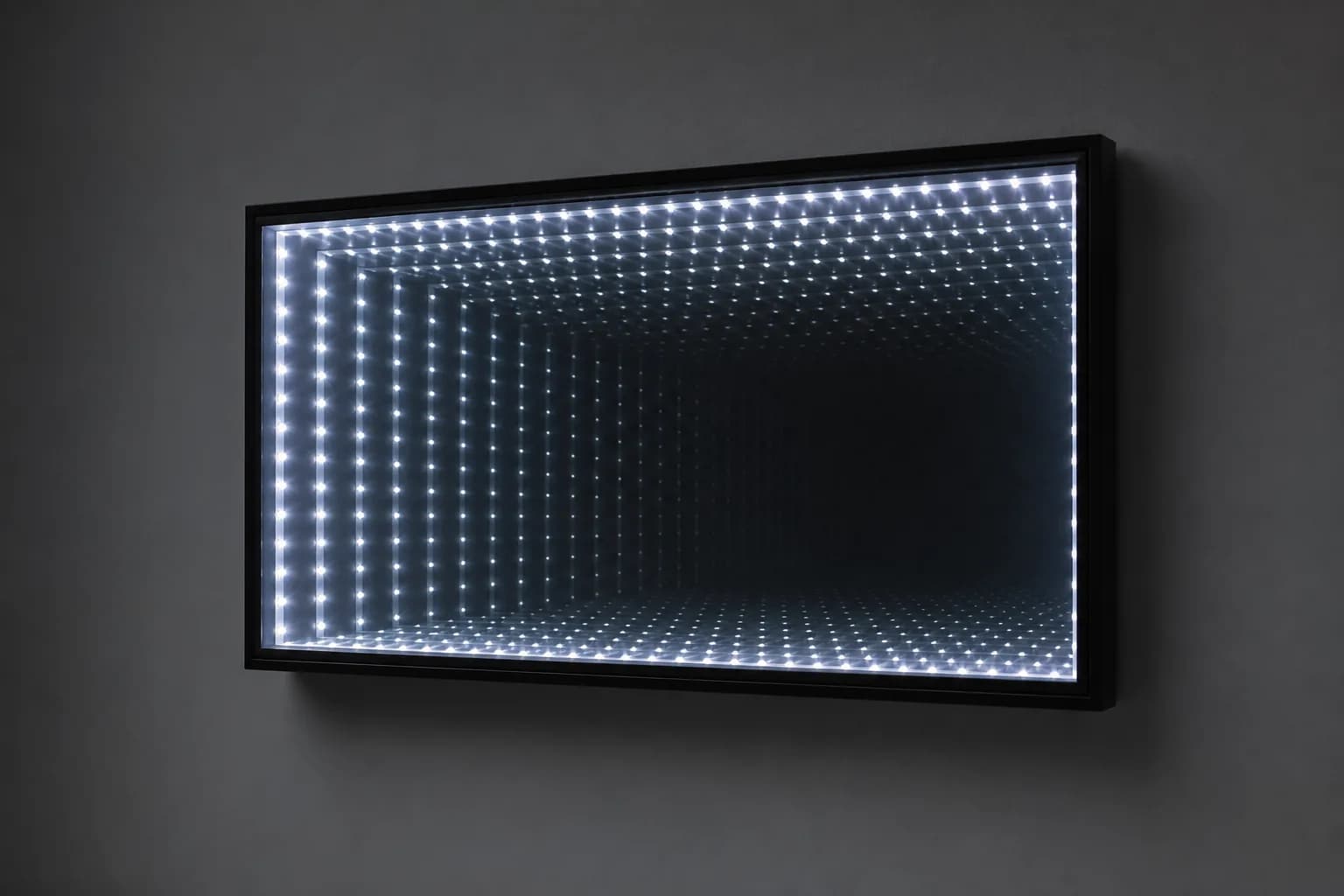
Standard Focal Panels
Fixed-size, ready-to-order standard infinity mirror focal panels with standard drivers and mounting kits for fast, predictable projects.
View Standard Focal Panels details