RFQ Checklist: What to Send for a Fabrication-Ready Infinity Mirror Quote
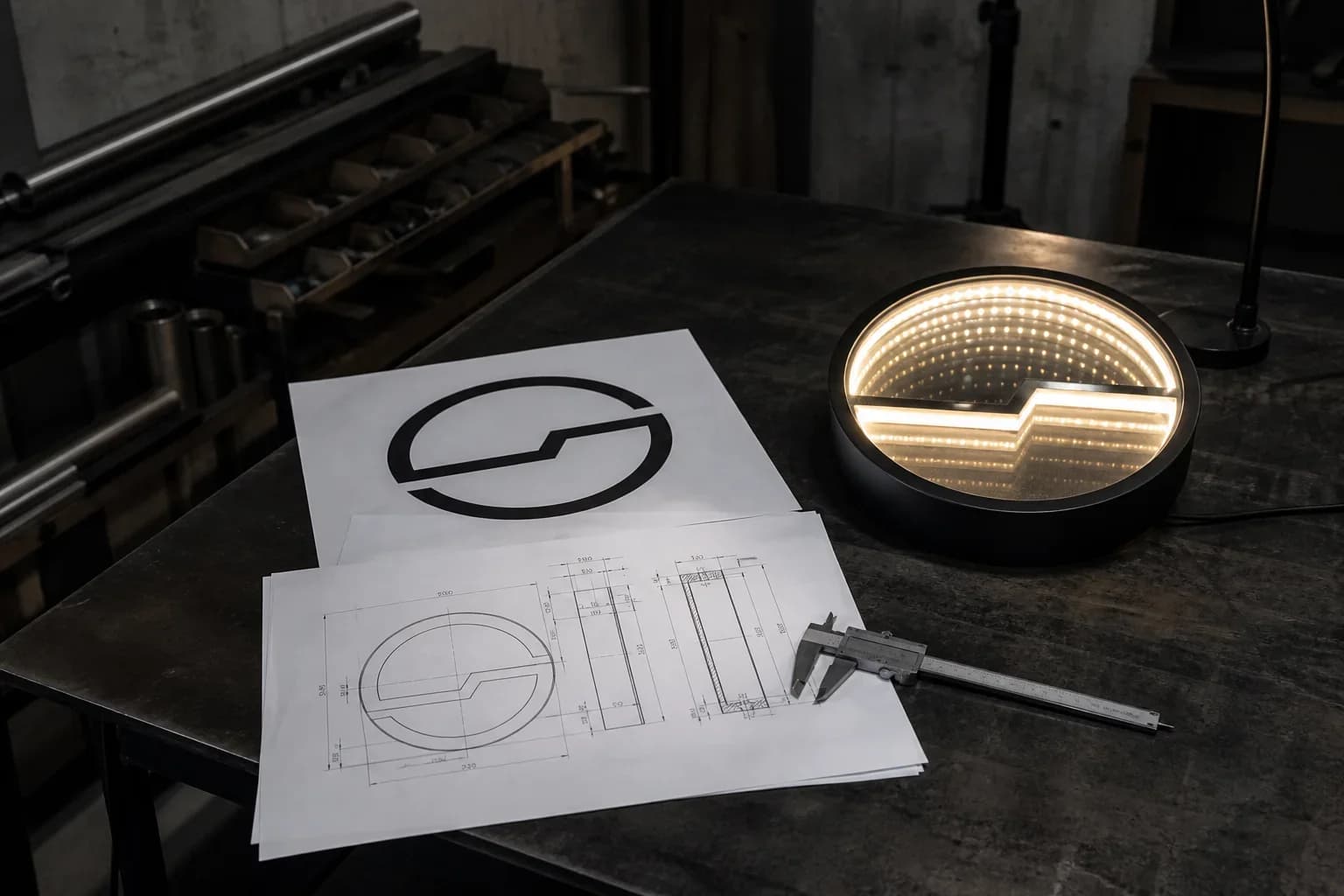
What to attach to an infinity mirror RFQ so the factory can issue a fabrication-ready quote: shop drawings, artwork, voltage, viewing distance, control tier, and site photos — not a mood board.
An incomplete infinity mirror RFQ is how quotes expire
Most infinity mirror quotes fail before glass is ordered. The buyer sends a PNG of the logo, a target diameter, and a Pinterest still. Sales replies with a round number. Then shop drawings start and the number dies: stroke too thin for an LED plane, depth over the millwork cap, driver path for the wrong market, no service hatch. That is not a factory delay. It is an RFQ that never named the variables that change fabrication.
This checklist is for brand teams, sign contractors, architects, GCs, and OEM buyers who need a fabrication-ready infinity mirror quote — a price tied to a buildable optical stack, not a placeholder. Product pages own the commercial offer. Here we name the shop drawing requirements and site facts that let InfinityMir quote once. Send a complete packet and the first reply can be a materials, light-path, driver, and packing map. Send a JPEG and the first reply is a list of questions.
Shop drawing requirements: size, depth, artwork, and the wall

Shop drawings are not a courtesy PDF after the PO. For an infinity cell they are the contract for cavity depth, glass layers, LED plane, returns, and the reveal against millwork. If you already have an architect elevation or section, send it — even if it still shows a generic “backlit logo.” Call out overall width, height, and the maximum depth the wall or soffit will accept. Note whether the face sits flush, proud, or in a niche. A 40 mm cavity and a 90 mm cavity are different products; quoting “approximately 800 mm round” without a depth cap is how the unit arrives too thick for the stone reveal.
Artwork belongs in the same packet, not a later email. Vector files (AI, EPS, SVG, DWG) beat PNG screenshots. For a logo tunnel we need closed paths, stroke versus fill intent, and which parts must glow versus stay dark. For letter systems, send the wordmark, font files or outlined paths, and whether every character is its own optical cell. Tight counters and serifs often need stroke rebuilds before glass is cut — that is a shop-drawing issue, not a surprise on the lit sample. If the mark is still in brand review, say so and freeze a revision ID we can cite on drawings.
Mounting language belongs on the drawing request. Flush to gypsum, standoffs off stone, raceway-fed letters, or a framed panel dropped into millwork all change frame section, fastener map, and service access. Photograph the wall: substrate, nearby lighting, ceiling height, and anything that will hide or hit the unit — HVAC, sprinklers, a glass balustrade. Landlord or mall criteria that cap projection, weight, or open-face neon should be attached, not summarized as “indoor sign.”
Viewing distance, ambient light, and the tunnel you actually want
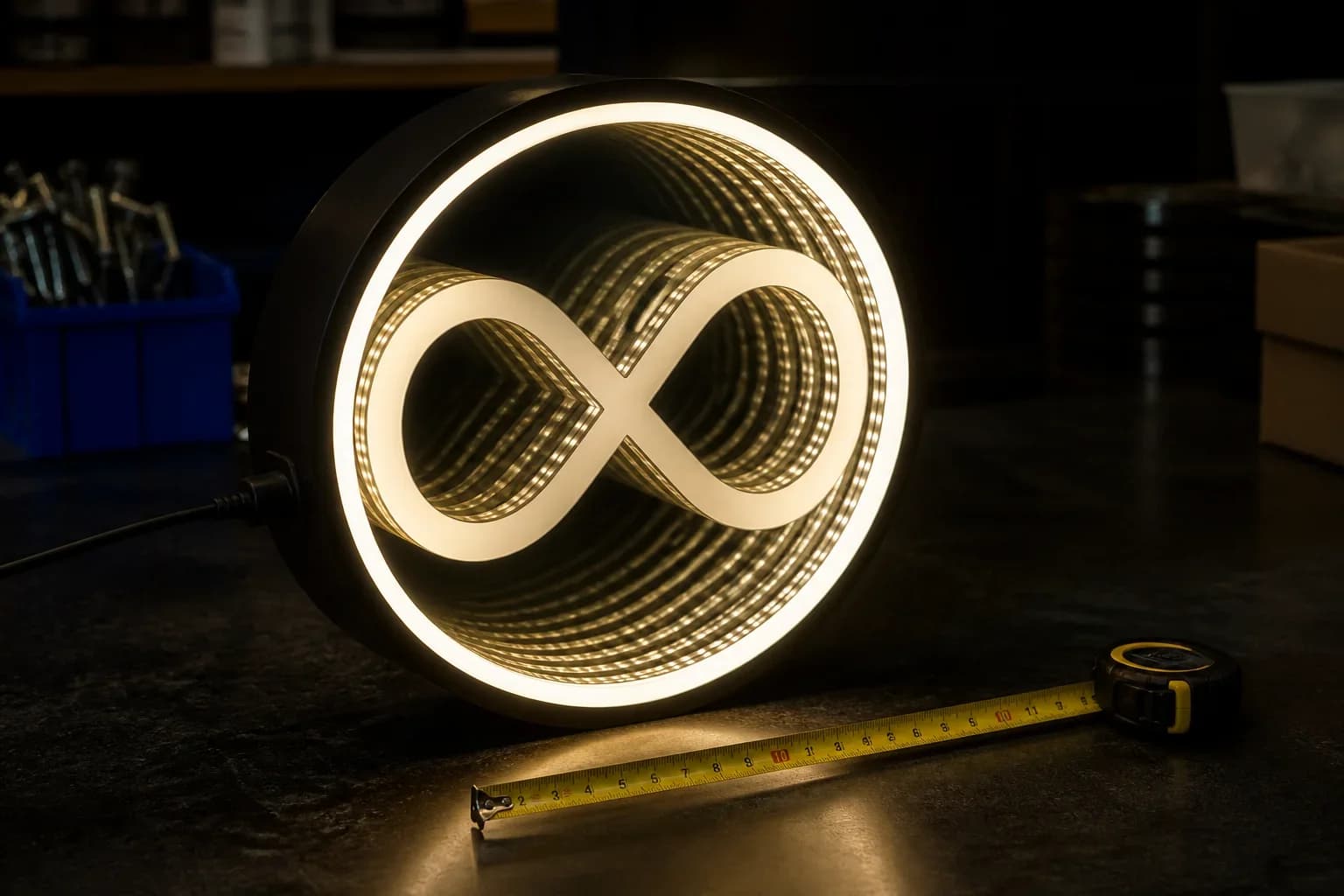
The endless effect is a stack, not a filter. Glass-layer count, gap, LED pitch, diffuser, and coating all change with viewing distance and ambient light. State how far guests stand — reception desk versus a twelve-meter lobby axis — and whether the wall sees daylight, warm hospitality wash, or a dark club. A tunnel tuned in a dim showroom will look shallow and noisy under flagship glass. If you already have a preferred Kelvin or a brand RGB, name it. If you only know “premium white,” say that too — we will propose a band rather than invent a color after the sample ships.
Control is a commercial choice, not a firmware afterthought. Static single-color, RGB scenes, and DMX for nightlife are different BOMs and different driver cavities. Tell us whether the unit must run dusk-to-dawn, sit on a house dimmer, or talk to a venue console. Mixing a static logo wall and a DMX tunnel on one vague “RGB” line is how the quote includes the wrong controller and the electrician inherits a surprise. Our control-tier guide maps those options; the RFQ only needs to name the tier and who owns the show file.
Voltage, listings, and where the drivers live
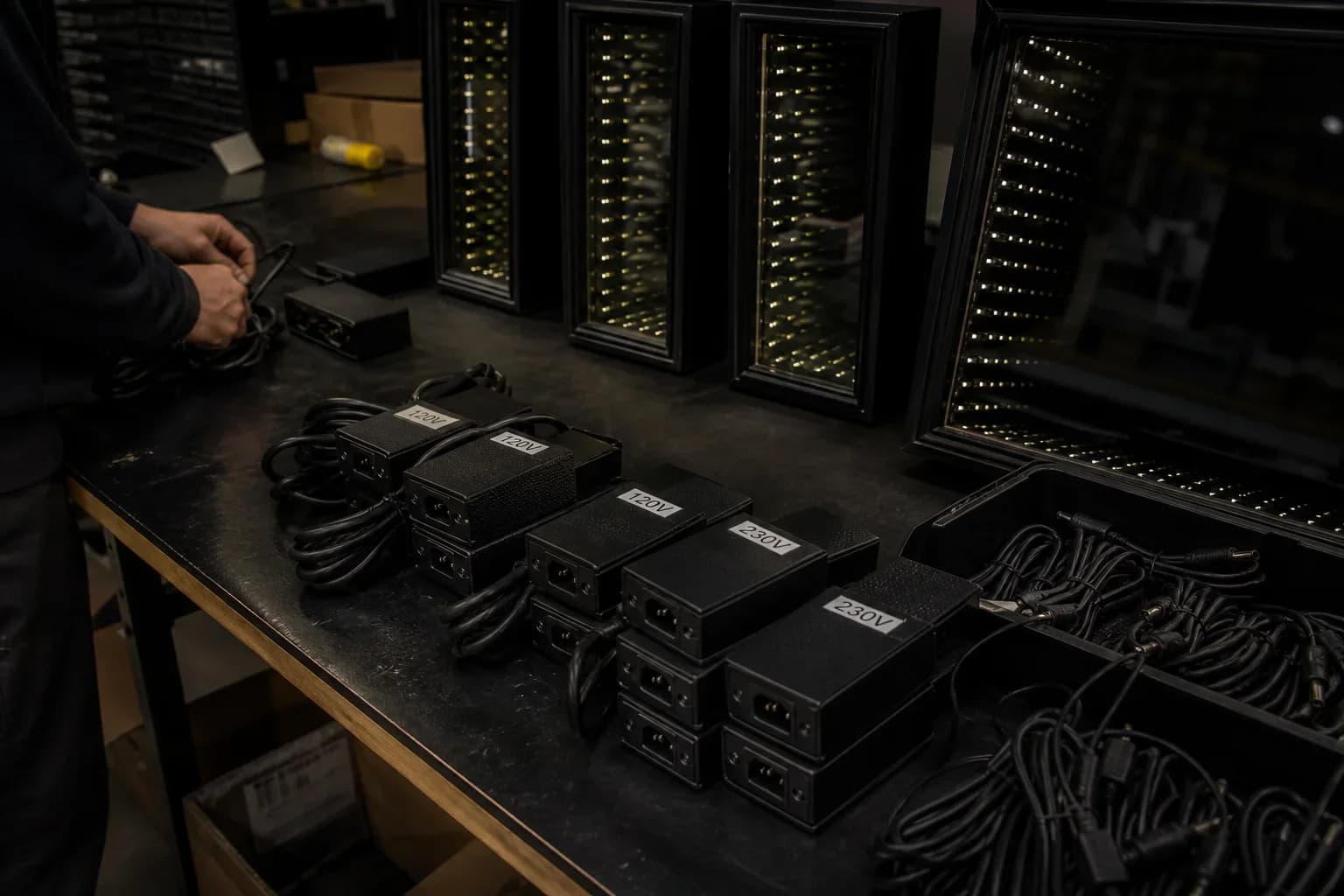
Destination market decides the electrical path before LEDs are chosen. Name country or region, supply voltage, and whether the site is indoor dry, indoor damp, or exterior. North America typically needs a UL/NEC-oriented driver and evidence package; EU and similar markets need a CE/DoC-oriented path. Do not ask for “UL or CE, whichever is cheaper” on one SKU heading to two continents. If the GC already specified Class 2, a remote driver closet, or a maximum VA on a landlord panel, put that in the RFQ. Voltage and listing guesses are the fastest way a cheap quote fails AHJ review.
Power location matters as much as voltage. Say where the homerun lands, who pulls it, and whether drivers live in the cavity, a remote closet, or a millwork chase. Feature walls need this early: multi-panel runs, interconnect length, and service access for a failed module. If continuous run is the operating assumption — hotel lobby, retail flagship — say so. Heat and driver sizing follow occupancy hours, not the rendering’s glow.
Quantity, packing, samples, and the calendar that actually governs lead time
A fabrication-ready quote includes how the unit travels and who hangs it. Quantity, ship-to city, and need-by date sequence glass, crate, and sample. Indoor versus outdoor changes gasket and coating. For export, name Incoterms if you have them and whether the receiver can handle a crate that must stay upright. Our packing guide covers foam maps and orientation; the RFQ only needs to say glass-heavy, multi-panel, or letter-set so we do not quote parcel when you need a crate.
Samples and QC belong in the first packet when the program is more than one unit. A single logo for a flagship may need a shop-drawing approval and a lit photo set. An OEM wave needs a golden-sample gate, serial QC, and spare-driver language. Say which you are buying. Also name who approves: brand, landlord, GC, or all three — and how long that cycle usually takes. A quote that ignores approval time is a quote that will miss the opening.
Send the packet. We map a fabrication-ready infinity mirror quote
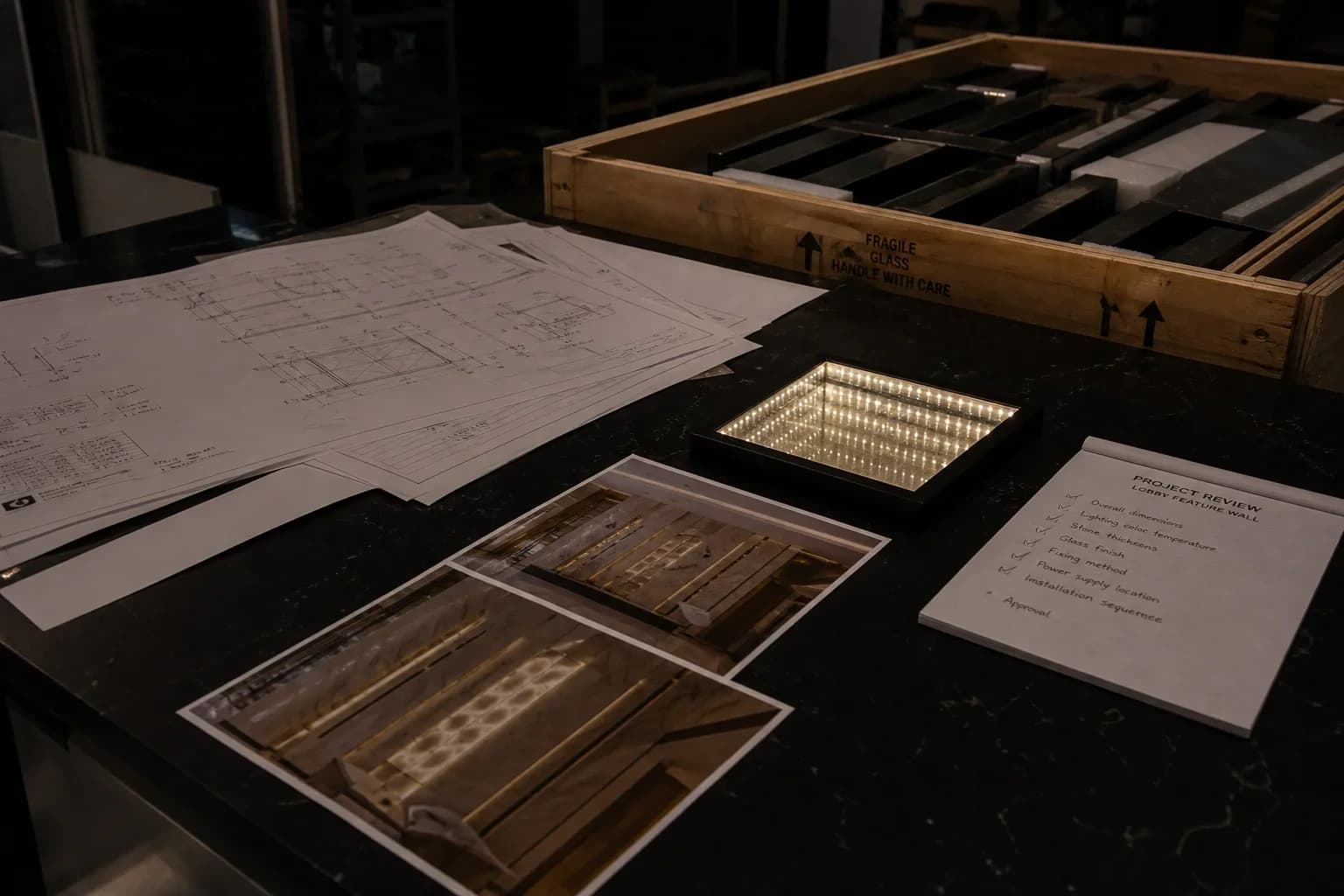
A useful infinity mirror RFQ is a short packet, not a novel. Attach: overall size and max depth; vector artwork with a revision ID; elevation or millwork section if it exists; wall photos; viewing distance and ambient light; control tier (static, RGB, DMX); destination market and voltage; indoor/outdoor; mounting intent; landlord or AHJ notes; quantity and need-by date; and whether you need a sample, spare kit, or serial QC. If anything is still open — color, depth cap, listing market — label it as open. Unknowns we can propose against. Hidden constraints we cannot.
Send that packet to InfinityMir when you need a fabrication-ready infinity mirror quote. We respond with a buildable map: optical stack and viewing assumption, shop-drawing scope, driver and listing path for your market, mounting and service notes, packing assumption, and the questions that still block metal. The number that follows is tied to a drawing revision you can issue to the GC — not to a rendering that never named the cavity.
Related capability
Infinity logo signsManufactured Product Catalog
Explore Infinity Mirror Product Lines
Browse our full range of custom infinity mirror signs, letter systems, and feature walls — engineered with CAD shop drawings, UL/CE compliance, and export packing.
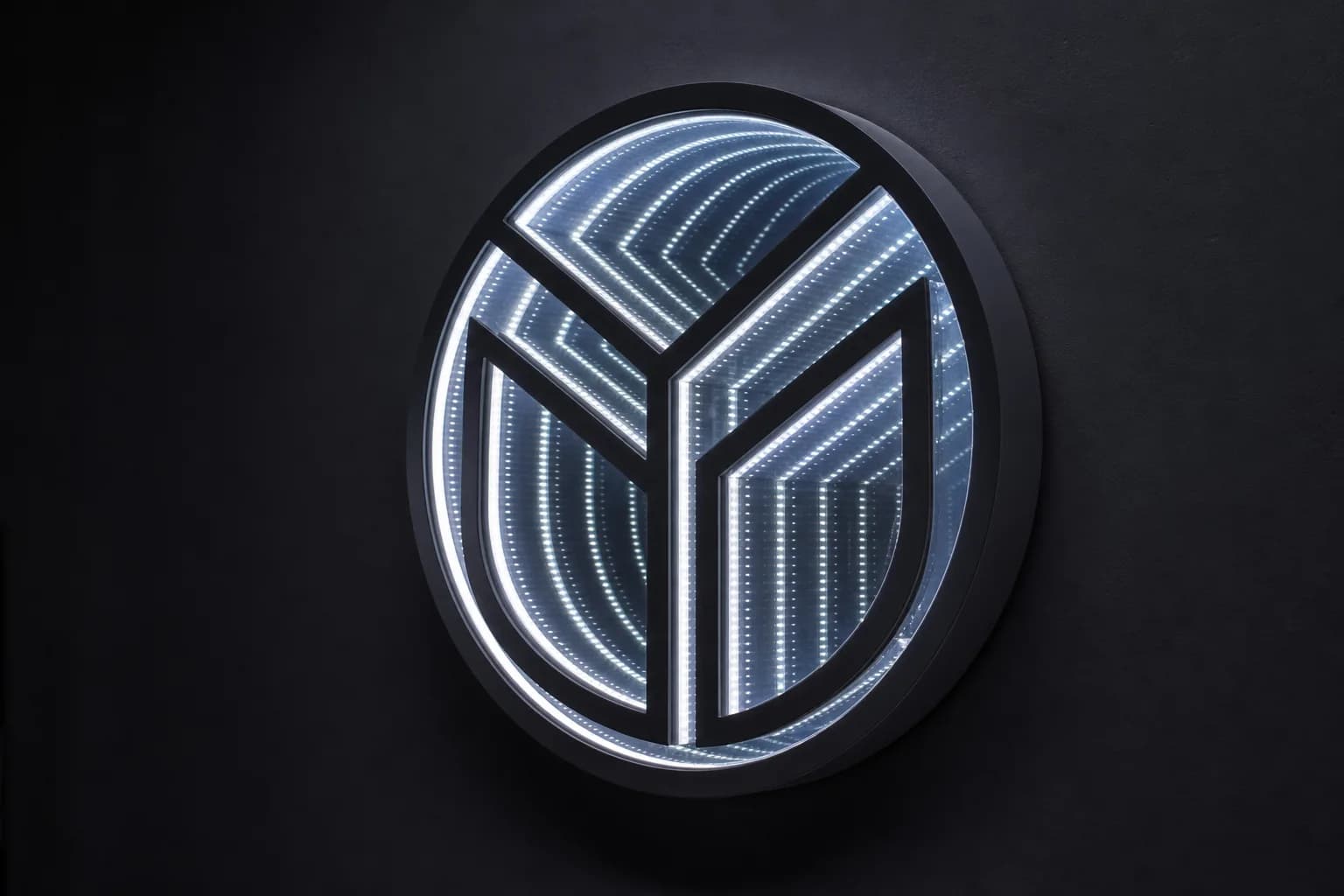
Infinity Logo Signs
Turn your brand mark into a custom infinity mirror logo sign — optical-grade glass, tuned LEDs, and endless depth engineered from vector artwork.
View Infinity Logo Signs details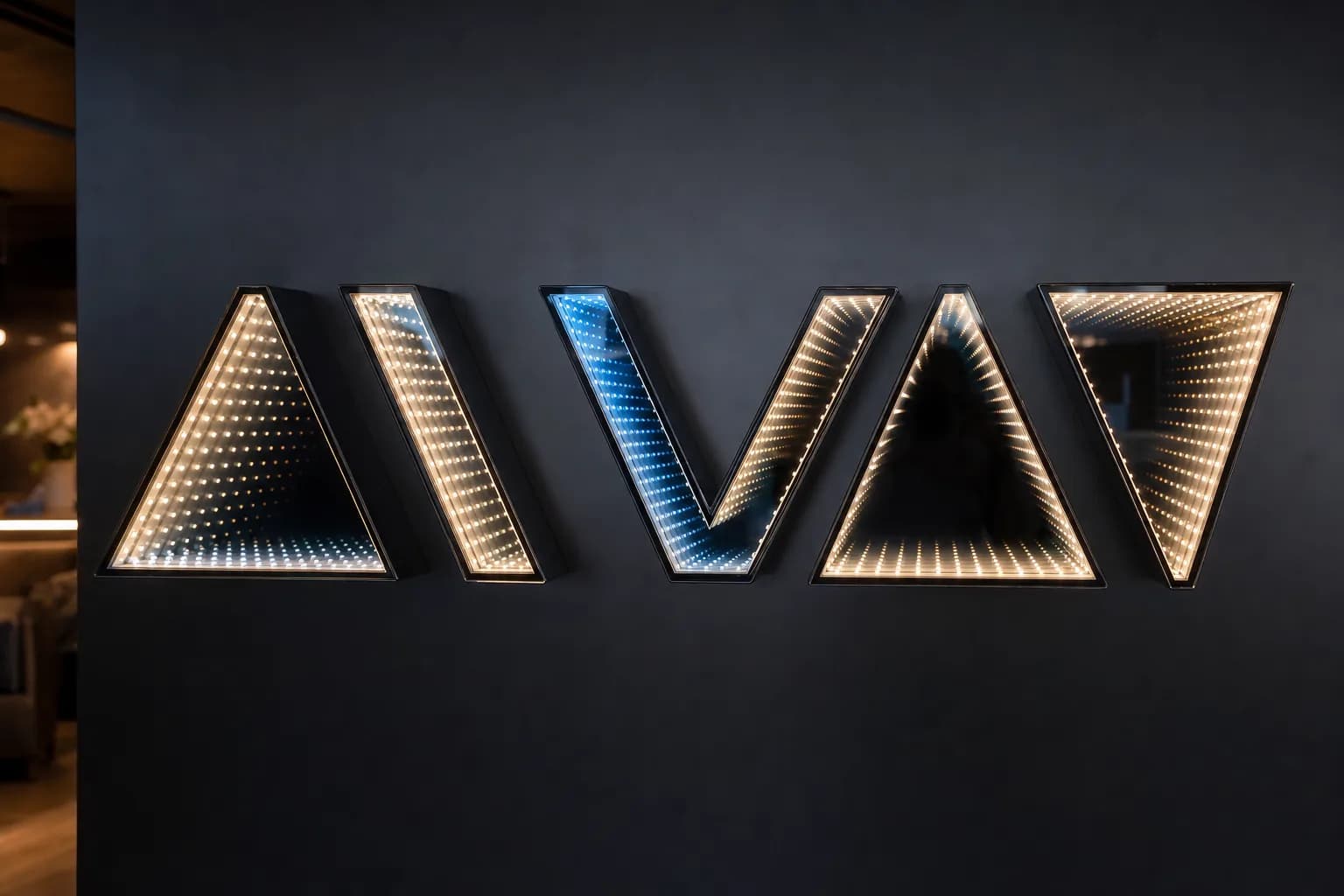
Infinity Mirror Letter Systems
Custom infinity mirror letter systems and channel signs built as individual optical cells for even depth across the whole wordmark.
View Infinity Mirror Letter Systems details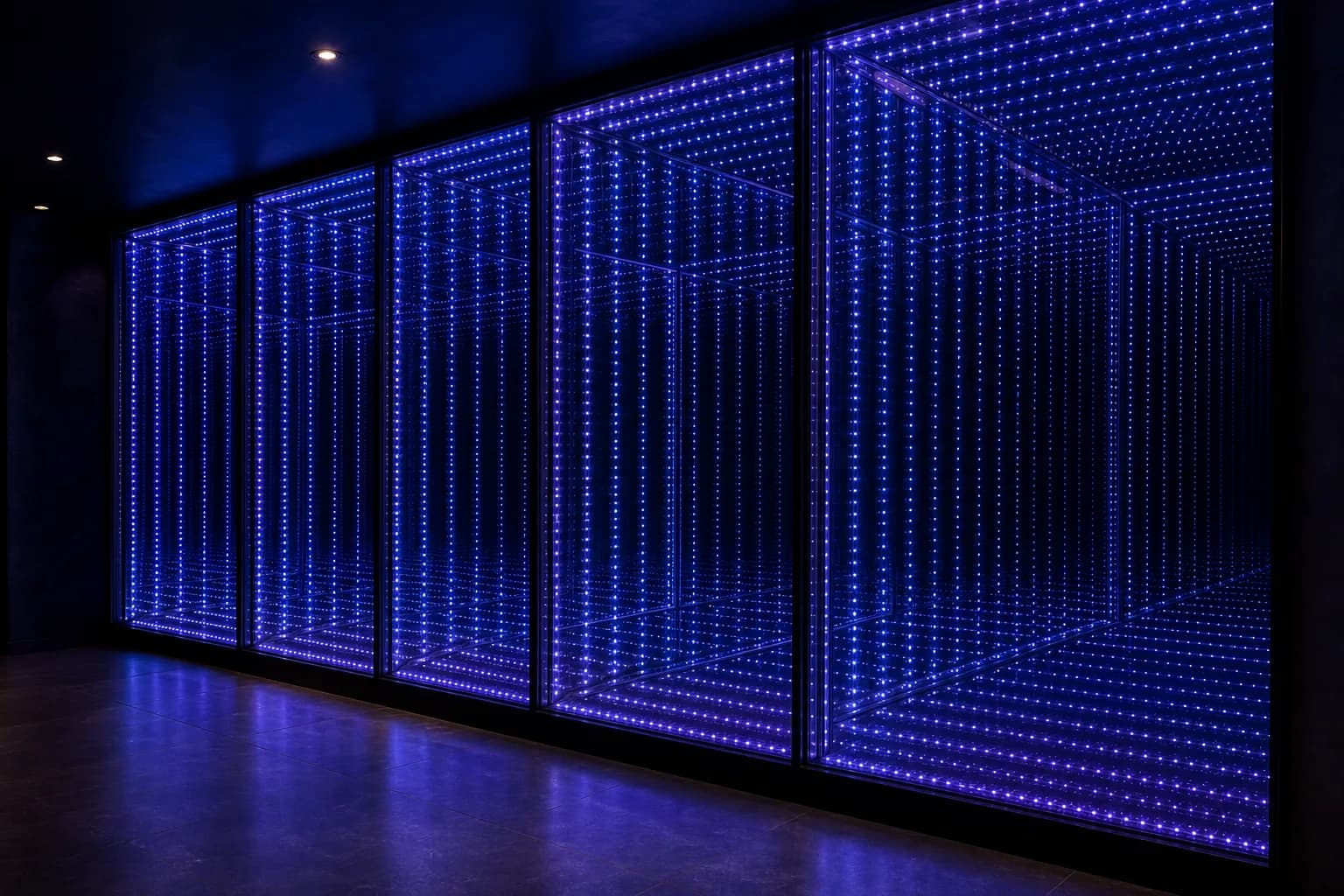
Feature Walls & Portals
Large-format infinity mirror feature walls and portals with synchronized multi-zone control, 24/7 heat management, and hidden service access.
View Feature Walls & Portals details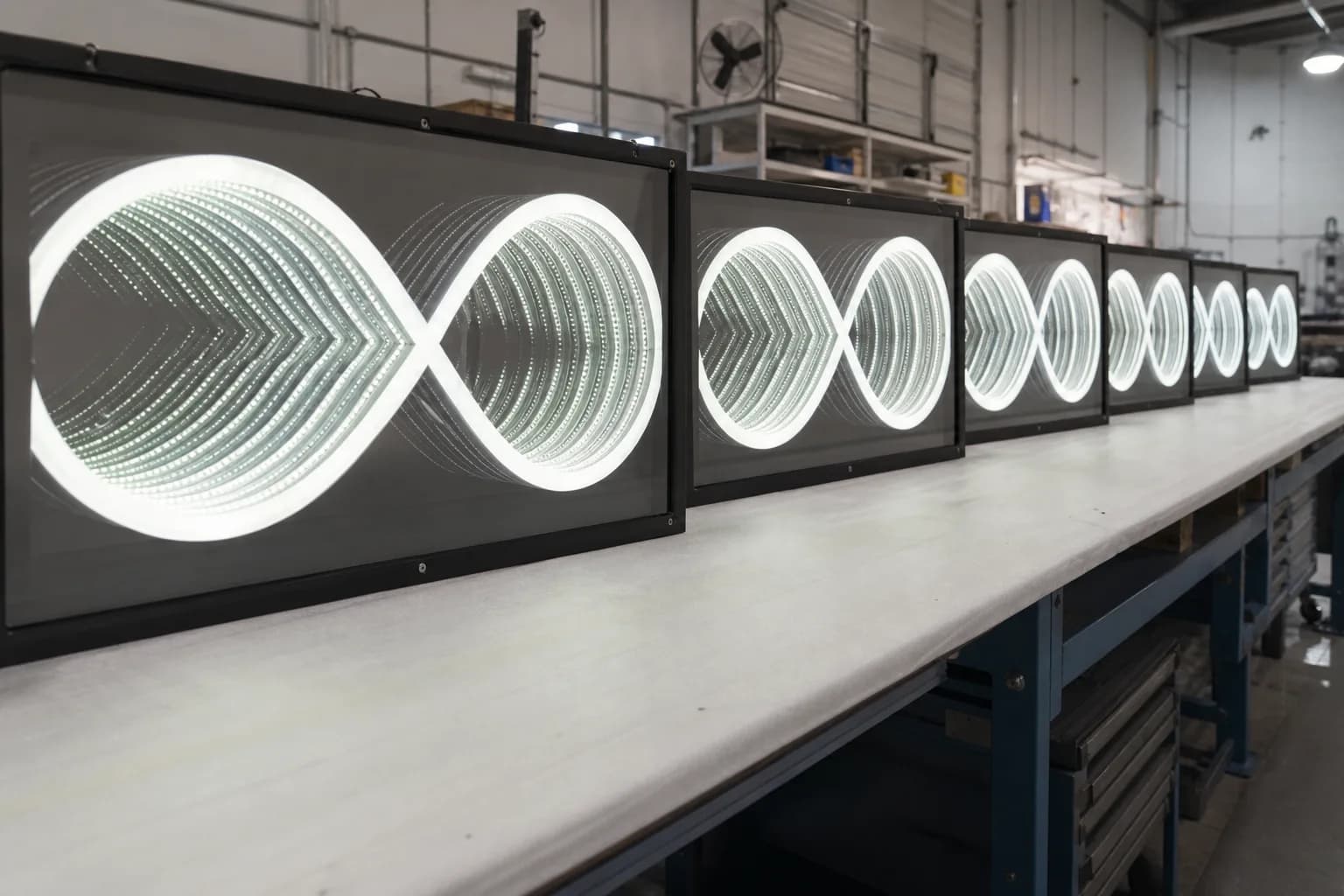
OEM & Rollout Programs
Private-label OEM & multi-location infinity mirror rollout programs with golden samples, controlled BOMs, and UL/CE electrical paths.
View OEM & Rollout Programs details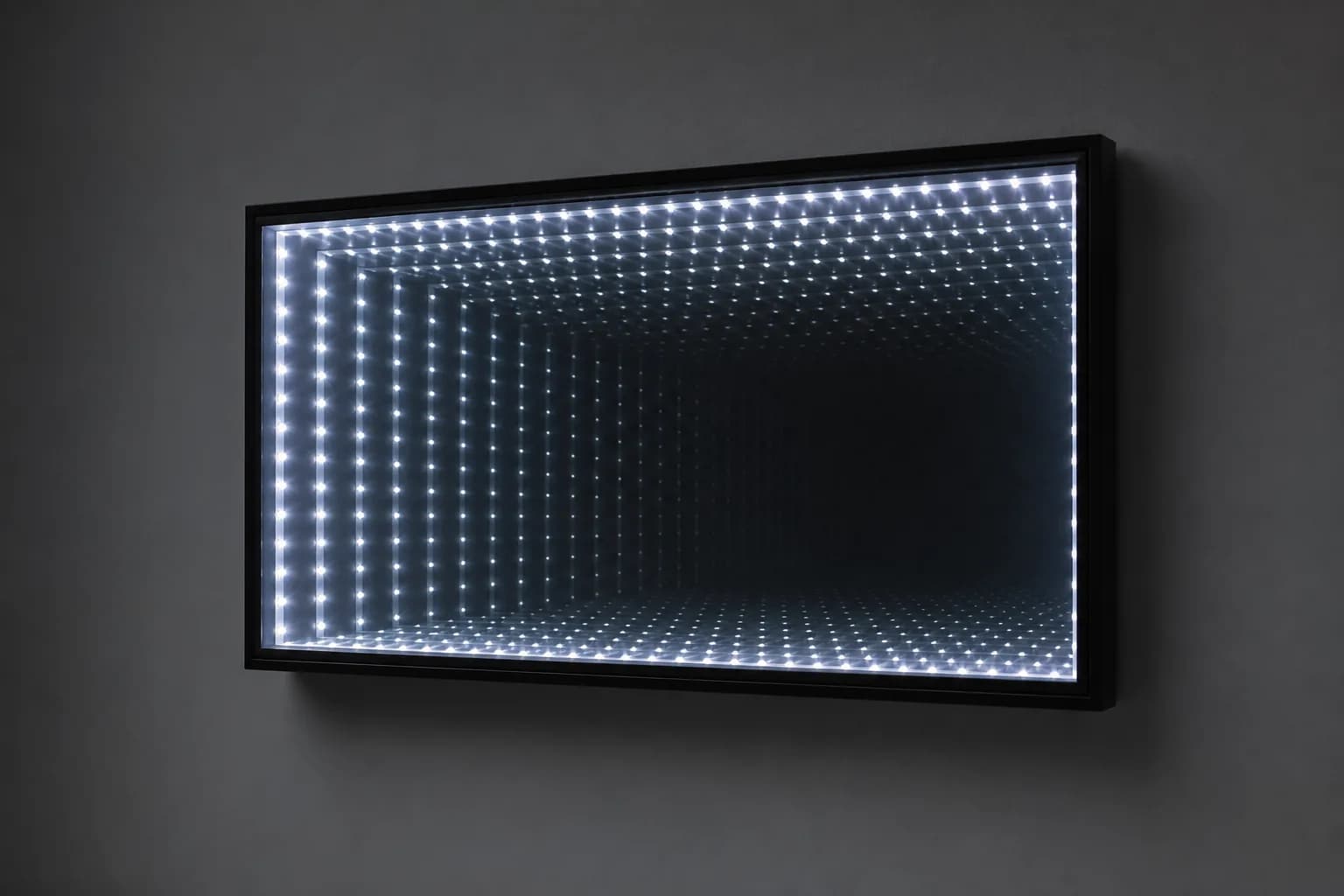
Standard Focal Panels
Fixed-size, ready-to-order standard infinity mirror focal panels with standard drivers and mounting kits for fast, predictable projects.
View Standard Focal Panels details