When to Choose Standard Infinity Focal Panels vs Full Custom
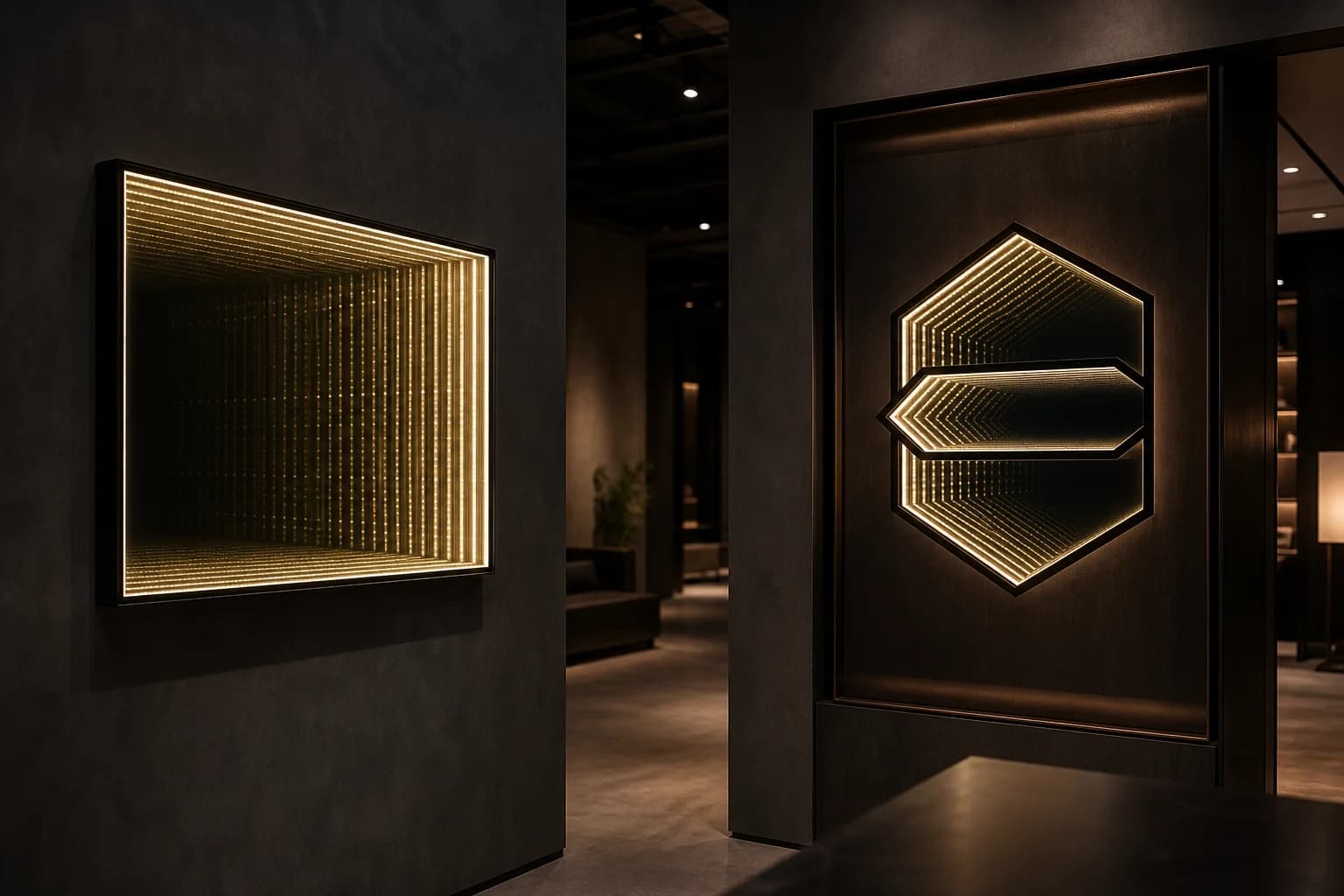
A buyer guide for when standard infinity focal panels beat a full custom optical stack — and when logo geometry, millwork, or control force a custom build before glass is cut.
Why teams pick the wrong infinity build before glass is cut
Most infinity programs stall on a false binary: a stock rectangle that can ship next month, or a fully custom optical stack that waits on CAD. Buyers often approve a rendering, then treat size, glass-layer count, and control as shop details. After the millwork niche is framed or the pop-up calendar is locked, a standard focal panel will not carry the logo, and a custom logo cell will miss the opening date. That is not a pricing problem — it is a procurement decision that should have been named in the RFQ.
This guide is for brand teams, sign contractors, architects, exhibition builders, and facilities leads choosing between standard infinity focal panels and a full custom build. Product pages own the commercial offer; here we map when a fixed-size panel with a standard driver and mounting kit is the honest answer — and when logo geometry, letter systems, feature walls, or landlord constraints force a custom optical stack before glass is cut.
What a standard infinity focal panel actually includes
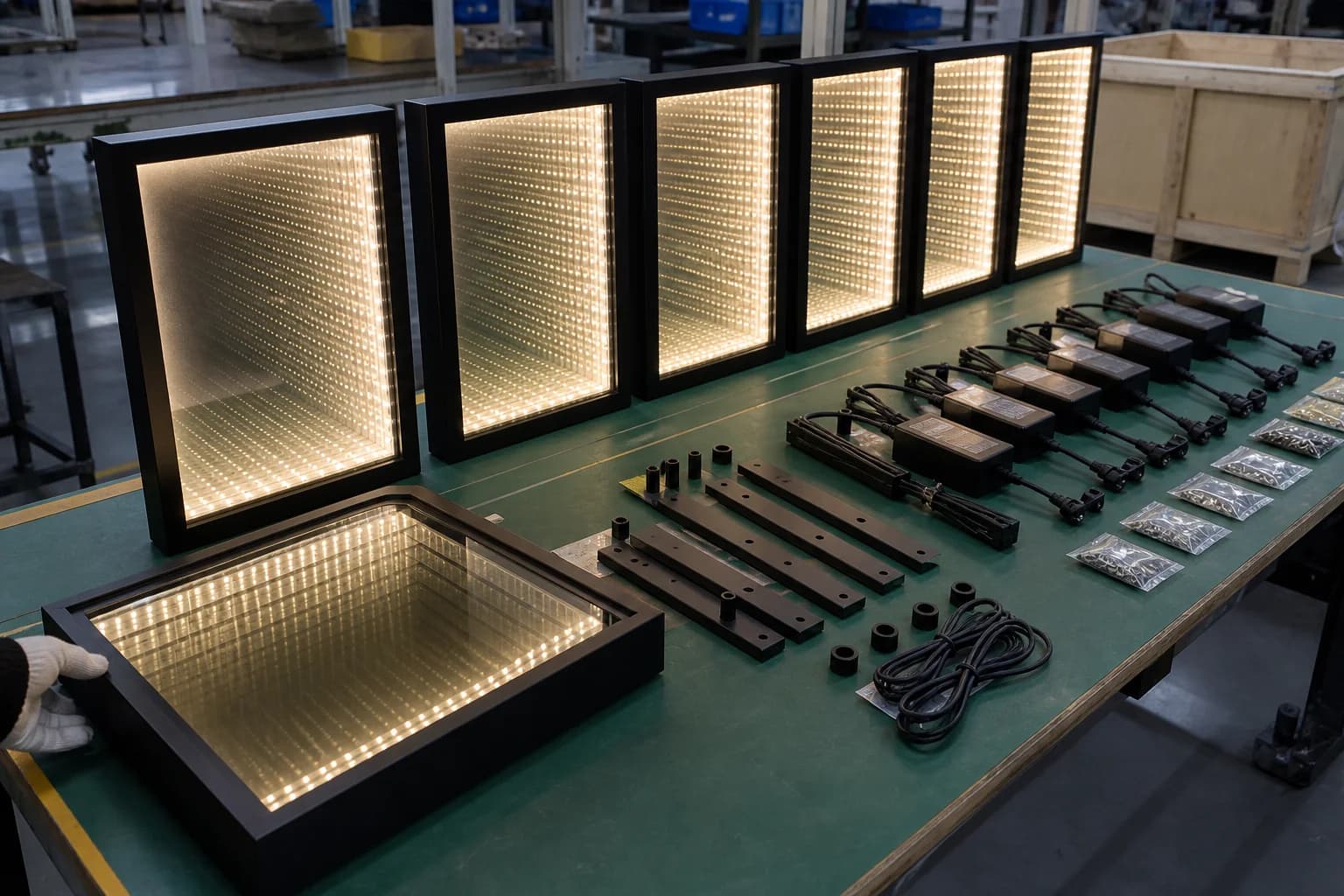
A standard infinity focal panel is a locked SKU, not a smaller custom job. Size bands are published and fixed. Glass-layer count, LED layout, and driver type are already engineered. The mounting kit and power requirements ship documented. Lead time and unit price stay predictable because fabrication is repeating a known optical stack, not inventing one from artwork. That is why panels quote cleanly across quantities and pack compact for export.
What you do not get is a tunnel shaped to your mark. The face is a rectangle — or another published size band — not a logo silhouette, not a wordmark, not a portal that follows stone reveals. Color options are typically single-color or RGB within the standard driver, not a DMX zone map or a Kelvin matched to a brand book under camera. If the brief is “we need depth on this wall by a date,” a standard panel is often the right tool. If the brief is “this mark must read as architecture,” you are already in custom territory.
Treat the panel as an optical appliance: hang it, power it, and service the driver without opening the face. Do not assume you can later CNC the same glass into a logo without re-engineering spacing, LED density, and returns. That retrofit is a new product, not a field modification. The same glass-spacing discipline that makes a rectangle read endless still applies — it is just locked to a catalog cavity instead of tuned to artwork.
When standard focal panels are the right procurement call
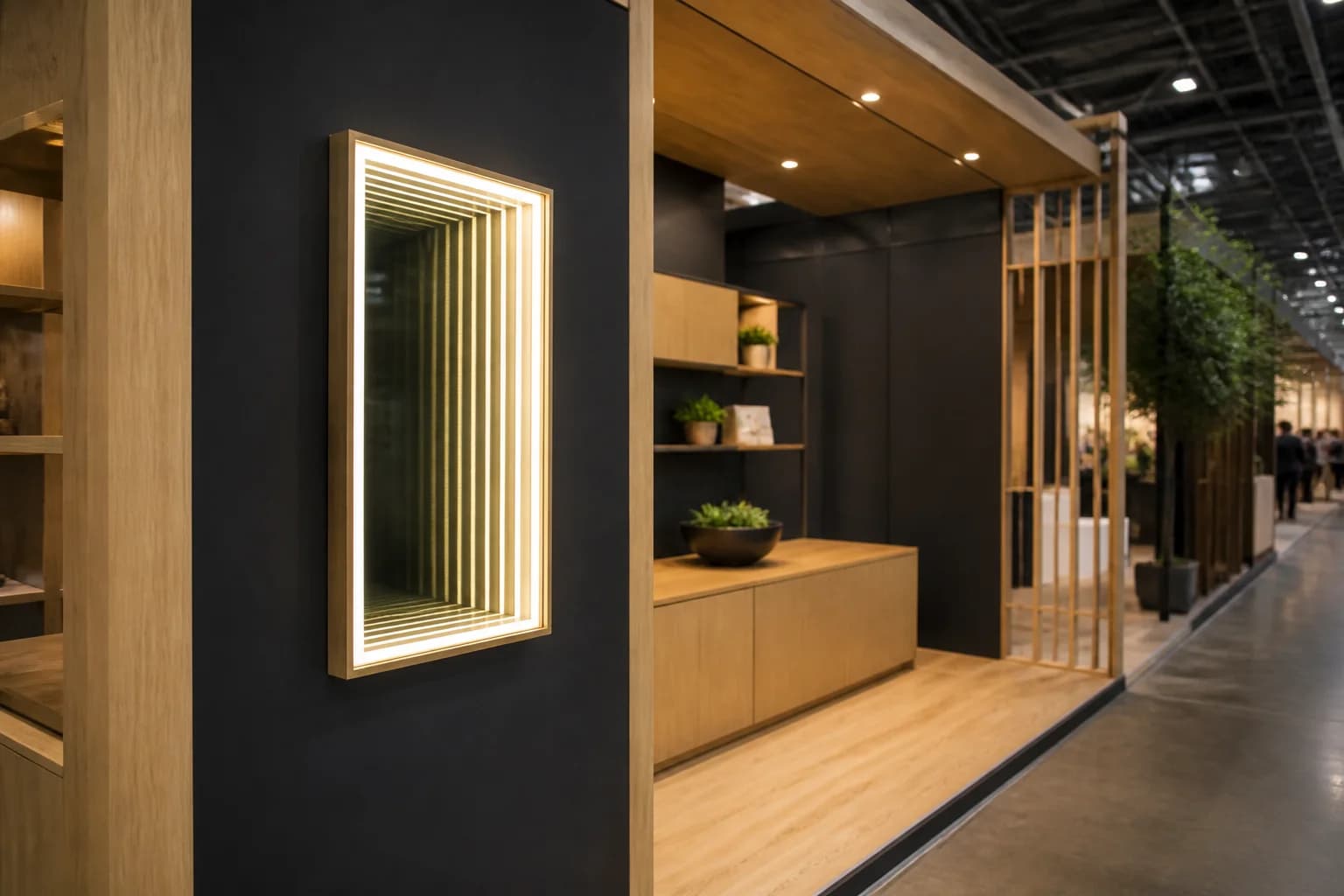
Standard focal panels win when calendar, quantity, and predictability matter more than silhouette. Sample walls and concept stores that need to prove the infinity effect before a flagship budget lands. Pop-up retail and exhibition accents that must crate, hang, and strike on a show schedule. Repeatable in-store moments across locations that do not yet justify a golden-sample logo program. Procurement teams that need a landed-cost-friendly quote without waiting on shop drawings for every unit.
They also win as a learning install. Facilities and GCs who have never hung an infinity stack can complete a documented kit — standoffs or a French cleat, a known voltage, a labeled driver — without coordinating millwork niches and lifting plans. If the venue is indoor, the wall is flat, projection limits are generous, and nobody is asking the tunnel to follow a brand outline, stay on the standard SKU. Exhibition booths often start here: a camera-friendly focal panel that reads from the aisle under bright hall lighting, then upgrades later if the brand wants a full modular wall.
Quantity quoting is the other tell. When the PO is for six or sixty identical rectangles, a standard glass-layer count and driver keep QC and packing boring in the best way. Custom still exists for rollouts — that is a locked logo standard with market-split BOMs — but do not pay for CAD on every unit if the design never leaves the rectangle. Compact protective packing is already part of the panel kit; you are not inventing lift points for a feature wall.
When full custom optics are non-negotiable
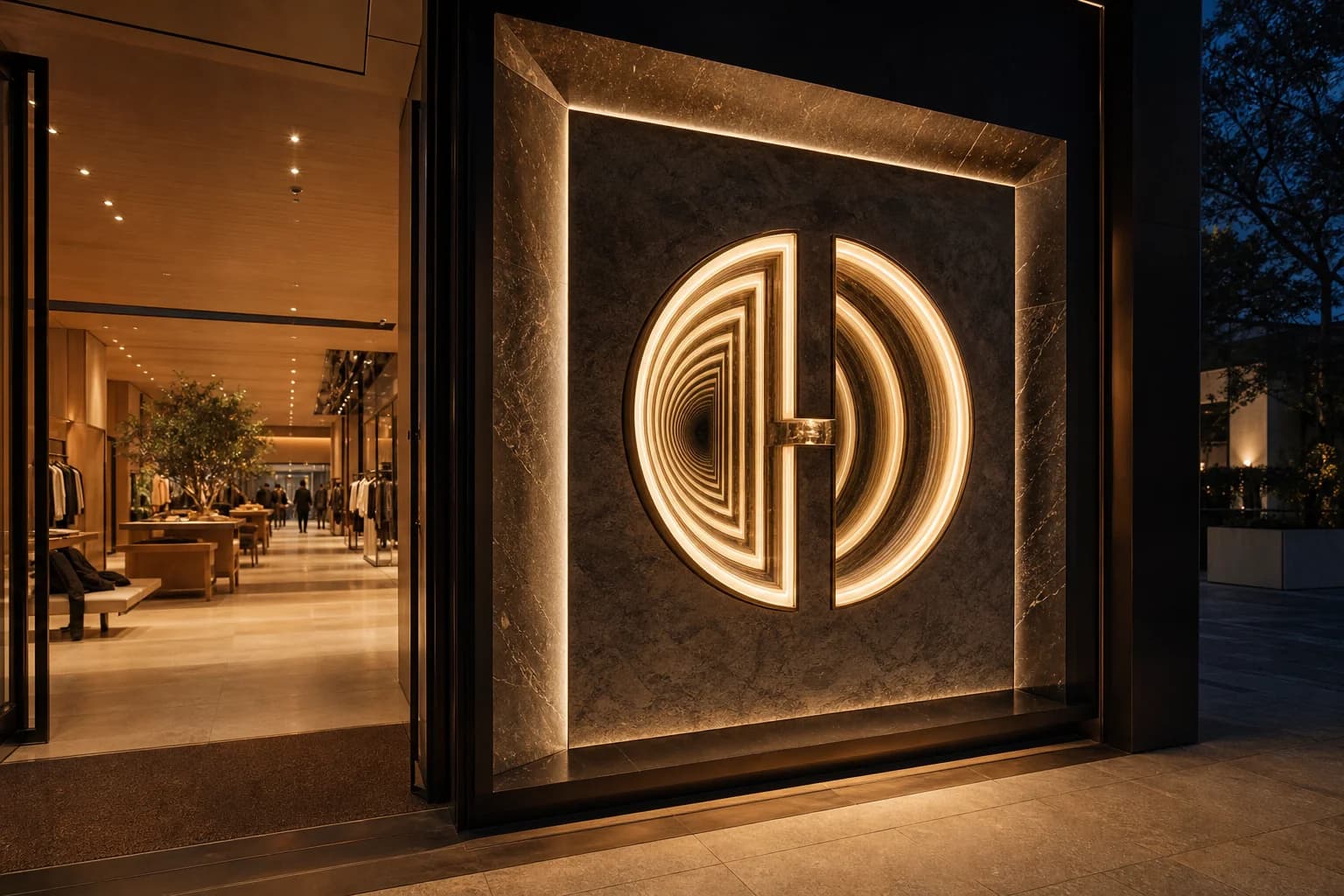
Full custom is required when the optical cavity must follow a shape that a rectangle cannot. Infinity logo signs start from vector artwork: glass spacing, LED density, and diffusion are tuned so the mark reads as an endless tunnel, not a glow box behind a stencil. Infinity letter systems go further — each character is its own optical cell so stroke and returns stay even across the word. Feature walls and portals integrate with stone, metal, and millwork; panel joints, control zones, and hidden service access are modeled in CAD before glass is cut. None of those jobs can be faked by tiling standard panels behind a cut-out fascia.
Control and duty cycle push the same way. A flagship that needs exact brand color, scene presets, or DMX personality is not a standard RGB brick. Continuous-run lobbies and nightlife need thermal paths and driver placement sized for the duty cycle — not a generic supply stuffed in a shallow cavity. Landlord or millwork caps on projection, outdoor exposure, and AHJ paperwork also belong on the custom path: a standard kit assumes indoor use, documented power, and a published depth.
Viewing distance is the last honest gate. A 600 mm panel at three meters in a boutique can look endless. The same SKU at twelve meters in a hotel atrium reads as a small glowing tile. Custom scales glass count, LED pitch, and physical size to the approach. If the elevation shows a logo occupying a niche, or letters spanning a reception wall, do not try to “make standard work” with extra frames. You will spend the custom lead time anyway — after the first install fails under camera.
The hybrid path — and why mixing SKUs on one wall fails
Many programs should start standard and graduate. A concept store hangs two focal panels, photographs the effect, then issues an RFQ for a logo tunnel once the brand team has seen real depth instead of a rendering. That sequence is healthy when the first units are treated as temporary or as side accents — not as the hero mark. The upgrade path is a new optical stack: custom logo signs, letter systems, or a feature wall — not a firmware flash on the original panel.
The failure mode is mixing SKUs on one composed wall. A standard rectangle next to a custom logo cell will almost never share glass gap, brightness, or color temperature. Guests and phone cameras read two products. If you need a family of pieces — reception logo plus corridor accents — spec them as one optical standard, even if some units are simpler rectangles, or keep the standard panels on a different wall, different lighting scene, and different viewing distance. Do not assume a shared driver will unify two cavities that were never designed together.
What to send so we can recommend standard or custom
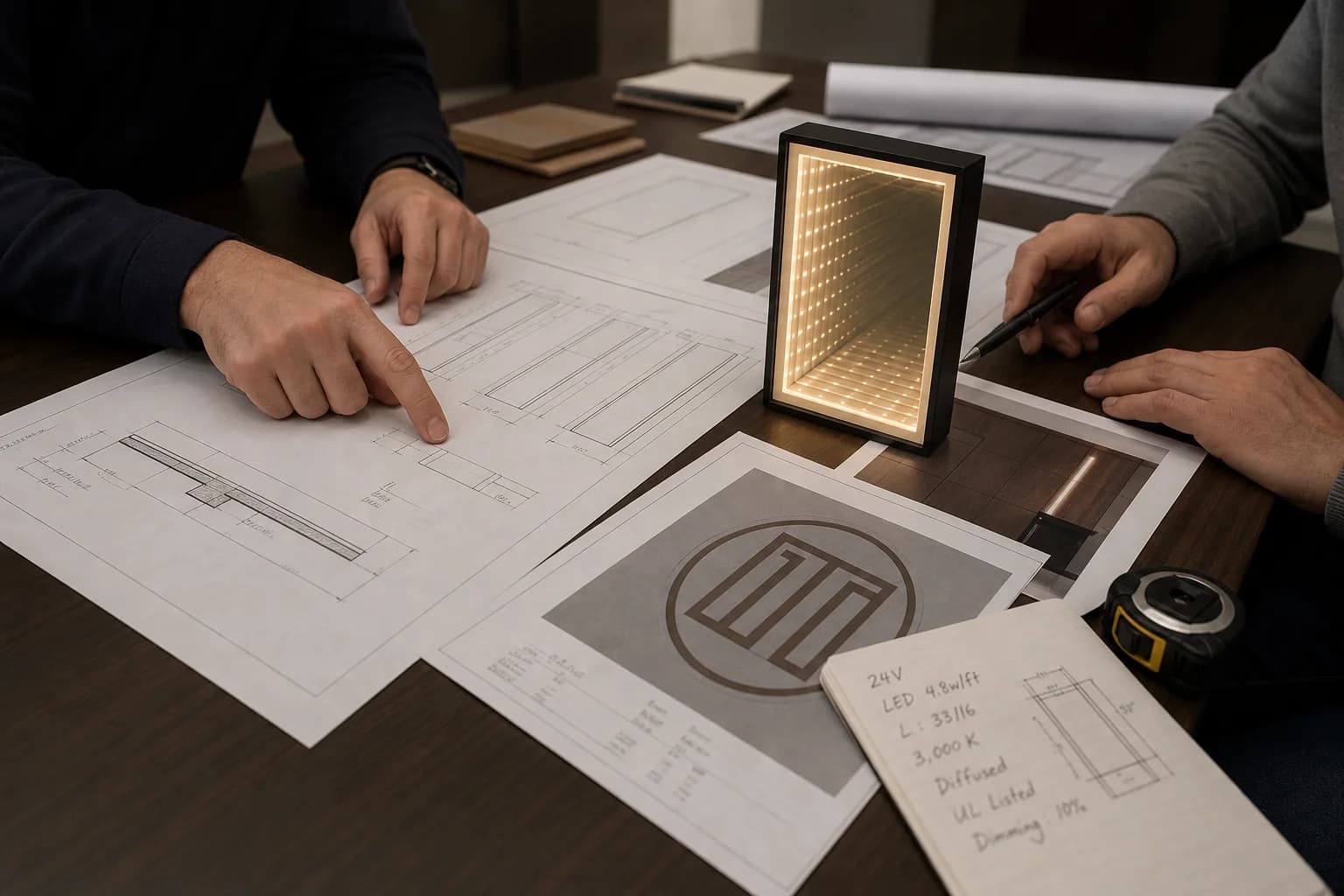
A useful RFQ names whether the piece must follow artwork or can be a published size band. Send target dimensions or the size band you can accept, indoor versus outdoor, viewing distance, ambient light, static white versus RGB, destination voltage, quantity, and photos of the wall. If a logo or wordmark is sacred, attach vectors and say so. If the date cannot move, say that too — calendar is often the real reason to stay on a standard panel. Note millwork niches, projection limits, and whether this is a one-off, a pop-up, or a future rollout.
Send those inputs to InfinityMir when you are choosing between a standard focal panel and a full custom build. We respond with a fabrication-ready recommendation — which size band can ship as a kit, where a custom optical stack is required, control and driver intent, and packing assumptions — so you do not pay for CAD you do not need, or hang a rectangle where the brand needed a mark.
Related capability
Custom infinity logo signsManufactured Product Catalog
Explore Infinity Mirror Product Lines
Browse our full range of custom infinity mirror signs, letter systems, and feature walls — engineered with CAD shop drawings, UL/CE compliance, and export packing.
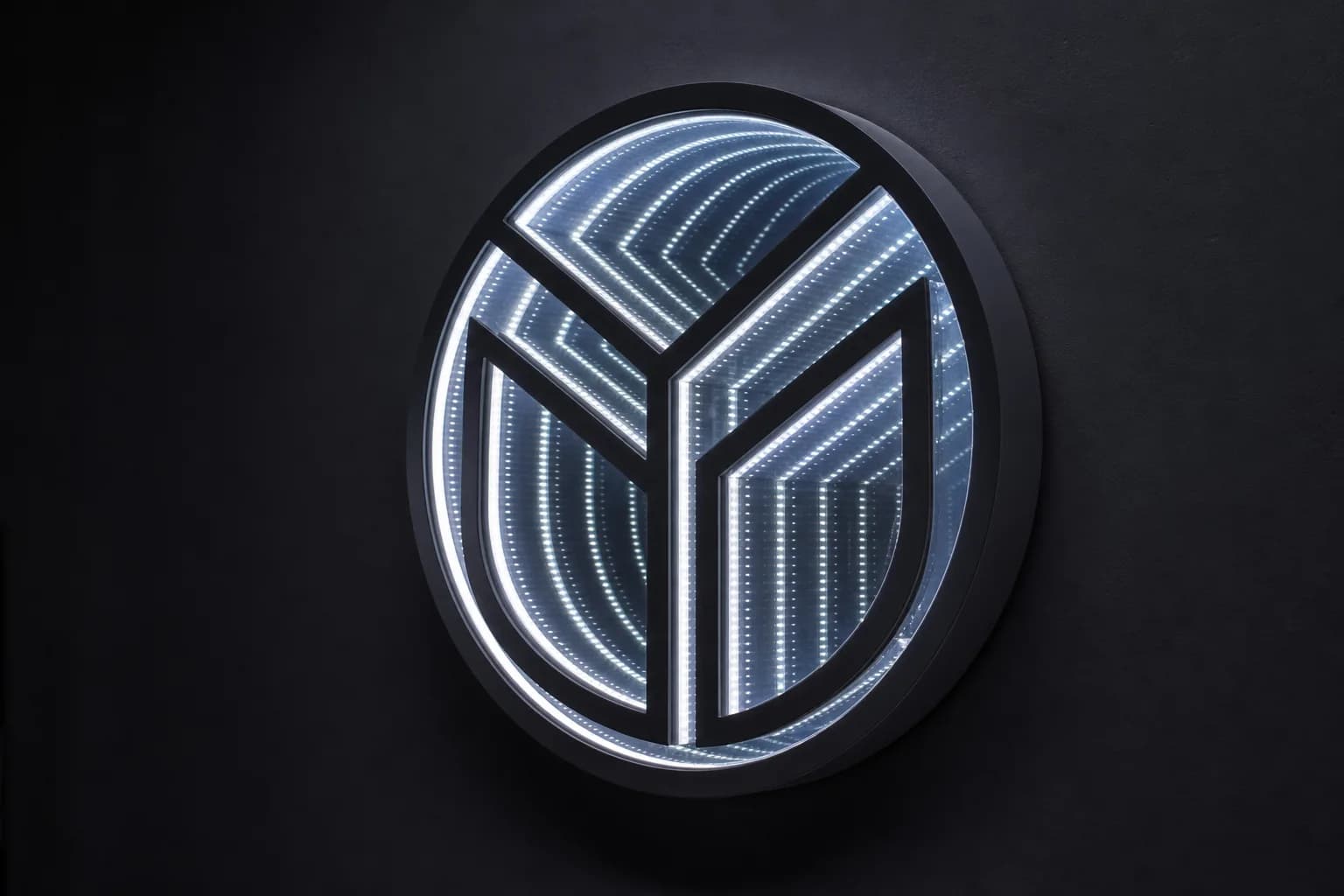
Infinity Logo Signs
Turn your brand mark into a custom infinity mirror logo sign — optical-grade glass, tuned LEDs, and endless depth engineered from vector artwork.
View Infinity Logo Signs details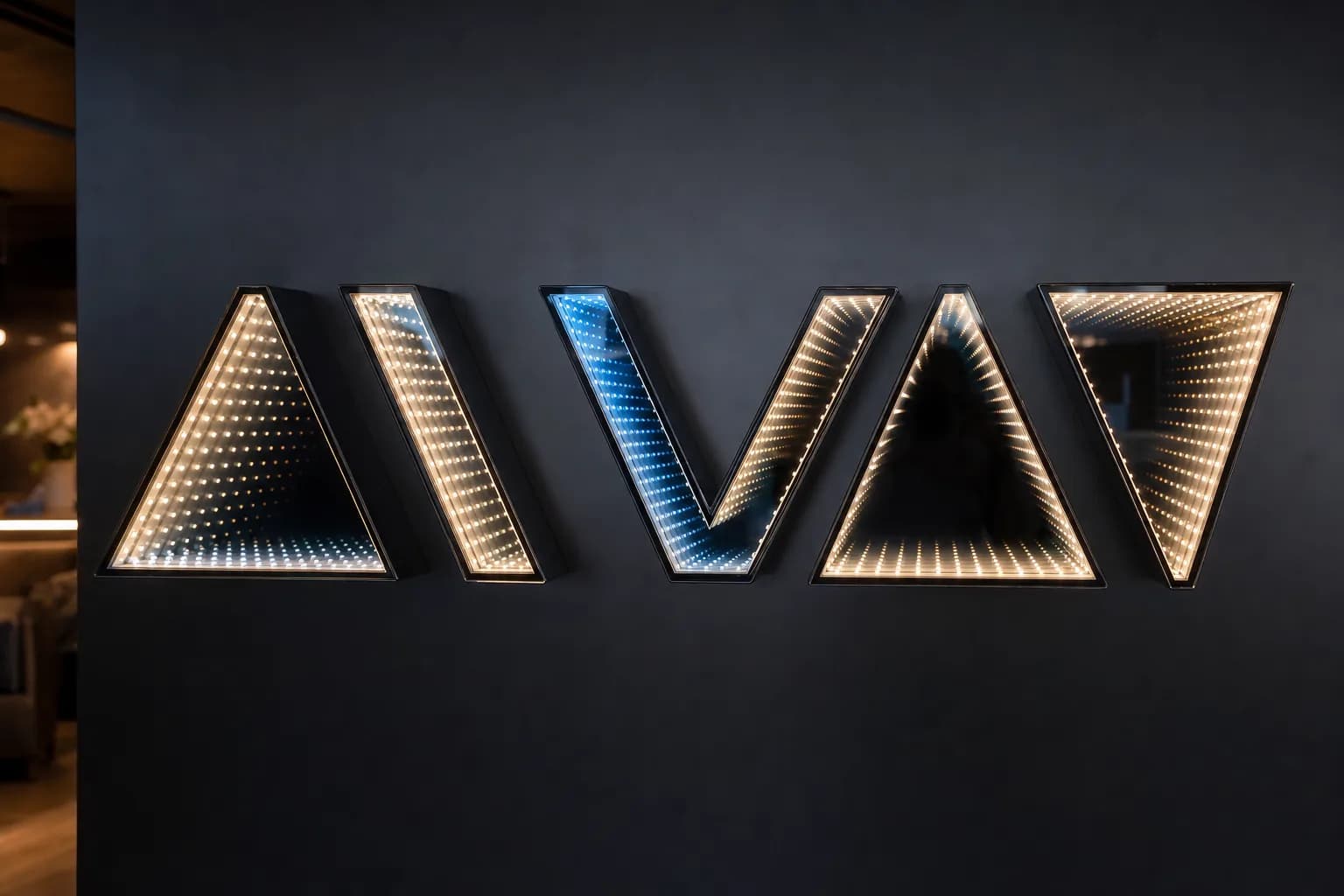
Infinity Mirror Letter Systems
Custom infinity mirror letter systems and channel signs built as individual optical cells for even depth across the whole wordmark.
View Infinity Mirror Letter Systems details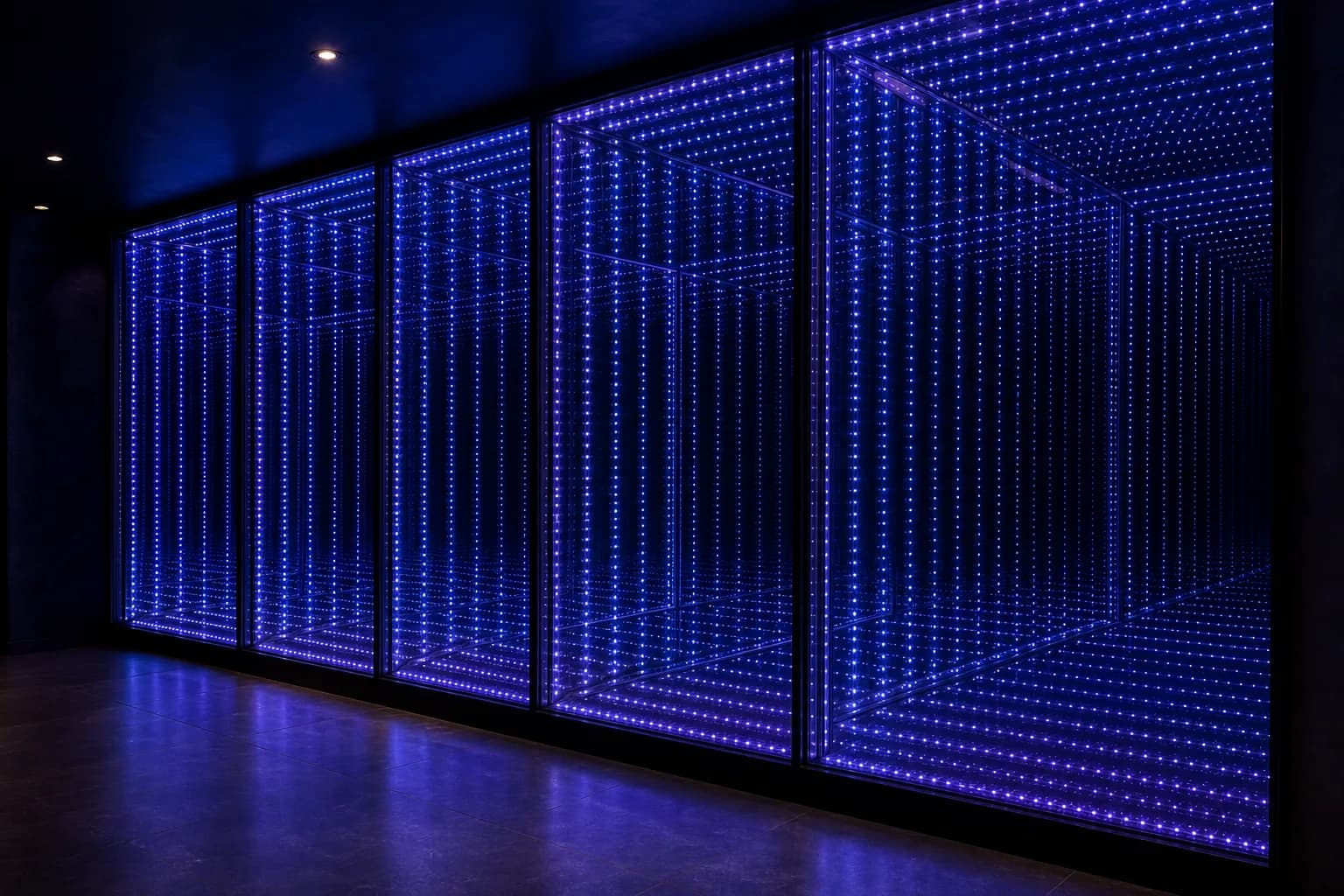
Feature Walls & Portals
Large-format infinity mirror feature walls and portals with synchronized multi-zone control, 24/7 heat management, and hidden service access.
View Feature Walls & Portals details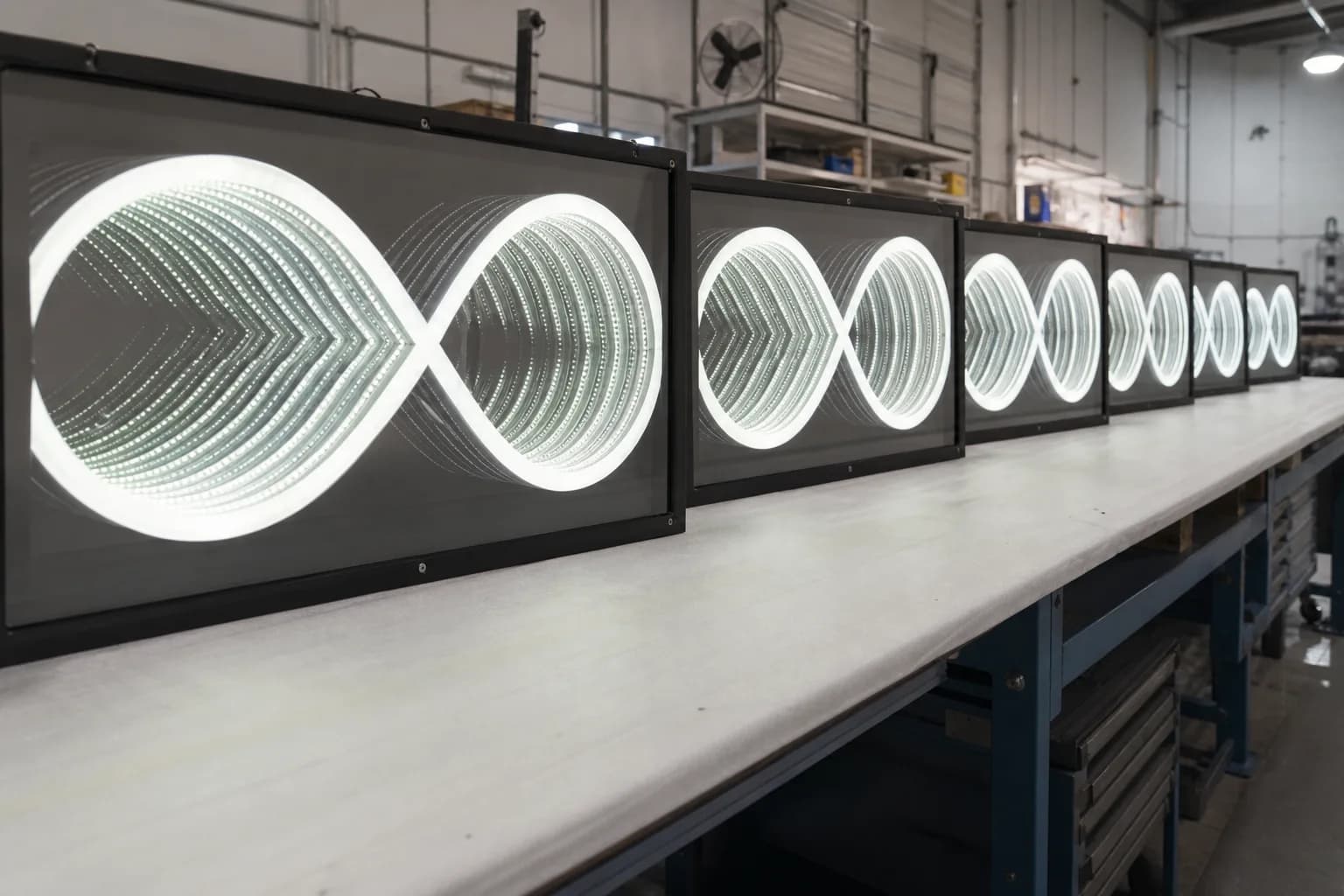
OEM & Rollout Programs
Private-label OEM & multi-location infinity mirror rollout programs with golden samples, controlled BOMs, and UL/CE electrical paths.
View OEM & Rollout Programs details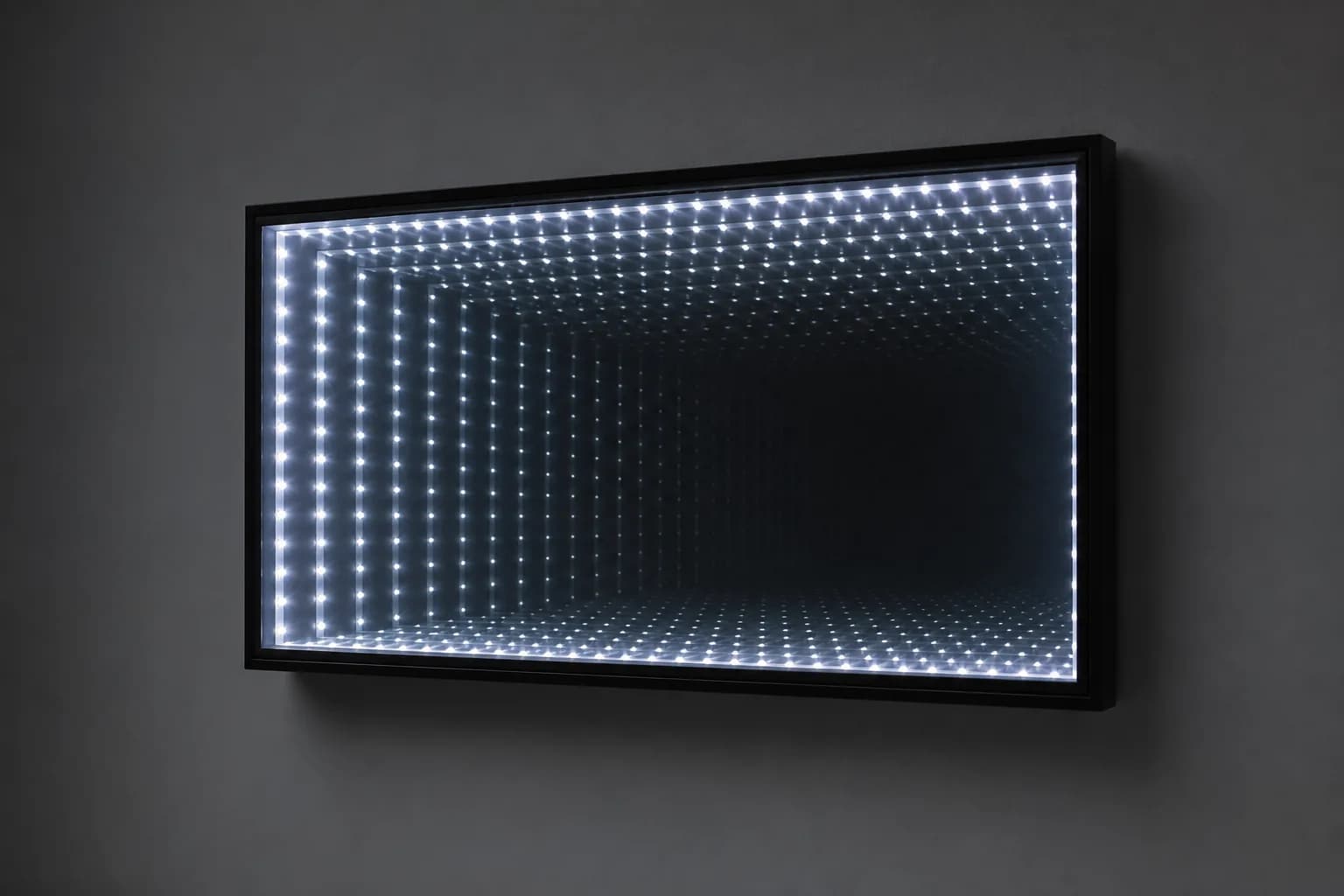
Standard Focal Panels
Fixed-size, ready-to-order standard infinity mirror focal panels with standard drivers and mounting kits for fast, predictable projects.
View Standard Focal Panels details