OEM Multi-Location Infinity Mirror Rollout: Golden Sample to Serial QC
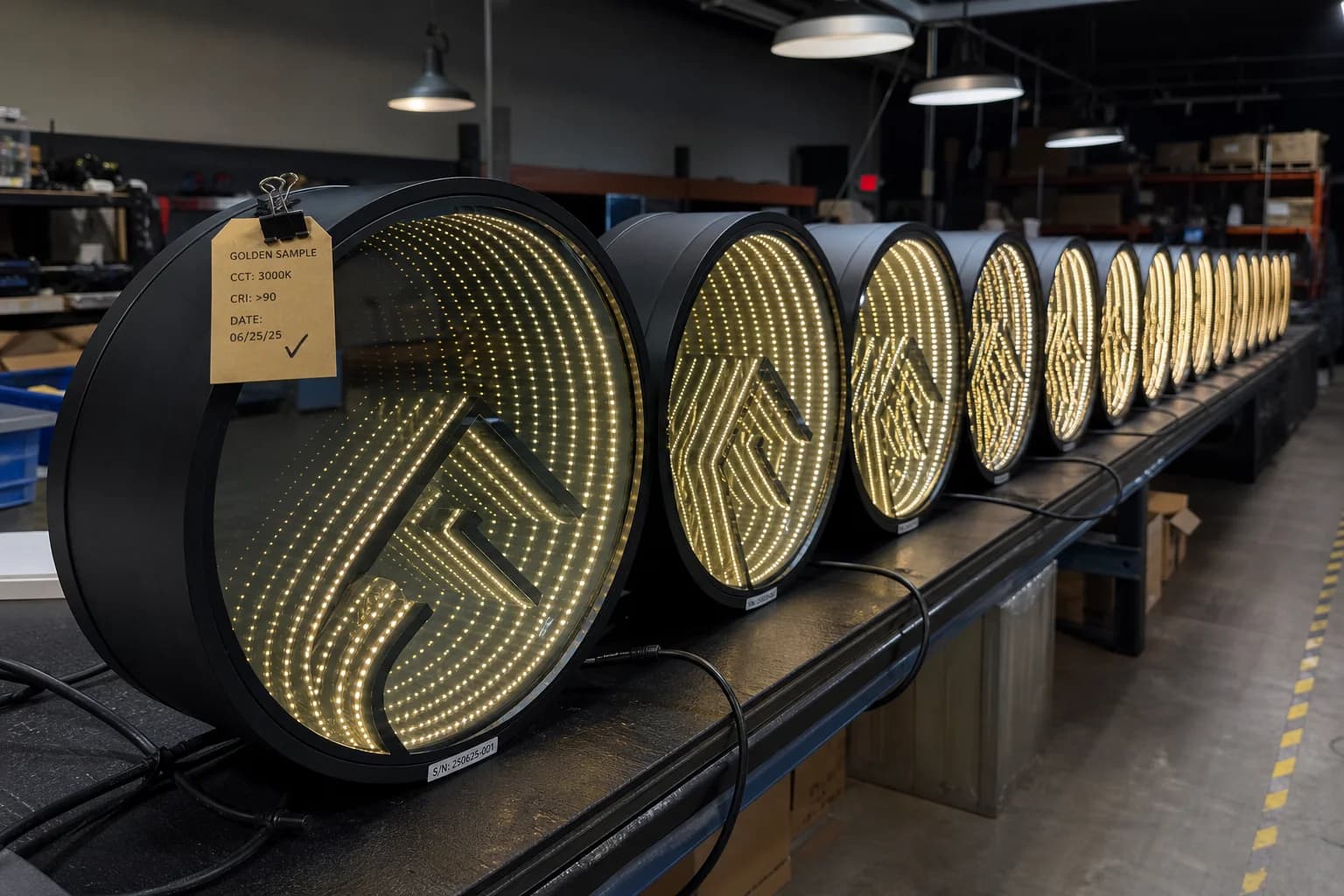
How to run an OEM infinity mirror program from golden sample to serial QC so multi-location rollouts stay optically identical — locked BOMs, market-split electrical paths, and PO-aligned checkpoints.
Why a multi-location rollout is not a stack of one-off POs
Most OEM infinity mirror programs fail after the first city looks right. Buyers approve a rendering, order a prototype, then treat every later site as a copy-paste PO. Glass gap, LED bin, driver SKU, and coating lot quietly drift. By store twelve the tunnel is cooler, shallower, or brighter than store one — guests photograph both, and brand ops inherit two products. That is not a factory surprise. It is a procurement structure that never named a locked optical standard.
This guide is for brand rollout teams, franchise operators, sign contractors, and OEM/ODM partners specifying a multi-location infinity mirror program. Product pages own the commercial offer. Here we map the process that keeps units identical: a golden sample that freezes optics and structure, revision-controlled BOMs split by electrical market, serialized QC that matches PO language, and packing and spare kits that travel with the same discipline. The goal is not a prettier first unit. It is a first unit that later units can still match.
What a golden sample actually locks
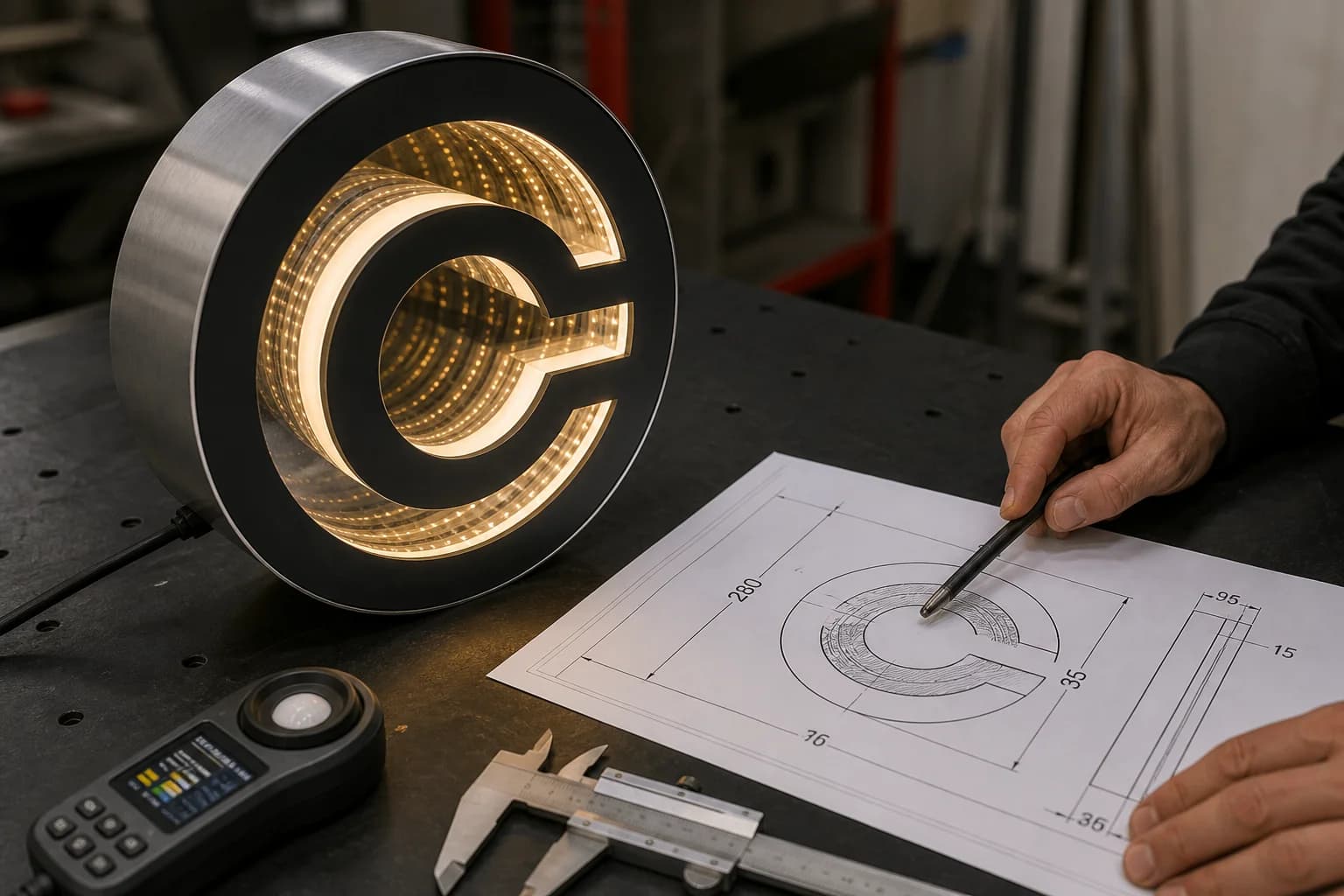
A golden sample is not a sales mock-up you keep on a shelf. It is the optical and structural reference every serial unit is judged against. For an infinity logo cell that means glass-layer count and gap, LED pitch and bin, diffuser strategy, return depth, finish language, and the viewing-distance assumption used when the sample was approved. Photograph it under agreed ambient light and camera settings. Measure brightness and color, not only “looks good in the showroom.” If the sample was tuned under dim hospitality wash, a flagship with daylight glass will not match unless you name that condition in the approval.
Lock the sample against a drawing revision, not against a conversation. Call out the artwork file, stroke rebuilds, cavity depth, Kelvin or RGB personality, and driver type. Brand reviewers should sign the same packet fabrication will use: shop drawing, lit photos, and a short optical checklist — first-ring evenness, hotspot at corners, coating haze, face flatness. A sample that exists only as a WhatsApp video is how city two “improves” the LED and city three inherits a different tunnel.
Treat the golden sample as inventory, not as the first shippable store unit unless the program explicitly allows it. Keep it at the factory or at a brand lab so serial production can be compared against it. If you must hang the sample in a concept store, photograph and meter it before it leaves, then treat that data as the frozen standard — not the unit after six months of dust, driver aging, and a facilities dimmer nobody recorded.
Revision control and market-split BOMs
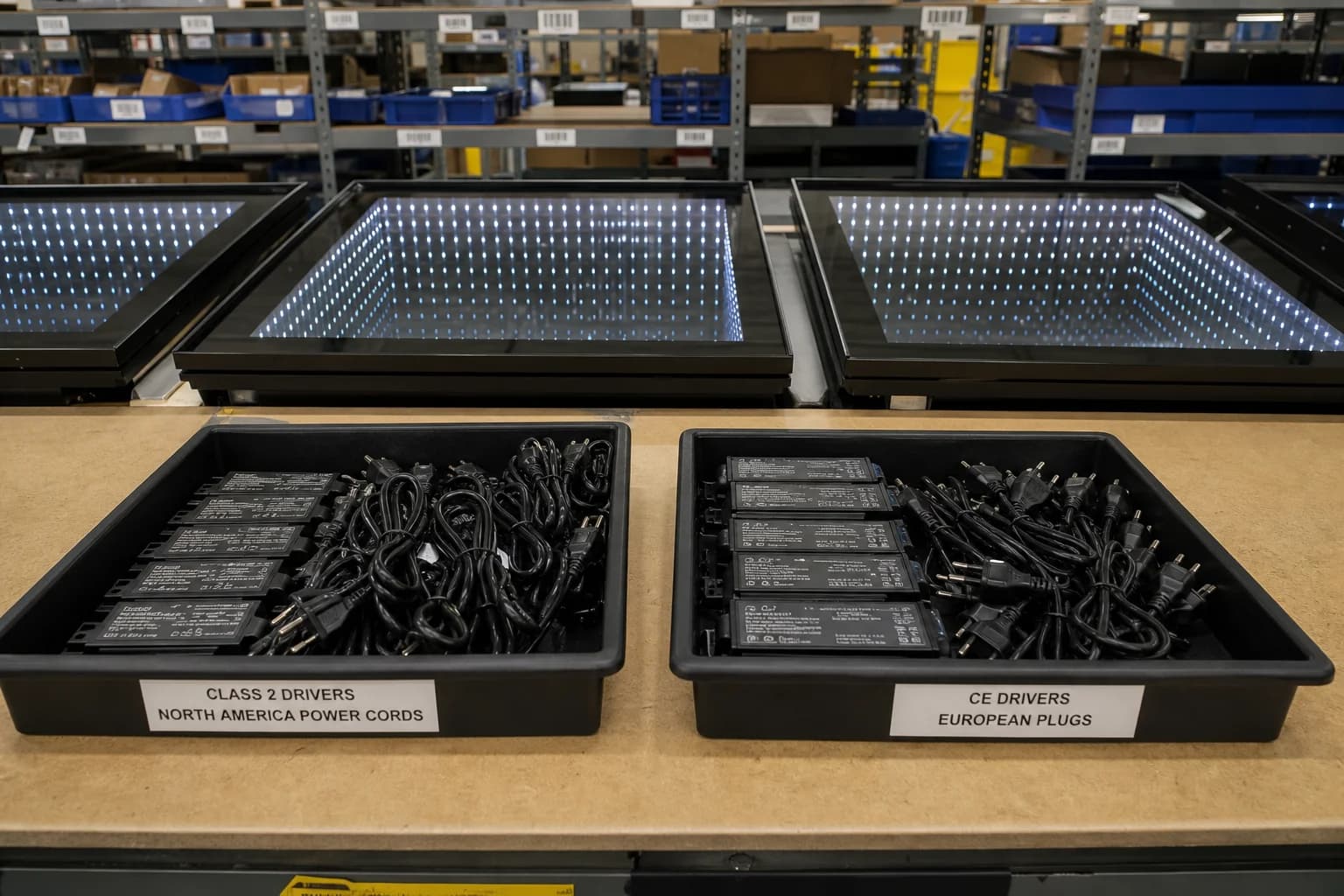
Once the optical stack is frozen, the BOM is where rollouts usually split in two. A US site and an EU site can share glass, frame, and LED layout and still fail inspection if the driver, cordset, and listings follow the wrong market. Split the electrical path by destination: UL/NEC-oriented components and evidence for North America, CE/DoC-oriented components for the EU and similar markets — the same discipline covered in our UL vs CE BOM guide. Do not mix leftover drivers from a previous PO into a new city because they “fit the cavity.” Serial QC will pass the tunnel and fail the AHJ.
Revision control is the other half. Artwork, glass gap, and LED bin must carry a revision ID that the PO can cite. When brand updates a wordmark or Kelvin, issue a new revision and a new golden-sample gate — do not silently thicken a stroke on lot 40 because the font file changed. Private-label and ODM programs should also freeze documentation language: nameplates, packing labels, and spare-kit SKUs aligned to the buyer’s PO, not to an internal factory nickname that receiving cannot search.
Quantity does not replace a BOM freeze. Twenty units quoted as “same as last time” without a revision ID is how coating lots and LED bins drift. Ask for a controlled BOM per market, a change log, and a rule for substitutions: any electrical or optical substitute requires written approval and, if it can change the tunnel, a new sample check.
Serial QC from the first unit to the last crate
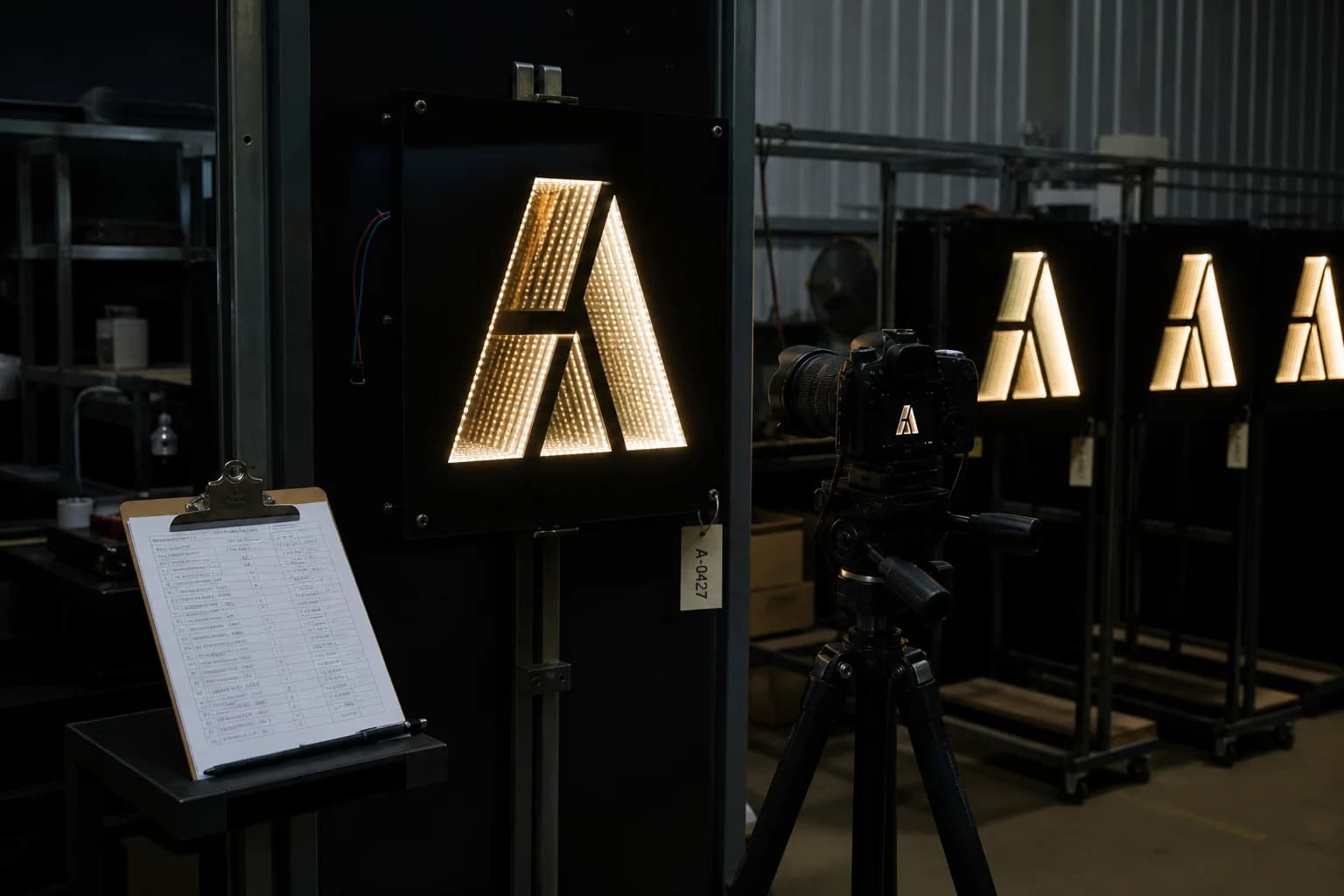
Serial QC is how you prove unit twelve matches unit one. Assign a serial to every optical cell. Photograph each unit at agreed camera angles — face-on, corner detail, power-on first ring — against a lighting setup that matches the golden-sample protocol. Record brightness and color notes, glass-gap confirmation, and a pass/fail against the checklist, not a thumbs-up on the line. Tie those records to the PO line and the crate number so a damaged arrival or a dim site can be traced without opening every box.
Define tolerances in the RFQ. Infinity mirrors do not have a useful “close enough” for brand color or first-ring evenness. Name what fails: coating haze, dark LED modules, frame out of flat, driver label missing, serial unreadable. A unit that fails stays in quarantine; it does not ship as a “back-of-house” spare unless the program has an explicit downgrade path. The brand-rollout logo panels case we ran for a multi-site program used serialized checkpoints so a logo hung in one city could be compared, by serial, to the next.
QC without packing QC is incomplete. The same serial should appear on the cell, the crate, and the photo pack. Orientation marks, foam maps, and accessory bags must be identical across the lot — the export packing rules in our shipping guide. If unit eight arrives with a different foam recipe, you no longer have a serial program; you have a stack of one-offs that happen to share artwork.
Labeling, spare kits, and site identity
Multi-location infinity mirrors fail in the field when the local electrician cannot identify the driver or brand ops invents a new procedure per city. Label interconnects, voltage, and market path in the language the PO uses. Pack a spare-driver ratio and, when LED-plane risk is real, a spare-module strategy agreed at RFQ. Keep kit contents identical across sites so a Dallas facilities crew and a Berlin preferred contractor follow the same torque, gasket, and glass-handling notes.
Private-label OEM/ODM work can carry the buyer’s documentation and packaging, but the optical standard still belongs to the golden sample. Do not let a carton redesign change how the cell is supported in the crate. Do not let a local dimmer or RGB controller — added after install — become an unofficial revision. If control tiers differ by venue (static logo wall versus DMX nightlife), those are different SKUs with different samples, not one BOM with a field firmware flash.
Reorders are part of the program. A VMI-style or scheduled replenishment only works if the revision is still live. Call out how long the golden sample and BOM remain valid, and what happens when a driver SKU goes end-of-life. A three-year rollout that silently substitutes LEDs is how the last ten stores look like a different brand under camera.
What to send so we can run golden sample through serial QC
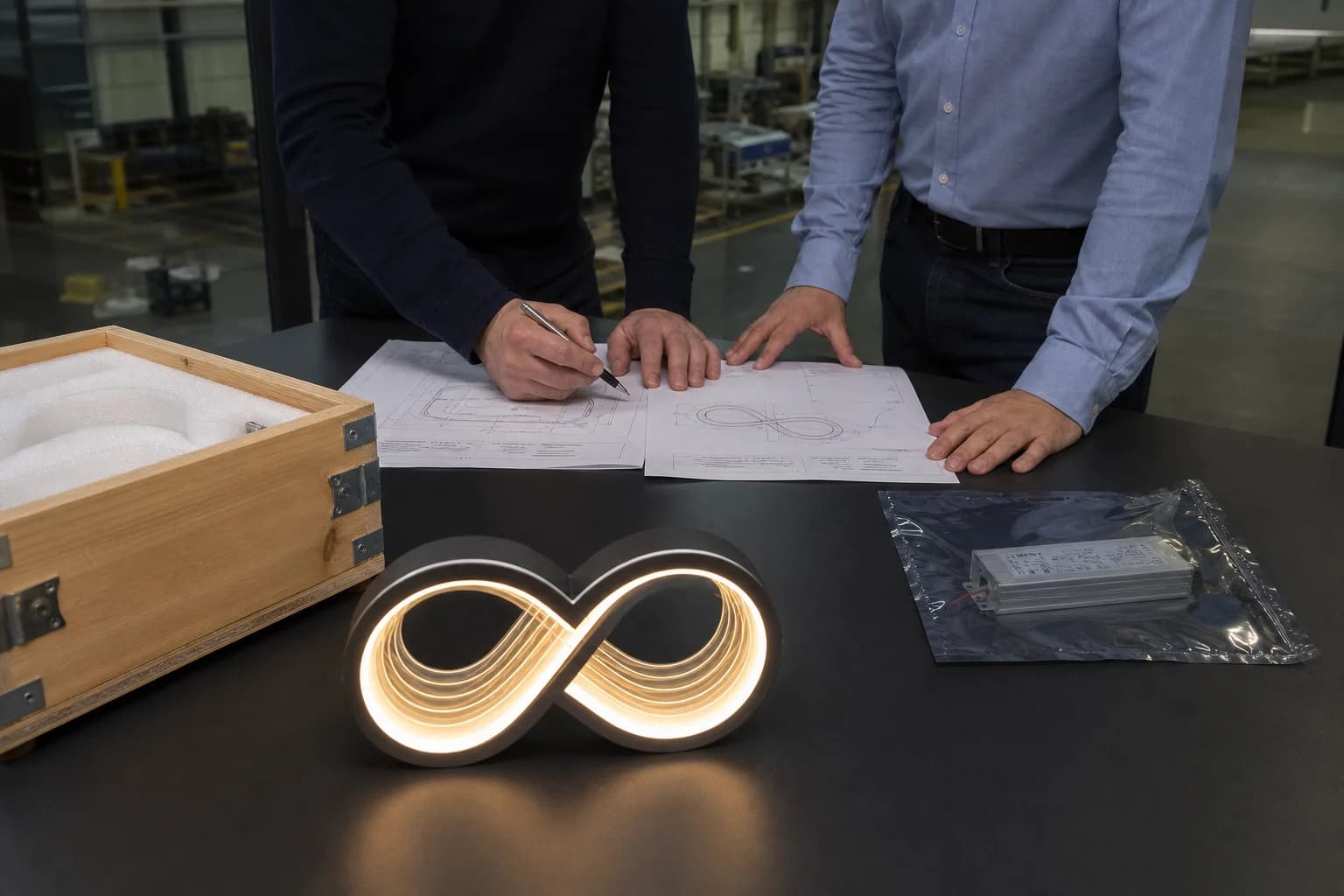
A useful RFQ for an OEM multi-location infinity mirror rollout names program scope, not a single storefront. Send target markets and voltages, quantity by wave, indoor versus outdoor, artwork vectors, viewing distance, ambient light, static versus RGB/DMX, landlord or millwork constraints, and whether units must match an existing install. Attach photos of typical walls. Say whether you need private-label documentation, spare kits, and a packing standard frozen next to the sample. Note opening dates per city so sampling and freight can sequence against the real calendar.
Send those inputs to InfinityMir when a multi-location infinity mirror program is on the table. We respond with a sampling plan, a locked optical standard, per-market BOM approach, serialized QC checkpoints aligned to your PO language, and packing and spares strategy — so city twelve still matches the golden sample, not a memory of the first opening.
Related capability
Multi-location logo rollout caseManufactured Product Catalog
Explore Infinity Mirror Product Lines
Browse our full range of custom infinity mirror signs, letter systems, and feature walls — engineered with CAD shop drawings, UL/CE compliance, and export packing.
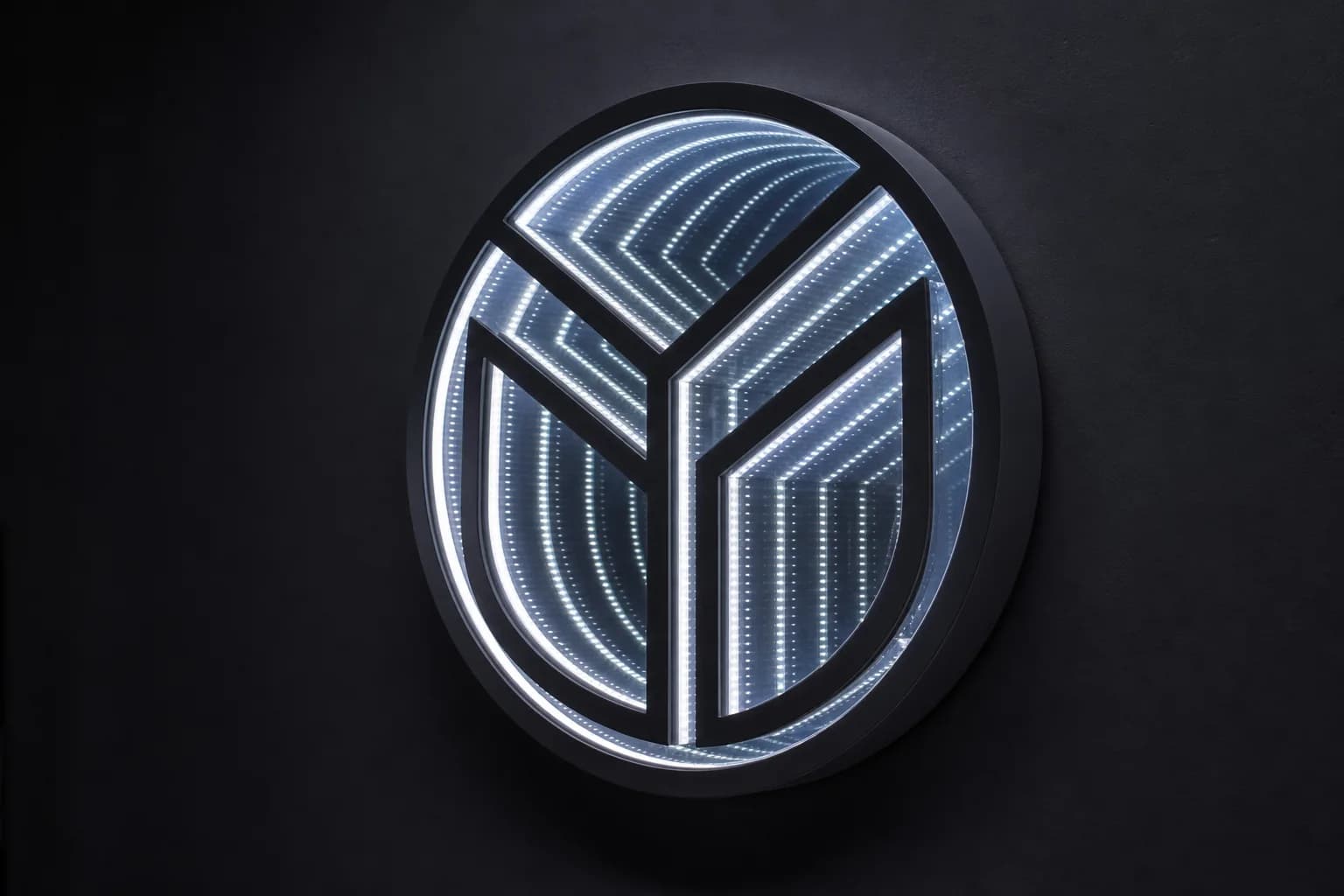
Infinity Logo Signs
Turn your brand mark into a custom infinity mirror logo sign — optical-grade glass, tuned LEDs, and endless depth engineered from vector artwork.
View Infinity Logo Signs details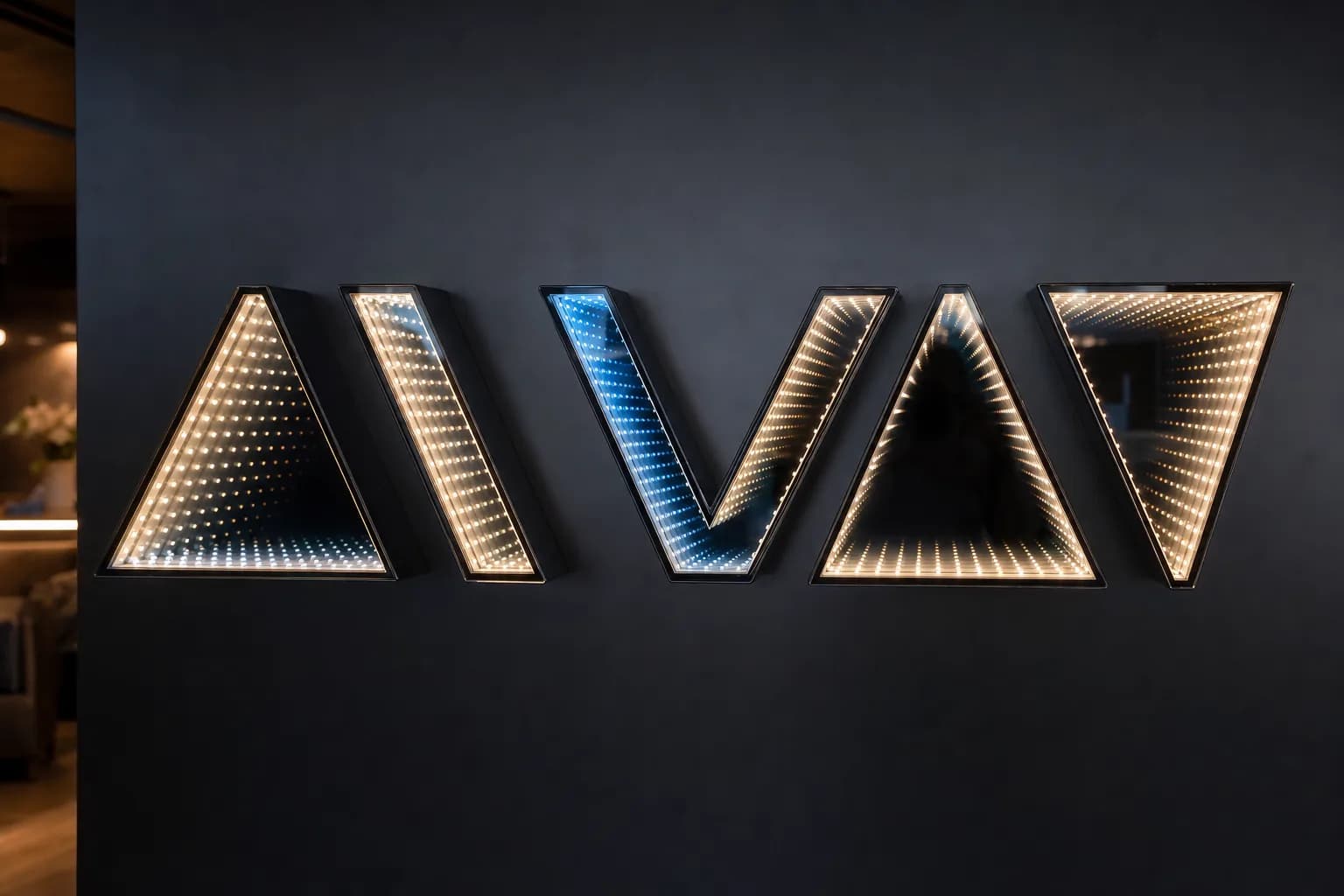
Infinity Mirror Letter Systems
Custom infinity mirror letter systems and channel signs built as individual optical cells for even depth across the whole wordmark.
View Infinity Mirror Letter Systems details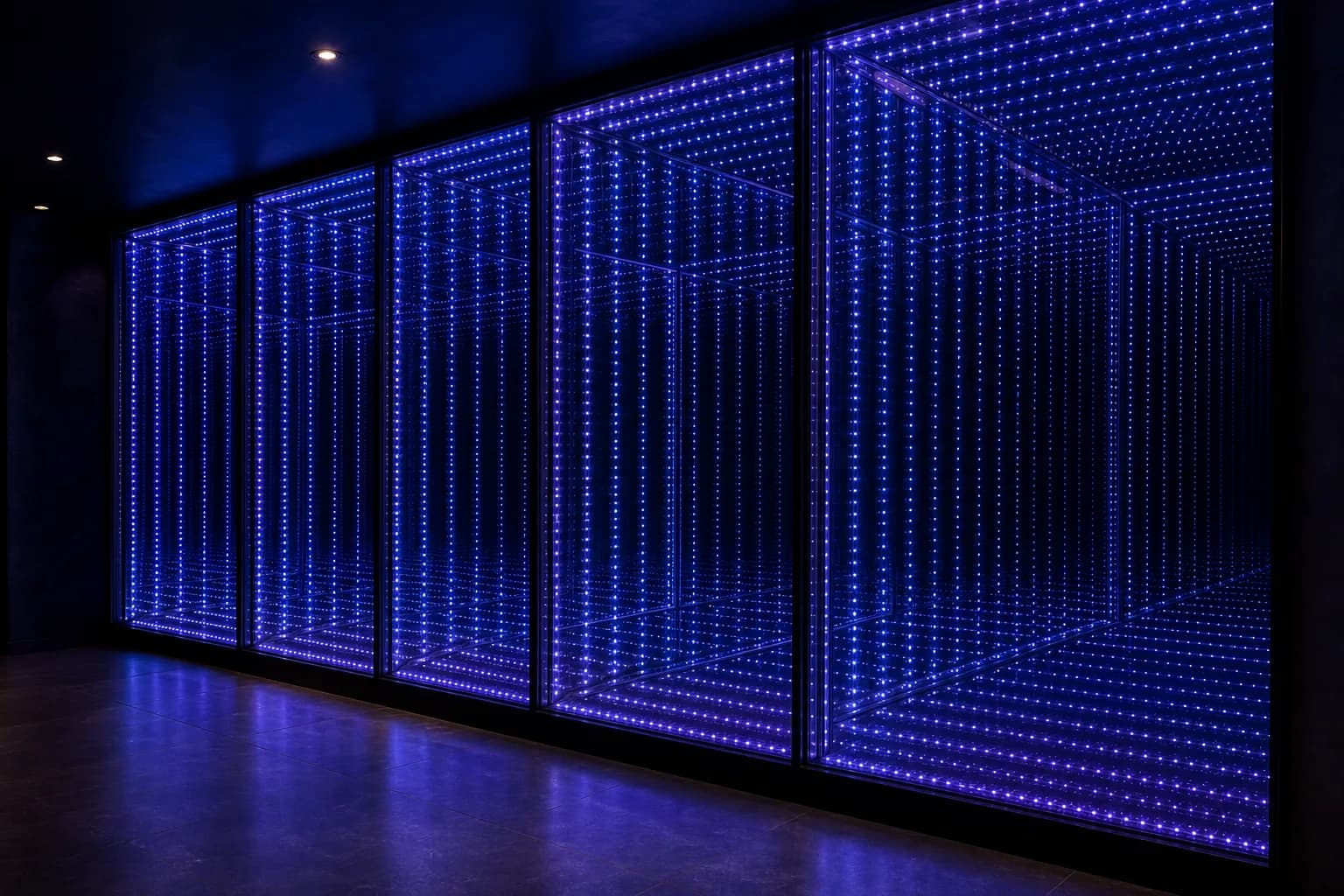
Feature Walls & Portals
Large-format infinity mirror feature walls and portals with synchronized multi-zone control, 24/7 heat management, and hidden service access.
View Feature Walls & Portals details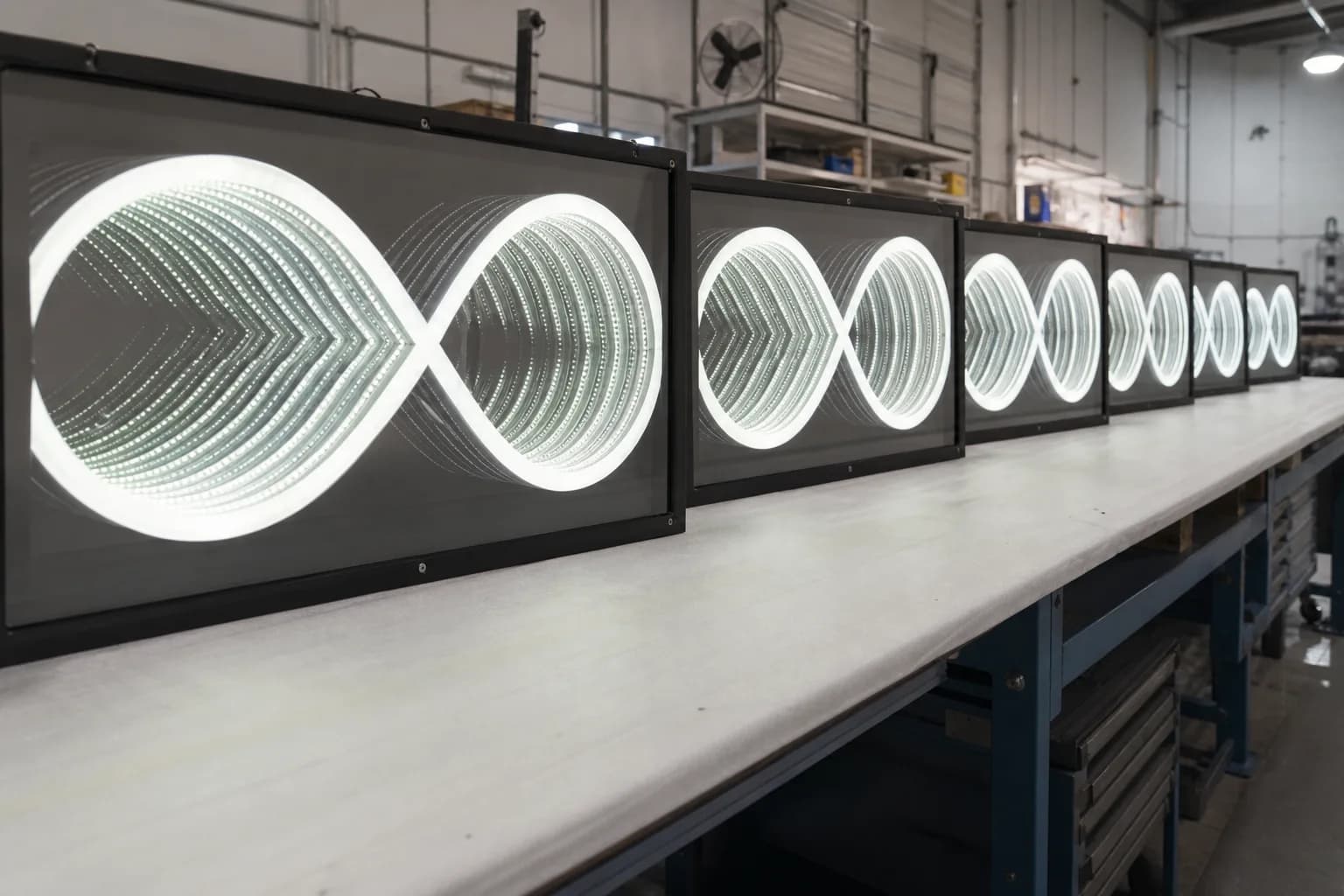
OEM & Rollout Programs
Private-label OEM & multi-location infinity mirror rollout programs with golden samples, controlled BOMs, and UL/CE electrical paths.
View OEM & Rollout Programs details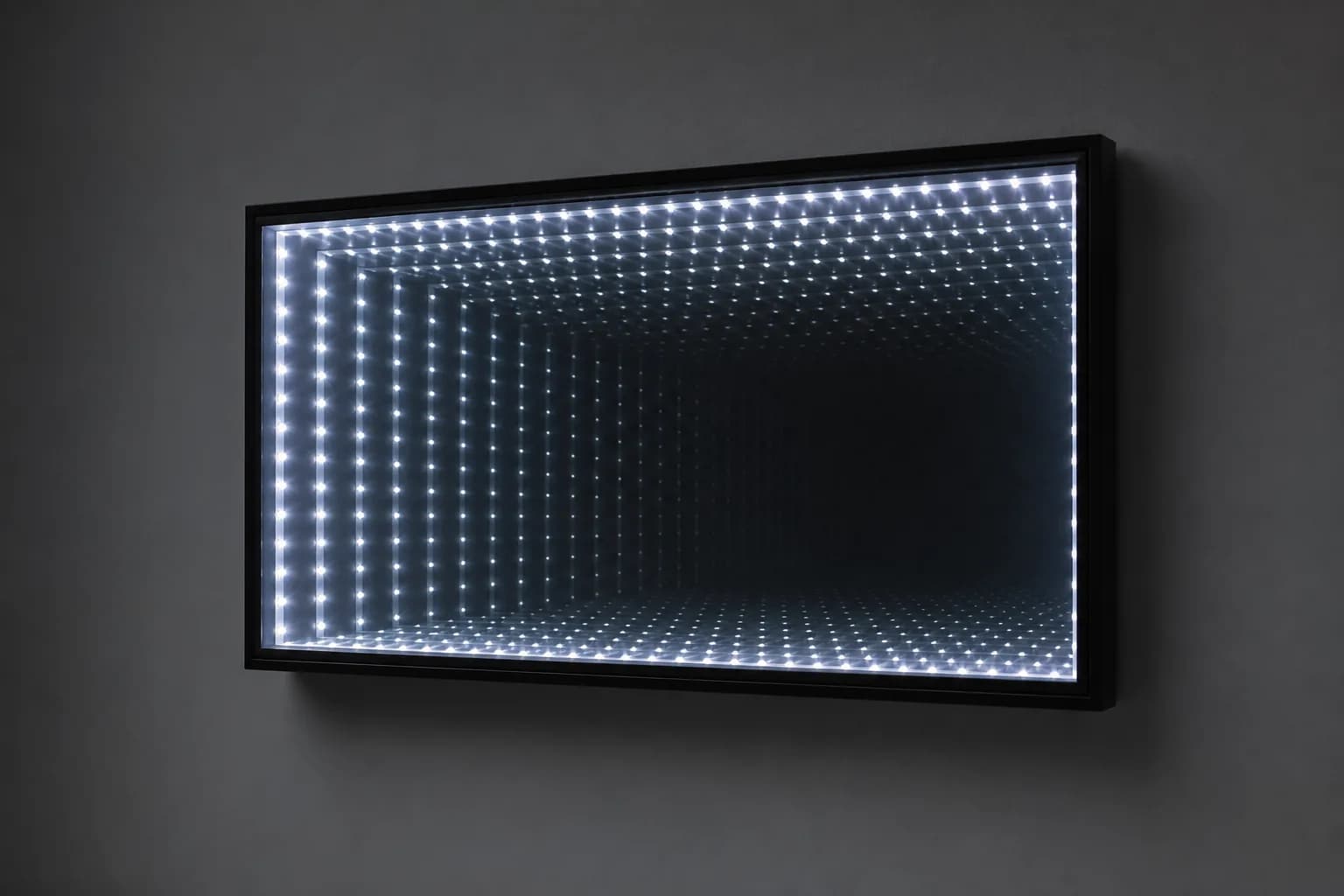
Standard Focal Panels
Fixed-size, ready-to-order standard infinity mirror focal panels with standard drivers and mounting kits for fast, predictable projects.
View Standard Focal Panels details