Shipping & Packing Export-Ready Infinity Mirrors
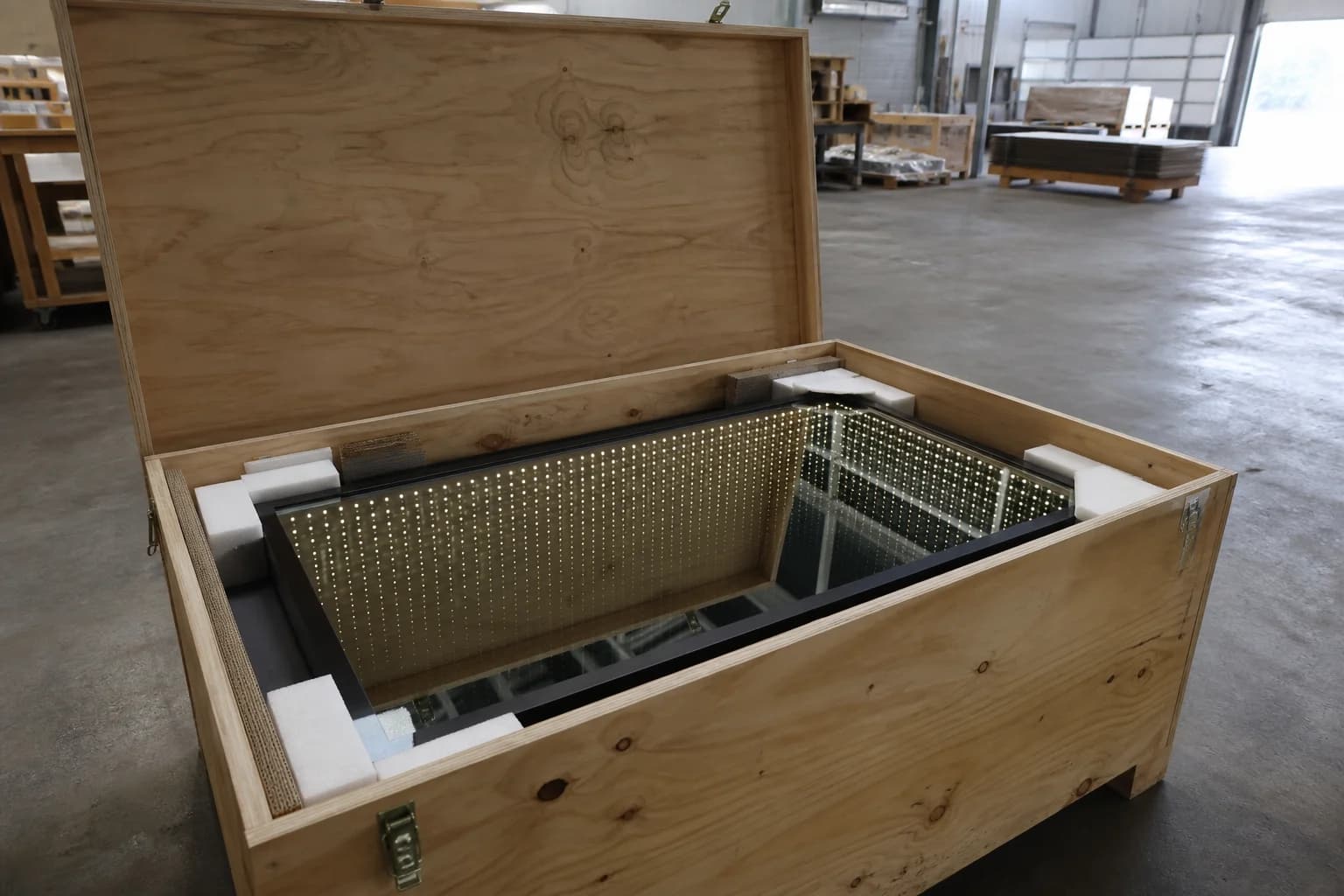
How to crate infinity mirror signs for export packing — glass protection, orientation, documentation, and OEM rollout consistency — so units arrive installable, not claimable.
Why packing belongs in the RFQ — not after the crate ships
An infinity mirror is a sealed optical stack: rear mirror, controlled front glass, LED plane, and a frame that must stay flat. Freight does not care about perceived depth. Shock, racking, moisture, and a crate tipped on its face turn parallel glass into chips, coating haze, or a tunnel that reads uneven after install. The failure mode buyers remember is not “shipping damage” in the abstract — it is a flagship opening with a scratched one-way face and a claim that eats the install schedule.
This guide is for brand rollout teams, sign contractors, GCs, and OEM partners who need export packing for infinity mirrors locked before the PO, not improvised on the loading dock. Treat crate design, orientation marks, photo evidence, and per-market paperwork as fabrication deliverables — the same way you already treat drivers and listings — so quotes stay comparable and units arrive installable.
What makes infinity mirror signs fragile in transit
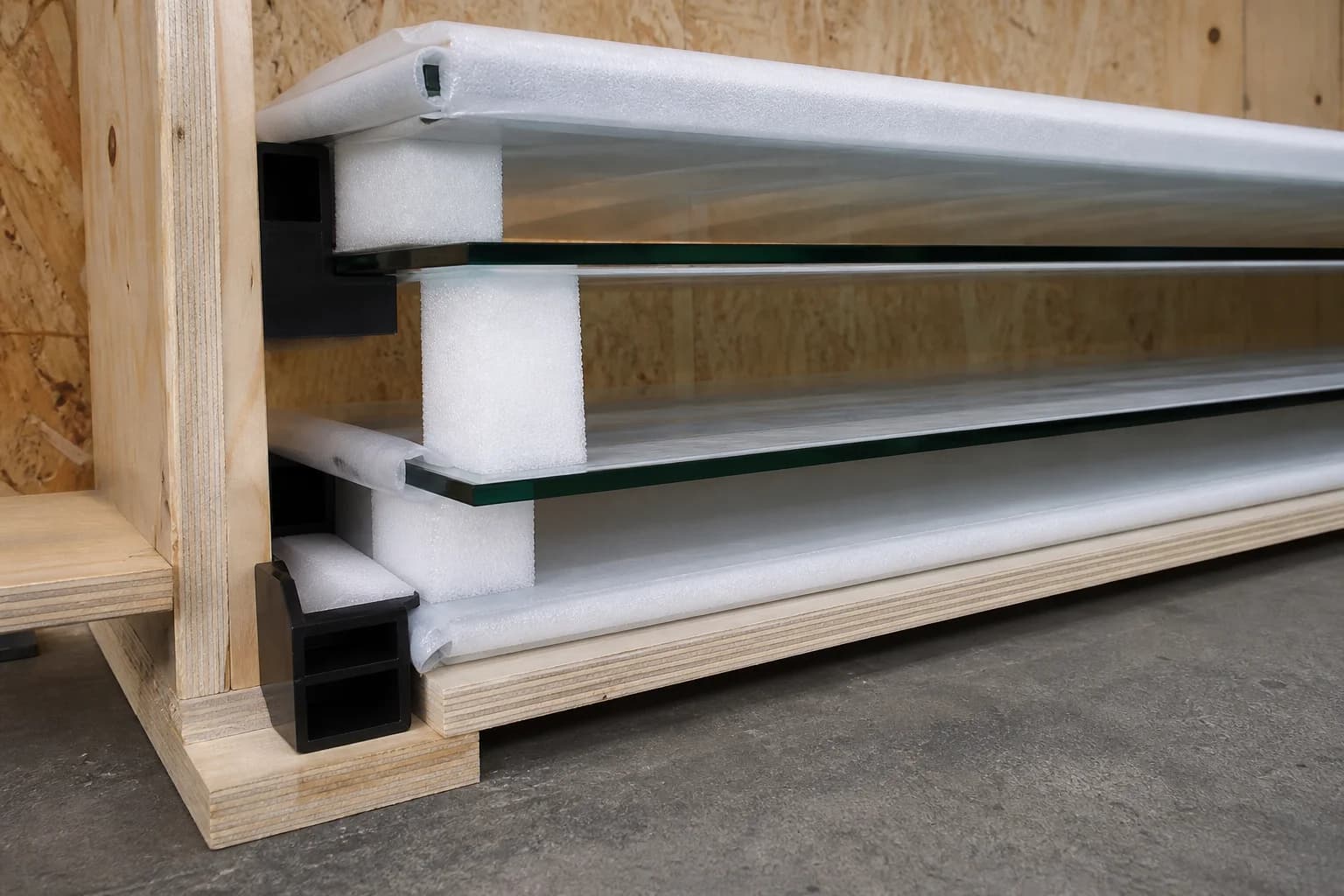
Unlike a shallow lightbox cassette or a set of channel letters in nested cartons, an infinity cell carries large glass planes that must remain parallel. Edge impact travels through the frame into the stack. Face-down stacking loads the front coating. Loose foam that settles mid-voyage lets the assembly rattle against wood. Condensation under plastic without desiccant fogs coatings that looked perfect at factory QC.
Drivers, controllers, and spare kits travel with the program but create their own risks: undocumented voltage for the destination market, loose hardware scoring glass, or a market-split BOM that left the CE unit with US paperwork. Packing and compliance are one logistics story. If destination country, Incoterms, and electrical path are unclear when the crate is quoted, you are pricing hope — not export-ready delivery.
Size and weight also change the method. Small focal panels may ride in reinforced cartons inside a master crate. Full logo walls and letter systems usually need ISPM-15 treated timber, custom foam cavities, and lift points designed for forklift and site hoist — not a generic carton labeled “fragile.”
How we crate infinity mirror signs for export packing
Export packing for an infinity mirror starts with a rigid outer crate sized to the frame plus crush zones — not a snug box that transfers every dock bump into the glass. Soft film or tissue on optical faces prevents abrasion; foam or molded cavities lock the unit so it cannot migrate; corner and edge blocks take the hits that wood alone will not. Orientation arrows and “this side up / do not stack” marks belong on every face a handler might see — including the side the forklift approaches.
Moisture control matters on ocean and long truck lanes: desiccant sized to crate volume, sealed barriers where condensation is likely, and enough venting or vapor strategy that the glass does not sit in a wet pocket for three weeks. We photograph the packed cavity before the lid closes and keep those images with the packing list so receiving teams can compare as-found condition to as-shipped condition without arguing from memory.
Accessories ride in labeled secondary packs: drivers by market, mounting hardware, spare LEDs or gaskets when the program calls for them, and a packing list that maps crate IDs to serials. Mixed loose parts in the same cavity as glass is how faces get scored before customs clears the container.
Documentation, Incoterms, and market-split BOMs
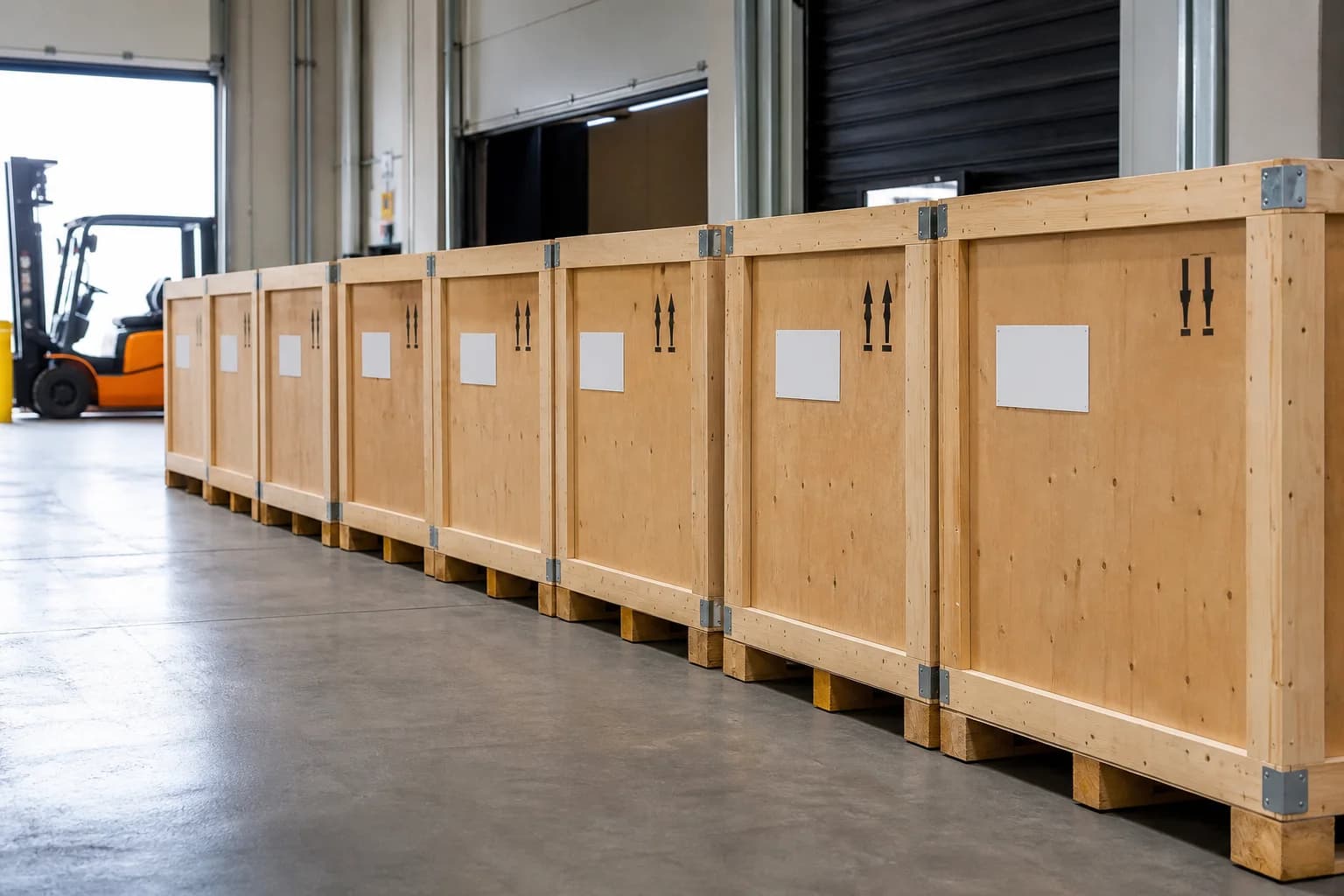
A crate that arrives intact still fails the job if the paperwork does not match the install market. Destination country, supply voltage, and UL/NEC versus CE driver evidence should already be frozen in the BOM — the same split covered in our guide to UL vs CE for imported infinity mirror signs. Packing lists, commercial invoices, and serial labels need to agree with that split so customs and the site electrician are not reverse-engineering the shipment.
Name Incoterms and who opens the crate early. Under some terms the factory’s responsibility ends at the port; under others damage in the last mile still lands on the program schedule. Clarify whether the GC, sign contractor, or brand receives, who photographs unboxing, and who holds the claim window. Export packing is wasted if receiving skips photo evidence and bolts a questionable unit to the wall before anyone documents a crack.
For multi-city OEM programs, freeze a packing standard next to the golden optical sample: same foam map, same orientation language, same photo checklist, same crate labeling convention. Serial QC without packing QC is how unit twelve arrives with a different foam recipe than unit one — and a different failure rate.
Site receiving: unbox before you hang
Train receiving to open, photograph, and dry-fit power before millwork closes around the niche. Check glass for edge chips and coating marks under store-like light, confirm serials against the packing list, and verify the driver kit matches the destination market before the electrician pulls cable. A scratched face discovered after the feature wall is sealed is a fabrication and logistics problem that looks like a design problem on the punch list.
If a unit fails receiving, stop install, document with the same camera angles used at pack-out, and escalate against the serial — do not rotate a damaged cell into a less-visible location hoping nobody notices the first ring. OEM rollouts live or die on that discipline as much as on optical tolerances.
What to send so packing and freight are buildable

A useful RFQ for export packing names overall sizes and weights (or asks us to engineer them), destination countries and ports, preferred Incoterms, indoor versus outdoor exposure after install, whether units ship as one master load or staggered drops, and any site lift or corridor constraints. Attach elevation photos, niche depth, and the electrical market path so crate design and driver kits stay aligned. Call out spare-kit and VMI needs when reorders will follow the first wave.
Send those inputs to InfinityMir when OEM or multi-location infinity mirrors are on the table. We respond with a packing and logistics map — crate method, orientation and photo protocol, market-split accessory packs, and checkpoints your GC or receiving team can run — so export packing protects the optical stack the same way shop drawings protect the install.
Related capability
UL vs CE for imported buildsManufactured Product Catalog
Explore Infinity Mirror Product Lines
Browse our full range of custom infinity mirror signs, letter systems, and feature walls — engineered with CAD shop drawings, UL/CE compliance, and export packing.

Infinity Logo Signs
Turn your brand mark into a custom infinity mirror logo sign — optical-grade glass, tuned LEDs, and endless depth engineered from vector artwork.
View Infinity Logo Signs details
Infinity Mirror Letter Systems
Custom infinity mirror letter systems and channel signs built as individual optical cells for even depth across the whole wordmark.
View Infinity Mirror Letter Systems details
Feature Walls & Portals
Large-format infinity mirror feature walls and portals with synchronized multi-zone control, 24/7 heat management, and hidden service access.
View Feature Walls & Portals details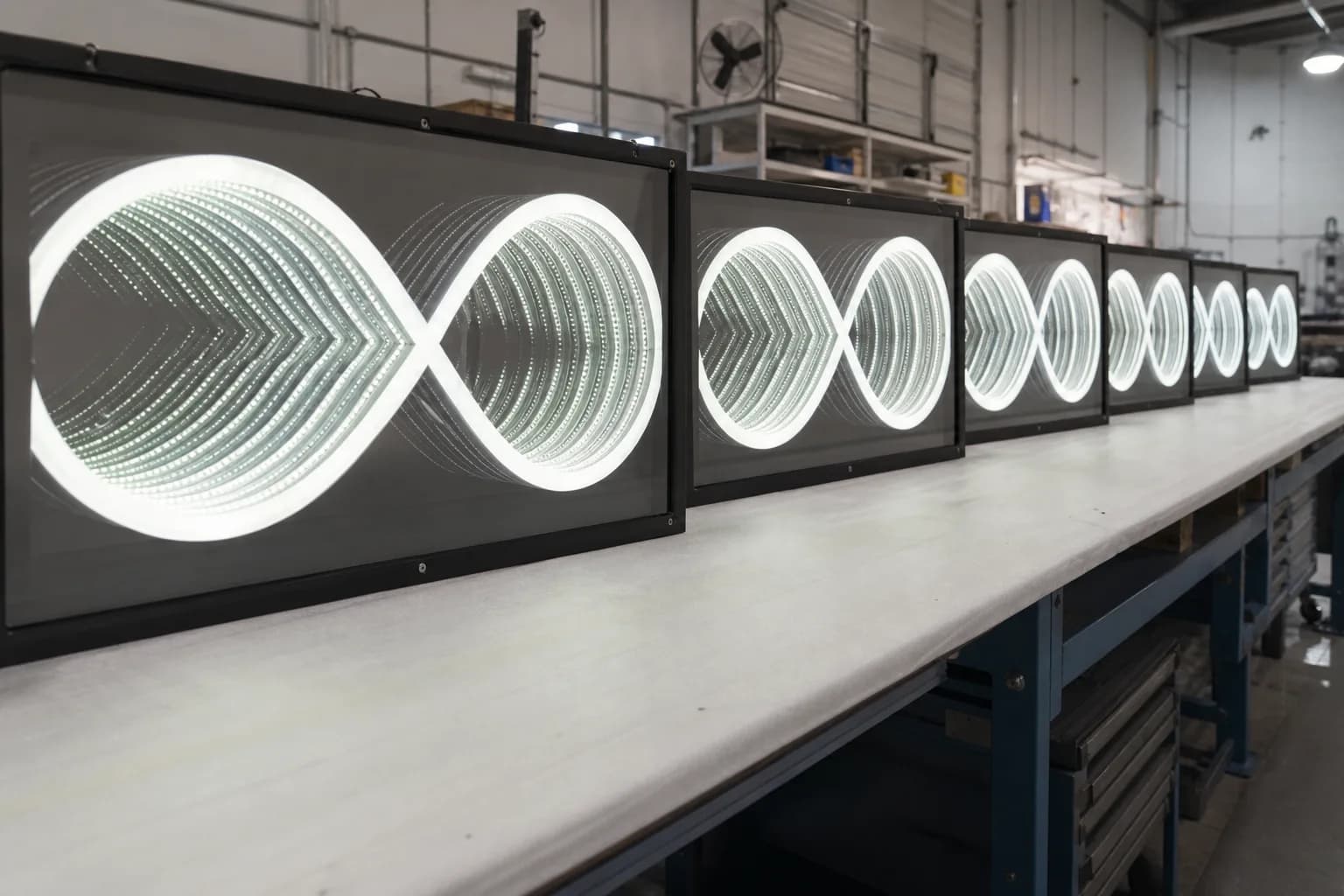
OEM & Rollout Programs
Private-label OEM & multi-location infinity mirror rollout programs with golden samples, controlled BOMs, and UL/CE electrical paths.
View OEM & Rollout Programs details
Standard Focal Panels
Fixed-size, ready-to-order standard infinity mirror focal panels with standard drivers and mounting kits for fast, predictable projects.
View Standard Focal Panels details